Kang Weixi, Wang Junxin, Malvaso Antonio
Imperial College London, London, United Kingdom.
Beijing University of Chinese Medicine, Beijing, China.
Front Aging Neurosci. 2022 Jul 28;13:771885. doi: 10.3389/fnagi.2021.771885. eCollection 2021.
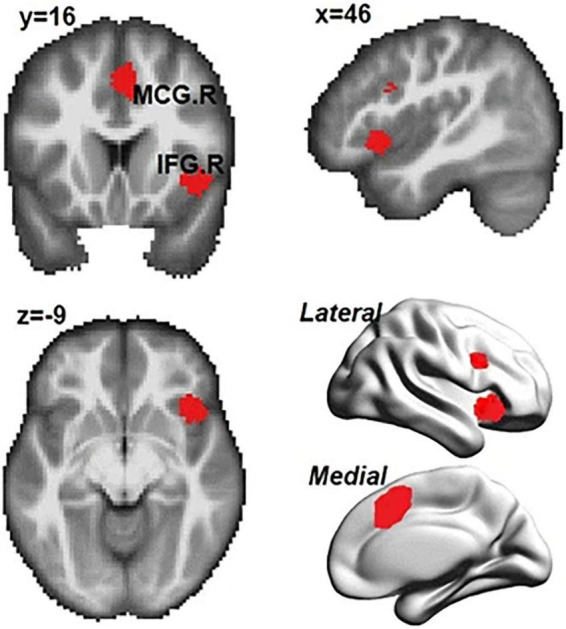
As one of the core executive functions, inhibitory control plays an important role in human life. Inhibitory control refers to the ability to suppress task irrelevant information both internally and externally. Modern cognitive neuroscience has extensively investigated the neural basis of inhibitory control, less is known about the inhibitory control mechanisms in aging. Growing interests in cognitive declines of aging have given raise to the compensation-related utilization of neural circuits hypothesis (CRUNCH). In this review, we survey both behavioral, functional, and structural changes relevant to inhibitory control in aging. In line with CRUNCH, we found that older adults engage additional brain regions than younger adults when performing the same cognitive task, to compensate for declining brain structures and functions. Moreover, we propose CRUNCH could well take functional inhibitory deficits in older adults into account. Finally, we provide three sensible future research directions.
作为核心执行功能之一,抑制控制在人类生活中起着重要作用。抑制控制是指在内部和外部抑制与任务无关信息的能力。现代认知神经科学广泛研究了抑制控制的神经基础,但对衰老过程中的抑制控制机制了解较少。对衰老认知衰退的兴趣日益浓厚,催生了神经回路补偿相关利用假说(CRUNCH)。在本综述中,我们调查了与衰老中抑制控制相关的行为、功能和结构变化。与CRUNCH一致,我们发现老年人在执行相同认知任务时比年轻人激活更多的脑区,以补偿脑结构和功能的衰退。此外,我们提出CRUNCH可以很好地解释老年人的功能性抑制缺陷。最后,我们提供了三个合理的未来研究方向。