Esposito Pasquale, Kearns Madeleine M, Smith Kevin B, Chandrasegaram Rajini, Kadamani Anthony K, Gandelman Michelle, Liang Jacky, Nikpoor Naghmeh, Tompkins Thomas A, Ismail Nafissa
NISE Laboratory, School of Psychology, Faculty of Social Sciences, University of Ottawa, Ontario, K1N 6N5, Canada.
Department of Neuroscience, Faculty of Health Sciences, University of Cardiff, Cardiff, CF24 2FN, United Kingdom.
Compr Psychoneuroendocrinol. 2022 Jun 11;11:100147. doi: 10.1016/j.cpnec.2022.100147. eCollection 2022 Aug.
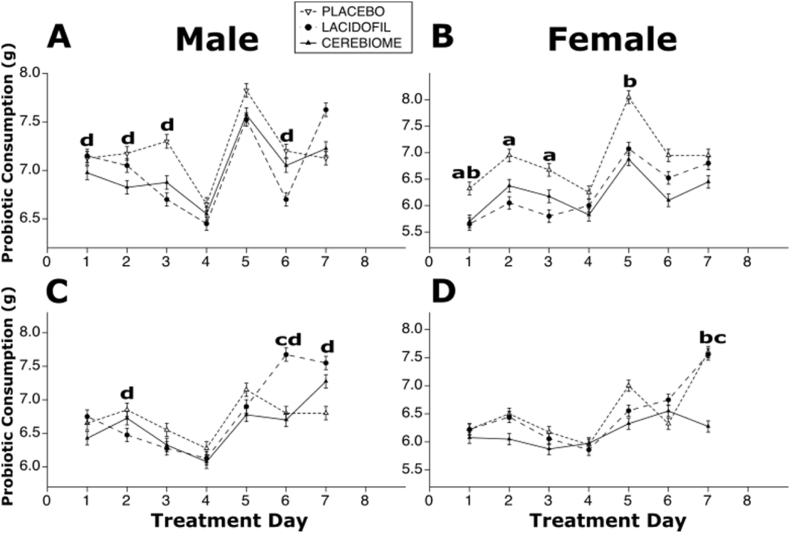
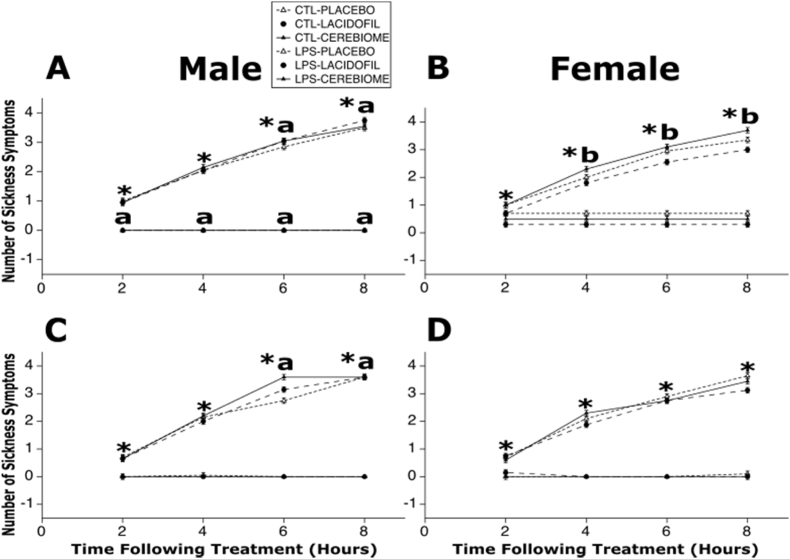
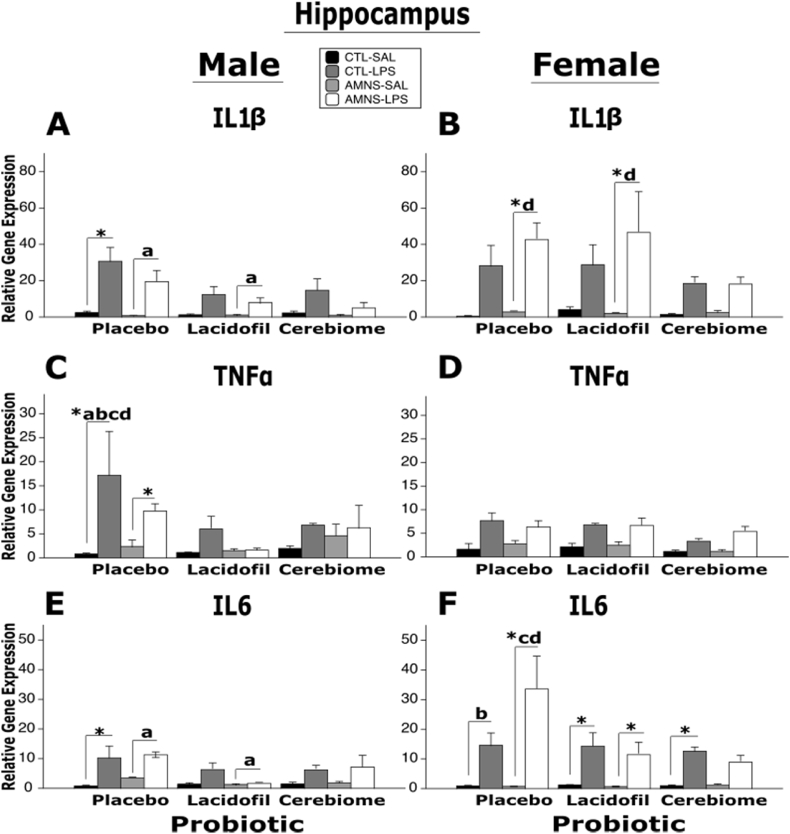
Exposure to stress during critical periods of development-such as puberty-is associated with long-term disruptions in brain function and neuro-immune responsivity. However, the mechanisms underlying the effect of stress on the pubertal neuro-immune response has yet to be elucidated. Therefore, the objective of the current study was to investigate the effect antimicrobial and lipopolysaccharide (LPS) treatments on acute immune responsivity in pubertal male and female mice. Moreover, the potential for probiotic supplementation to mitigate these effects was also examined. 240 male and female CD1 mice were treated with one week of antimicrobial treatment (mixed antimicrobials or water) and probiotic treatment ( R0011 and R0052 or R0052 and R0175) or placebo at five weeks of age. At six weeks of age (pubertal stress-sensitive period), the mice received a single injection of LPS or saline. Sickness behaviours were assessed, and mice were euthanized 8 h post-injection. Brain, blood, and intestinal samples were collected. The results indicated that the antimicrobial treatment reduced sickness behaviours, and potentiated LPS-induced plasma cytokine concentrations and pro-inflammatory markers in the pre-frontal cortex (PFC) and hippocampus, in a sex-dependent manner. However, probiotics reduced LPS-induced plasma cytokine concentrations along with hippocampal and PFC pro-inflammatory markers in a sex-dependent manner. R0011 and R0052 treatment also mitigated antimicrobial-induced plasma cytokine concentrations and sickness behaviours. These findings suggest that the microbiome is an important modulator of the pro-inflammatory immune response during puberty.
在发育的关键时期(如青春期)暴露于应激与大脑功能和神经免疫反应性的长期破坏有关。然而,应激对青春期神经免疫反应影响的潜在机制尚未阐明。因此,本研究的目的是调查抗菌和脂多糖(LPS)处理对青春期雄性和雌性小鼠急性免疫反应性的影响。此外,还研究了补充益生菌减轻这些影响的可能性。240只雄性和雌性CD1小鼠在5周龄时接受为期一周的抗菌处理(混合抗菌剂或水)、益生菌处理(R0011和R0052或R0052和R0175)或安慰剂处理。在6周龄(青春期应激敏感期)时,小鼠接受单次LPS或生理盐水注射。评估疾病行为,并在注射后8小时对小鼠实施安乐死。收集大脑、血液和肠道样本。结果表明,抗菌处理可减少疾病行为,并以性别依赖的方式增强LPS诱导的血浆细胞因子浓度以及前额叶皮质(PFC)和海马体中的促炎标志物。然而,益生菌以性别依赖的方式降低了LPS诱导的血浆细胞因子浓度以及海马体和PFC中的促炎标志物。R0011和R0052处理还减轻了抗菌诱导的血浆细胞因子浓度和疾病行为。这些发现表明,微生物群是青春期促炎免疫反应的重要调节因子。