• 文献检索
  • 文档翻译
  • 深度研究
  • 学术资讯
  • Suppr Zotero 插件Zotero 插件
  • 邀请有礼
  • 套餐&价格
  • 历史记录
应用&插件
Suppr Zotero 插件Zotero 插件浏览器插件Mac 客户端Windows 客户端微信小程序
定价
高级版会员购买积分包购买API积分包
服务
文献检索文档翻译深度研究API 文档MCP 服务
关于我们
关于 Suppr公司介绍联系我们用户协议隐私条款
关注我们

Suppr 超能文献

核心技术专利:CN118964589B侵权必究
粤ICP备2023148730 号-1Suppr @ 2026

文献检索

告别复杂PubMed语法,用中文像聊天一样搜索,搜遍4000万医学文献。AI智能推荐,让科研检索更轻松。

立即免费搜索

文件翻译

保留排版,准确专业,支持PDF/Word/PPT等文件格式,支持 12+语言互译。

免费翻译文档

深度研究

AI帮你快速写综述,25分钟生成高质量综述,智能提取关键信息,辅助科研写作。

立即免费体验

视黄酸相关核受体与 microRNAs 之间的反馈控制着 的蜕皮周期的速度和数量。

Feedback between a retinoid-related nuclear receptor and the microRNAs controls the pace and number of molting cycles in .

机构信息

Department of Biological Chemistry, David Geffen School of Medicine, University of California, Los Angeles, Los Angeles, United States.

Department of Biology, Johns Hopkins University, Baltimore, United States.

出版信息

Elife. 2022 Aug 15;11:e80010. doi: 10.7554/eLife.80010.

DOI:10.7554/eLife.80010
PMID:35968765
原文链接:https://pmc.ncbi.nlm.nih.gov/articles/PMC9377799/
Abstract

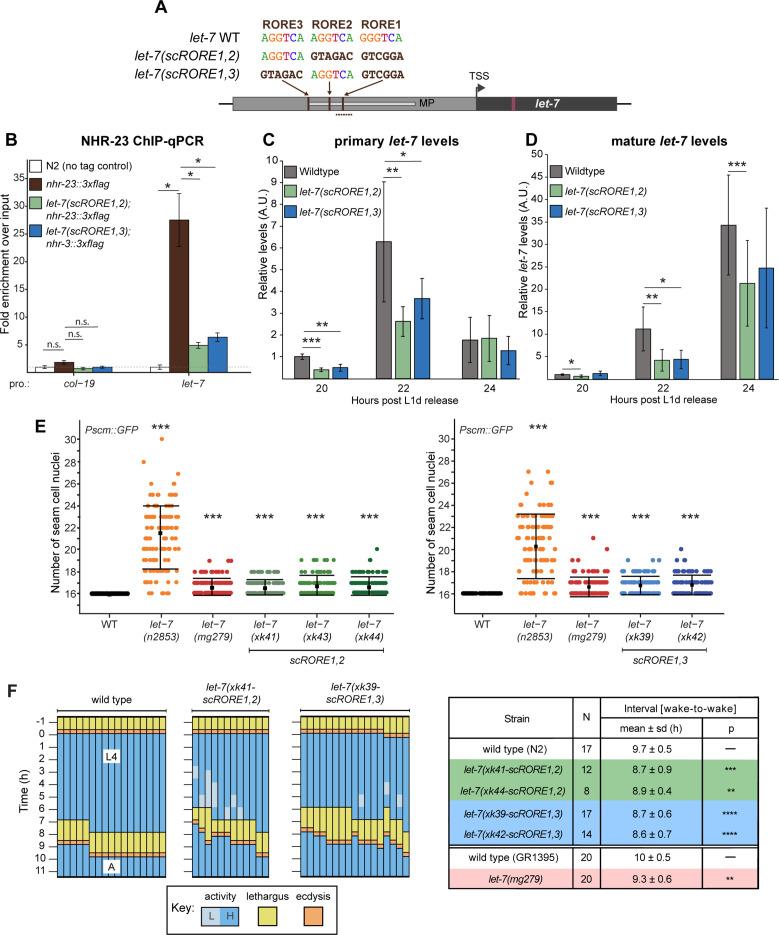
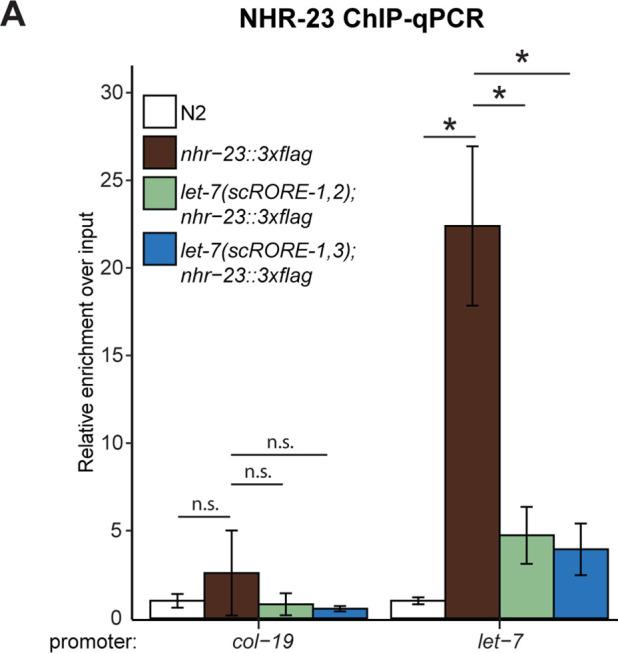
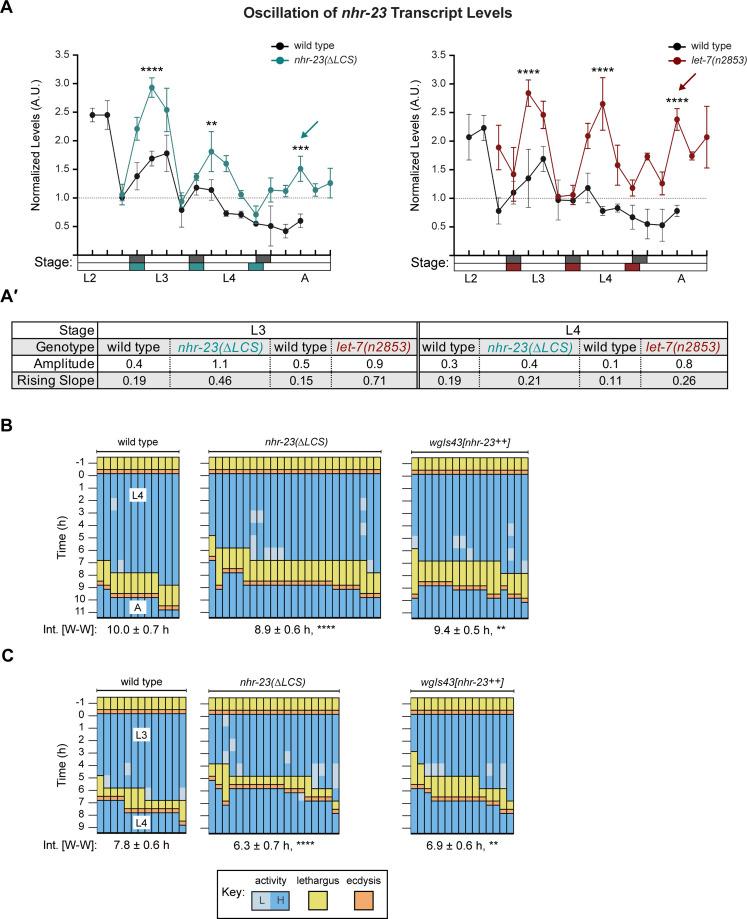
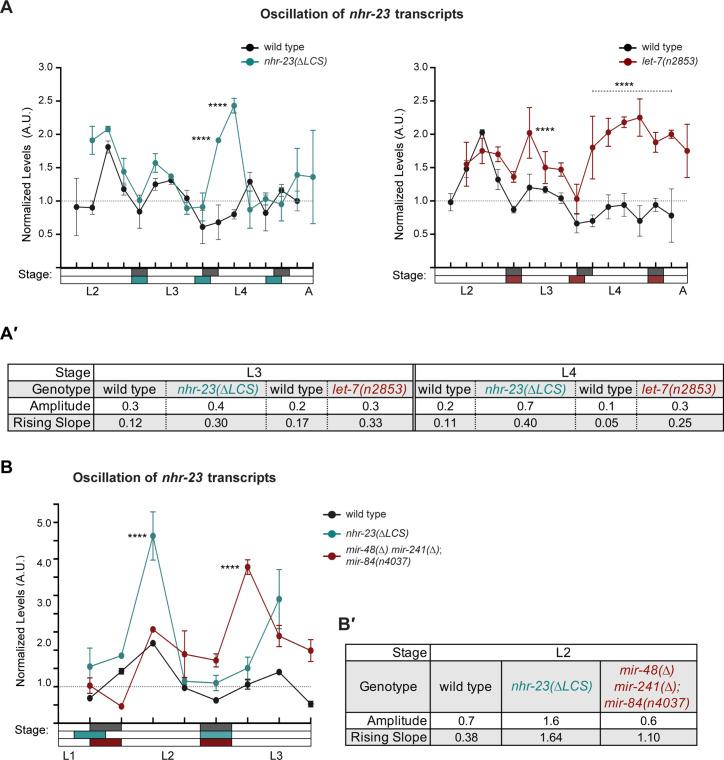
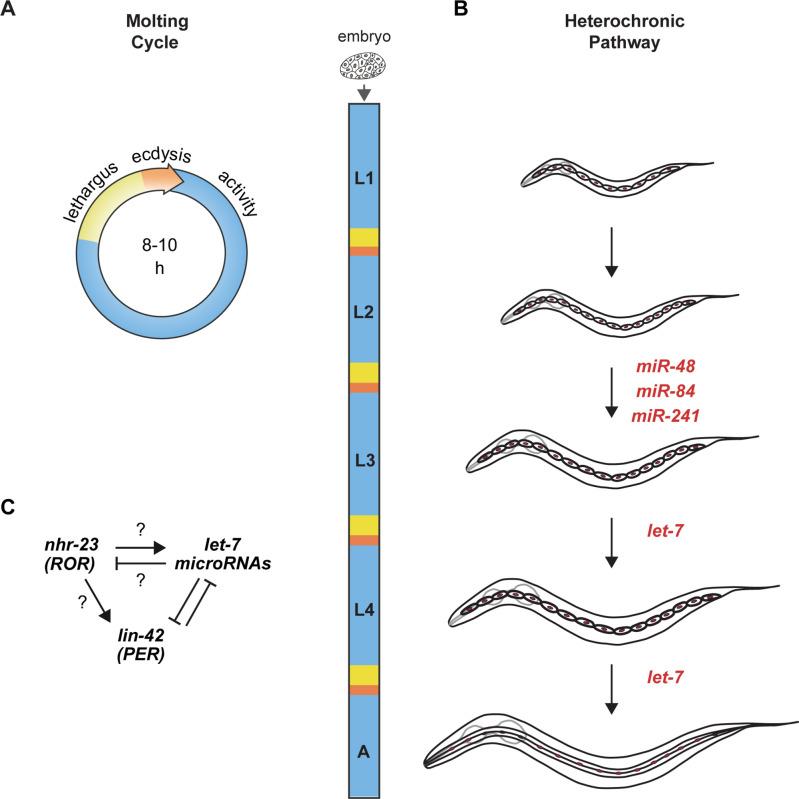
Animal development requires coordination among cyclic processes, sequential cell fate specifications, and once-a-lifetime morphogenic events, but the underlying timing mechanisms are not well understood. undergoes four molts at regular 8 to 10 hour intervals. The pace of the cycle is governed by PERIOD/ and other as-yet unknown factors. Cessation of the cycle in young adults is controlled by the family of microRNAs and downstream transcription factors in the heterochronic pathway. Here, we characterize a negative feedback loop between NHR-23, the worm homolog of mammalian etinoid-related rphan eceptors (RORs), and the family of microRNAs that regulates both the frequency and finite number of molts. The molting cycle is decelerated in knockdowns and accelerated in mutants, but timed similarly in double mutants and wild-type animals. NHR-23 binds response elements (ROREs) in the promoter and activates transcription. In turn, 7 dampens expression across development via a complementary -binding site (LCS) in the 3' UTR. The molecular interactions between NHR-23 and hold true for other family microRNAs. Either derepression of transcripts by LCS deletion or high gene dosage of leads to protracted behavioral quiescence and extra molts in adults. NHR-23 and also coregulate scores of genes required for execution of the molts, including . In addition, ROREs and LCSs isolated from mammalian and genes function in , suggesting conservation of this feedback mechanism. We propose that this feedback loop unites the molting timer and the heterochronic gene regulatory network, possibly by functioning as a cycle counter.

摘要

动物的发育需要协调周期性过程、顺序细胞命运特化和一次性的形态发生事件,但潜在的计时机制尚不清楚。线虫经历四次蜕皮,间隔时间为 8 到 10 小时。周期的节奏由 PERIOD/和其他未知因素控制。年轻成虫中周期的停止由 miRNA 家族和异时性途径中的下游转录因子控制。在这里,我们描述了线虫 NHR-23 与 miRNA 家族之间的负反馈回路,NHR-23 是哺乳动物 etinoid-related orphan receptors (RORs)的同源物,而 miRNA 家族调节蜕皮的频率和有限次数。在 knockdown 中,蜕皮周期减慢,在 突变体中加速,但在 双突变体和野生型动物中时间相似。NHR-23 结合在 启动子中的反应元件 (ROREs)并激活转录。反过来, 7 通过在 3'UTR 中的互补 -结合位点 (LCS)在整个发育过程中抑制 的表达。NHR-23 和 之间的分子相互作用也适用于其他 miRNA 家族。LCS 缺失导致 转录物去抑制或 基因高剂量表达会导致成年动物行为静止和额外蜕皮。NHR-23 和 还共同调节执行蜕皮所需的数十个基因,包括 。此外,从哺乳动物 和 基因中分离出的 ROREs 和 LCSs 在 中起作用,表明这种反馈机制具有保守性。我们提出,这个反馈回路将蜕皮定时器和异时性基因调控网络结合在一起,可能通过作为一个循环计数器起作用。

https://cdn.ncbi.nlm.nih.gov/pmc/blobs/03e2/9377799/40a3a5d1ee71/elife-80010-sa2-fig1.jpg
https://cdn.ncbi.nlm.nih.gov/pmc/blobs/03e2/9377799/fe9bdc0321ce/elife-80010-fig1.jpg
https://cdn.ncbi.nlm.nih.gov/pmc/blobs/03e2/9377799/b8e4eec1ade0/elife-80010-fig2.jpg
https://cdn.ncbi.nlm.nih.gov/pmc/blobs/03e2/9377799/6eb1eb25ff9d/elife-80010-fig3.jpg
https://cdn.ncbi.nlm.nih.gov/pmc/blobs/03e2/9377799/023712a6e295/elife-80010-fig3-figsupp1.jpg
https://cdn.ncbi.nlm.nih.gov/pmc/blobs/03e2/9377799/8749671ebc4e/elife-80010-fig3-figsupp2.jpg
https://cdn.ncbi.nlm.nih.gov/pmc/blobs/03e2/9377799/5cfd2898299b/elife-80010-fig4.jpg
https://cdn.ncbi.nlm.nih.gov/pmc/blobs/03e2/9377799/b4bace01b044/elife-80010-fig4-figsupp1.jpg
https://cdn.ncbi.nlm.nih.gov/pmc/blobs/03e2/9377799/29a14b3a5572/elife-80010-fig5.jpg
https://cdn.ncbi.nlm.nih.gov/pmc/blobs/03e2/9377799/a797c3c3ff61/elife-80010-fig5-figsupp1.jpg
https://cdn.ncbi.nlm.nih.gov/pmc/blobs/03e2/9377799/811f1be777de/elife-80010-fig6.jpg
https://cdn.ncbi.nlm.nih.gov/pmc/blobs/03e2/9377799/a91cb80a6948/elife-80010-fig6-figsupp1.jpg
https://cdn.ncbi.nlm.nih.gov/pmc/blobs/03e2/9377799/6bedd1ccbf7a/elife-80010-fig6-figsupp2.jpg
https://cdn.ncbi.nlm.nih.gov/pmc/blobs/03e2/9377799/ab34e109b024/elife-80010-fig7.jpg
https://cdn.ncbi.nlm.nih.gov/pmc/blobs/03e2/9377799/fd9ee5dd1bc3/elife-80010-fig8.jpg
https://cdn.ncbi.nlm.nih.gov/pmc/blobs/03e2/9377799/4968581004c4/elife-80010-fig8-figsupp1.jpg
https://cdn.ncbi.nlm.nih.gov/pmc/blobs/03e2/9377799/795ebe5fcf6b/elife-80010-fig9.jpg
https://cdn.ncbi.nlm.nih.gov/pmc/blobs/03e2/9377799/3fce639215c8/elife-80010-fig9-figsupp1.jpg
https://cdn.ncbi.nlm.nih.gov/pmc/blobs/03e2/9377799/7623d60613d0/elife-80010-fig10.jpg
https://cdn.ncbi.nlm.nih.gov/pmc/blobs/03e2/9377799/8d6f9b30721f/elife-80010-fig10-figsupp1.jpg
https://cdn.ncbi.nlm.nih.gov/pmc/blobs/03e2/9377799/6af237e26067/elife-80010-fig11.jpg
https://cdn.ncbi.nlm.nih.gov/pmc/blobs/03e2/9377799/40a3a5d1ee71/elife-80010-sa2-fig1.jpg
https://cdn.ncbi.nlm.nih.gov/pmc/blobs/03e2/9377799/fe9bdc0321ce/elife-80010-fig1.jpg
https://cdn.ncbi.nlm.nih.gov/pmc/blobs/03e2/9377799/b8e4eec1ade0/elife-80010-fig2.jpg
https://cdn.ncbi.nlm.nih.gov/pmc/blobs/03e2/9377799/6eb1eb25ff9d/elife-80010-fig3.jpg
https://cdn.ncbi.nlm.nih.gov/pmc/blobs/03e2/9377799/023712a6e295/elife-80010-fig3-figsupp1.jpg
https://cdn.ncbi.nlm.nih.gov/pmc/blobs/03e2/9377799/8749671ebc4e/elife-80010-fig3-figsupp2.jpg
https://cdn.ncbi.nlm.nih.gov/pmc/blobs/03e2/9377799/5cfd2898299b/elife-80010-fig4.jpg
https://cdn.ncbi.nlm.nih.gov/pmc/blobs/03e2/9377799/b4bace01b044/elife-80010-fig4-figsupp1.jpg
https://cdn.ncbi.nlm.nih.gov/pmc/blobs/03e2/9377799/29a14b3a5572/elife-80010-fig5.jpg
https://cdn.ncbi.nlm.nih.gov/pmc/blobs/03e2/9377799/a797c3c3ff61/elife-80010-fig5-figsupp1.jpg
https://cdn.ncbi.nlm.nih.gov/pmc/blobs/03e2/9377799/811f1be777de/elife-80010-fig6.jpg
https://cdn.ncbi.nlm.nih.gov/pmc/blobs/03e2/9377799/a91cb80a6948/elife-80010-fig6-figsupp1.jpg
https://cdn.ncbi.nlm.nih.gov/pmc/blobs/03e2/9377799/6bedd1ccbf7a/elife-80010-fig6-figsupp2.jpg
https://cdn.ncbi.nlm.nih.gov/pmc/blobs/03e2/9377799/ab34e109b024/elife-80010-fig7.jpg
https://cdn.ncbi.nlm.nih.gov/pmc/blobs/03e2/9377799/fd9ee5dd1bc3/elife-80010-fig8.jpg
https://cdn.ncbi.nlm.nih.gov/pmc/blobs/03e2/9377799/4968581004c4/elife-80010-fig8-figsupp1.jpg
https://cdn.ncbi.nlm.nih.gov/pmc/blobs/03e2/9377799/795ebe5fcf6b/elife-80010-fig9.jpg
https://cdn.ncbi.nlm.nih.gov/pmc/blobs/03e2/9377799/3fce639215c8/elife-80010-fig9-figsupp1.jpg
https://cdn.ncbi.nlm.nih.gov/pmc/blobs/03e2/9377799/7623d60613d0/elife-80010-fig10.jpg
https://cdn.ncbi.nlm.nih.gov/pmc/blobs/03e2/9377799/8d6f9b30721f/elife-80010-fig10-figsupp1.jpg
https://cdn.ncbi.nlm.nih.gov/pmc/blobs/03e2/9377799/6af237e26067/elife-80010-fig11.jpg
https://cdn.ncbi.nlm.nih.gov/pmc/blobs/03e2/9377799/40a3a5d1ee71/elife-80010-sa2-fig1.jpg

相似文献

1
Feedback between a retinoid-related nuclear receptor and the microRNAs controls the pace and number of molting cycles in .视黄酸相关核受体与 microRNAs 之间的反馈控制着 的蜕皮周期的速度和数量。
Elife. 2022 Aug 15;11:e80010. doi: 10.7554/eLife.80010.
2
The mir-84 and let-7 paralogous microRNA genes of Caenorhabditis elegans direct the cessation of molting via the conserved nuclear hormone receptors NHR-23 and NHR-25.秀丽隐杆线虫的mir-84和let-7同源微小RNA基因通过保守的核激素受体NHR-23和NHR-25指导蜕皮的停止。
Development. 2006 Dec;133(23):4631-41. doi: 10.1242/dev.02655. Epub 2006 Oct 25.
3
A circadian-like gene network programs the timing and dosage of heterochronic miRNA transcription during C. elegans development.一个生物钟样的基因网络在秀丽隐杆线虫的发育过程中编程了异时性 miRNA 转录的时间和剂量。
Dev Cell. 2023 Nov 20;58(22):2563-2579.e8. doi: 10.1016/j.devcel.2023.08.006. Epub 2023 Aug 28.
4
The nuclear receptor gene nhr-25 plays multiple roles in the Caenorhabditis elegans heterochronic gene network to control the larva-to-adult transition.核受体基因 nhr-25 在秀丽隐杆线虫的异时性基因网络中发挥多种作用,以控制幼虫到成虫的过渡。
Dev Biol. 2010 Aug 15;344(2):1100-9. doi: 10.1016/j.ydbio.2010.05.508. Epub 2010 Jun 2.
5
Caenorhabditis elegans period homolog lin-42 regulates the timing of heterochronic miRNA expression.秀丽隐杆线虫周期同源物lin-42调控异时性微小RNA表达的时间。
Proc Natl Acad Sci U S A. 2014 Oct 28;111(43):15450-5. doi: 10.1073/pnas.1414856111. Epub 2014 Oct 15.
6
LIN-42/PERIOD controls cyclical and developmental progression of C. elegans molts.LIN-42/PERIOD 控制线虫蜕皮的周期性和发育进展。
Curr Biol. 2011 Dec 20;21(24):2033-45. doi: 10.1016/j.cub.2011.10.054. Epub 2011 Dec 1.
7
Toward a unified model of developmental timing: A "molting" approach.迈向发育时间的统一模型:一种“蜕皮”方法。
Worm. 2012 Oct 1;1(4):221-30. doi: 10.4161/worm.20874.
8
C. elegans molting requires rhythmic accumulation of the Grainyhead/LSF transcription factor GRH-1.秀丽隐杆线虫蜕皮需要 Grainyhead/LSF 转录因子 GRH-1 的节律性积累。
EMBO J. 2023 Feb 15;42(4):e111895. doi: 10.15252/embj.2022111895. Epub 2023 Jan 23.
9
acn-1, a C. elegans homologue of ACE, genetically interacts with the let-7 microRNA and other heterochronic genes.acn-1,一种秀丽隐杆线虫 ACE 的同源物,与 let-7 微 RNA 和其他时序基因在遗传上相互作用。
Cell Cycle. 2017 Oct 2;16(19):1800-1809. doi: 10.1080/15384101.2017.1344798. Epub 2017 Sep 21.
10
The Doubletime Homolog Mainly Regulates Independently of Its Effects on the Period Homolog in .双时同源物主要独立于其对周期同源物的影响进行调控。
G3 (Bethesda). 2018 Jul 31;8(8):2617-2629. doi: 10.1534/g3.118.200392.

引用本文的文献

1
Mirtrons in Human Cancers.人类癌症中的微小内含子。
Onco (Basel). 2025 Mar;5(1). doi: 10.3390/onco5010007. Epub 2025 Feb 8.
2
promotes the activity of ligand-bound DAF-12/NHR to coordinate dauer recovery and post-dauer seam cell fate.促进配体结合的DAF-12/核激素受体的活性,以协调滞育恢复和滞育后表皮细胞命运。
bioRxiv. 2025 Jun 24:2025.06.18.660181. doi: 10.1101/2025.06.18.660181.
3
A wrinkle in timers: evolutionary rewiring of conserved biological timekeepers.计时器中的一个褶皱:保守生物计时器的进化重连

本文引用的文献

1
A transient apical extracellular matrix relays cytoskeletal patterns to shape permanent acellular ridges on the surface of adult C. elegans.短暂的顶端细胞外基质将细胞骨架模式传递到成年秀丽隐杆线虫表面形成永久性无细胞脊。
PLoS Genet. 2022 Aug 12;18(8):e1010348. doi: 10.1371/journal.pgen.1010348. eCollection 2022 Aug.
2
Patterning with clocks and genetic cascades: Segmentation and regionalization of vertebrate versus insect body plans.利用时钟和基因级联进行模式形成:脊椎动物与昆虫体节模式的分割和区域化。
PLoS Genet. 2021 Oct 14;17(10):e1009812. doi: 10.1371/journal.pgen.1009812. eCollection 2021 Oct.
3
Gene expression oscillations in C. elegans underlie a new developmental clock.
Trends Biochem Sci. 2025 Apr;50(4):344-355. doi: 10.1016/j.tibs.2025.01.006. Epub 2025 Feb 13.
4
Loss of the Na+/K+ cation pump CATP-1 suppresses nekl-associated molting defects.钠钾阳离子泵CATP-1的缺失抑制了与nekl相关的蜕皮缺陷。
G3 (Bethesda). 2024 Oct 21;14(12). doi: 10.1093/g3journal/jkae244.
5
The Caenorhabditis elegans cuticle and precuticle: a model for studying dynamic apical extracellular matrices in vivo.秀丽隐杆线虫的角质层和前角质层:研究活体中动态顶端细胞外基质的模型。
Genetics. 2024 Aug 7;227(4). doi: 10.1093/genetics/iyae072.
6
Ror homolog nhr-23 is essential for both developmental clock and circadian clock in C. elegans.Ror 同源物 nhr-23 是秀丽隐杆线虫发育时钟和昼夜节律钟所必需的。
Commun Biol. 2024 Feb 28;7(1):243. doi: 10.1038/s42003-024-05894-3.
7
An knock-in allele for studying spermatogenesis and molting.一种用于研究精子发生和蜕皮的敲入等位基因。
MicroPubl Biol. 2023 Oct 2;2023. doi: 10.17912/micropub.biology.000996. eCollection 2023.
8
A circadian-like gene network programs the timing and dosage of heterochronic miRNA transcription during C. elegans development.一个生物钟样的基因网络在秀丽隐杆线虫的发育过程中编程了异时性 miRNA 转录的时间和剂量。
Dev Cell. 2023 Nov 20;58(22):2563-2579.e8. doi: 10.1016/j.devcel.2023.08.006. Epub 2023 Aug 28.
9
NHR-23 activity is necessary for C. elegans developmental progression and apical extracellular matrix structure and function.NHR-23 活性对于线虫的发育进程以及顶端细胞外基质的结构和功能是必需的。
Development. 2023 May 15;150(10). doi: 10.1242/dev.201085. Epub 2023 May 22.
10
C. elegans molting requires rhythmic accumulation of the Grainyhead/LSF transcription factor GRH-1.秀丽隐杆线虫蜕皮需要 Grainyhead/LSF 转录因子 GRH-1 的节律性积累。
EMBO J. 2023 Feb 15;42(4):e111895. doi: 10.15252/embj.2022111895. Epub 2023 Jan 23.
线虫中的基因表达振荡为新的发育时钟提供了基础。
Curr Top Dev Biol. 2021;144:19-43. doi: 10.1016/bs.ctdb.2020.11.001. Epub 2020 Dec 7.
4
Developmental function and state transitions of a gene expression oscillator in Caenorhabditis elegans.秀丽隐杆线虫中基因表达振荡器的发育功能与状态转变
Mol Syst Biol. 2020 Oct;16(10):e9975. doi: 10.15252/msb.209975.
5
The multifaceted roles of microRNAs in differentiation.microRNAs 在分化中的多效性作用。
Curr Opin Cell Biol. 2020 Dec;67:118-140. doi: 10.1016/j.ceb.2020.08.015. Epub 2020 Nov 3.
6
The full-length transcriptome of using direct RNA sequencing.利用直接 RNA 测序获得 的全长转录组。
Genome Res. 2020 Feb;30(2):299-312. doi: 10.1101/gr.251314.119. Epub 2020 Feb 5.
7
Neuronal specification in space and time.时空中的神经特化。
Science. 2018 Oct 12;362(6411):176-180. doi: 10.1126/science.aas9435.
8
Recent Molecular Genetic Explorations of MicroRNAs.最近对 microRNAs 的分子遗传学探索。
Genetics. 2018 Jul;209(3):651-673. doi: 10.1534/genetics.118.300291.
9
3'-UTR and microRNA-24 regulate circadian rhythms by repressing PERIOD2 protein accumulation.3'UTR 和 microRNA-24 通过抑制 PERIOD2 蛋白积累来调节生物钟节律。
Proc Natl Acad Sci U S A. 2017 Oct 17;114(42):E8855-E8864. doi: 10.1073/pnas.1706611114. Epub 2017 Oct 2.
10
The hepatic circadian clock fine-tunes the lipogenic response to feeding through RORα/γ.肝脏生物钟通过 RORα/γ 精细调节进食后的脂肪生成反应。
Genes Dev. 2017 Jun 15;31(12):1202-1211. doi: 10.1101/gad.302323.117. Epub 2017 Jul 26.