Department of Pathology, Microbiology, and Immunology, University of South Carolina School of Medicine - Columbia, Columbia, SC, USA.
Department of Cell Biology and Anatomy, University of South Carolina School of Medicine - Columbia, Columbia, SC, USA.
Cancer Biol Ther. 2022 Dec 31;23(1):1-15. doi: 10.1080/15384047.2022.2108306.
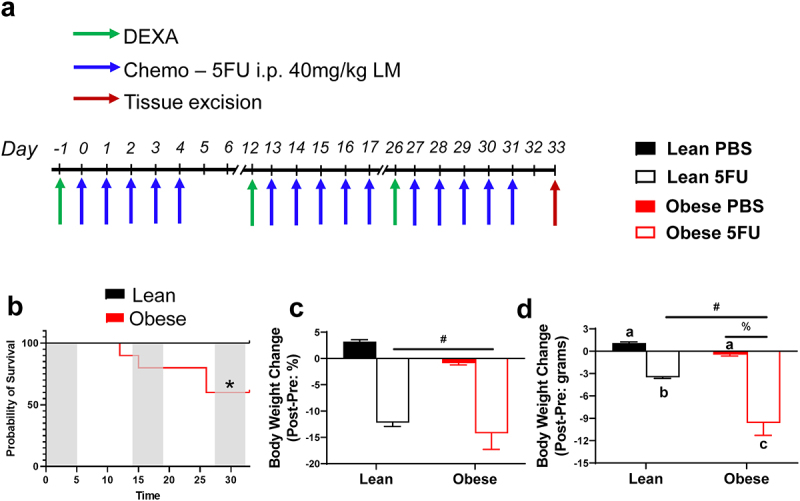
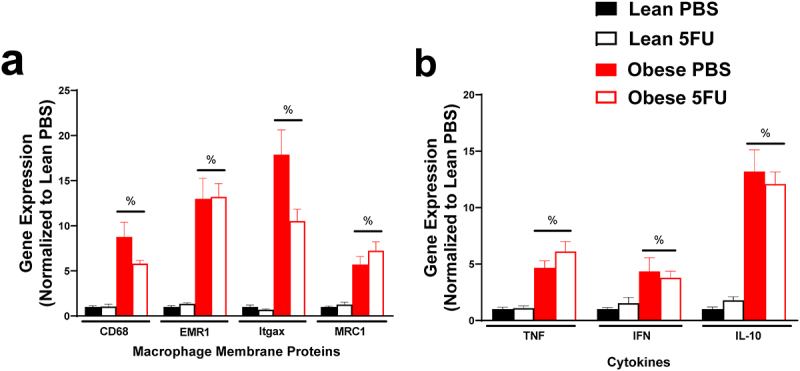
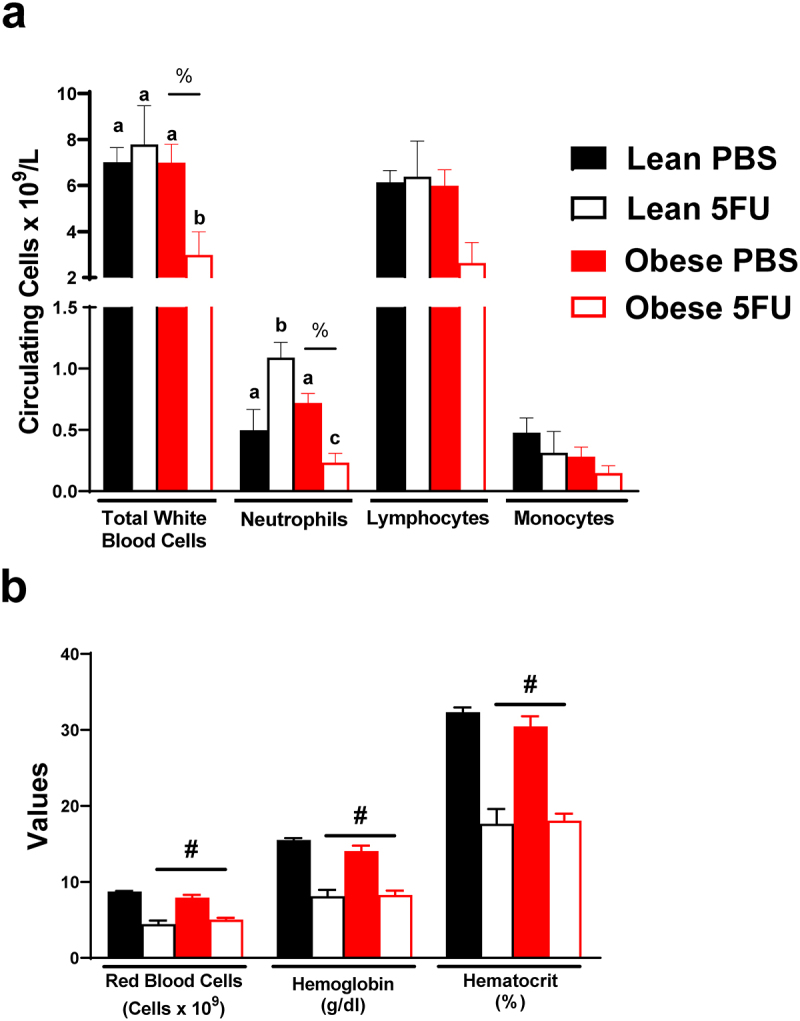
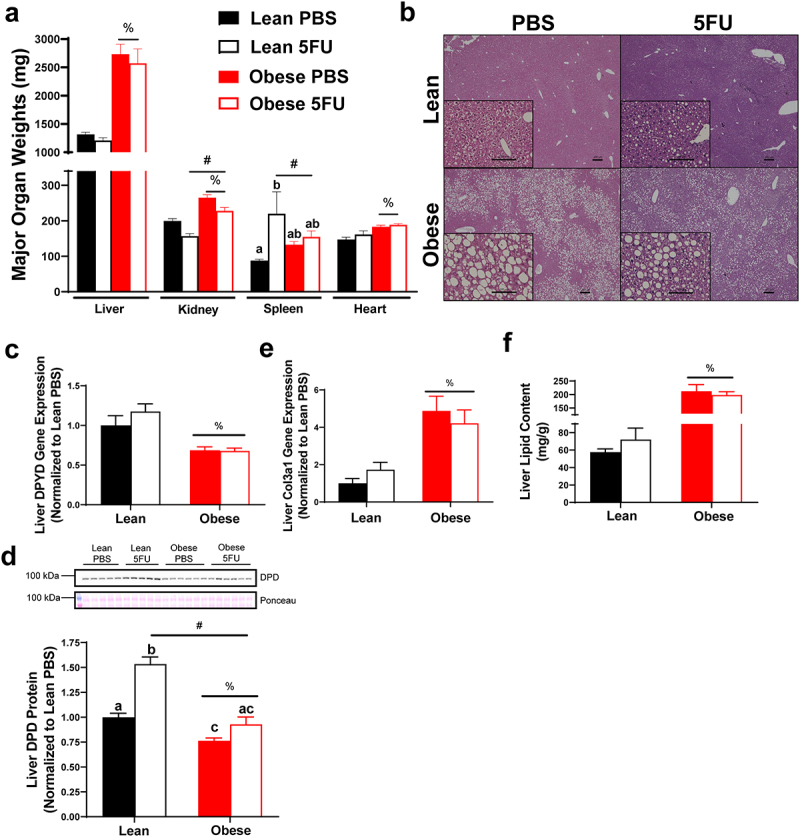
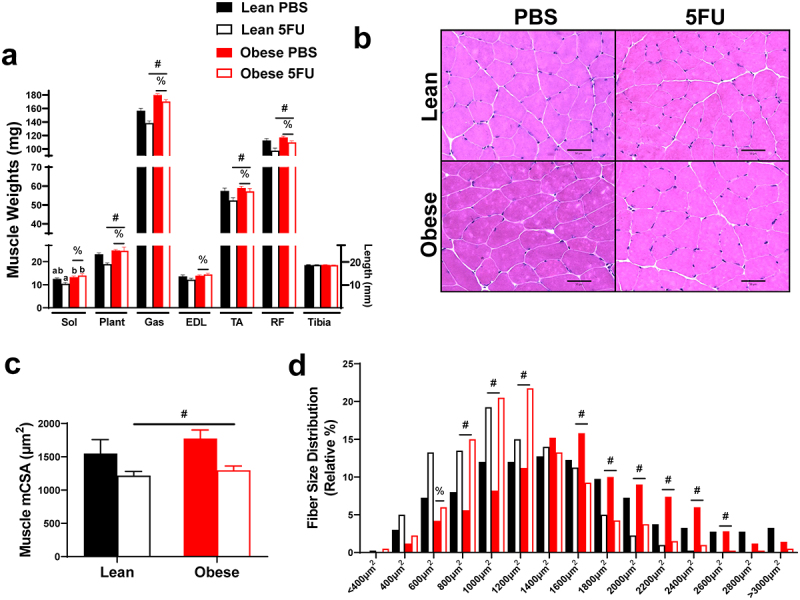
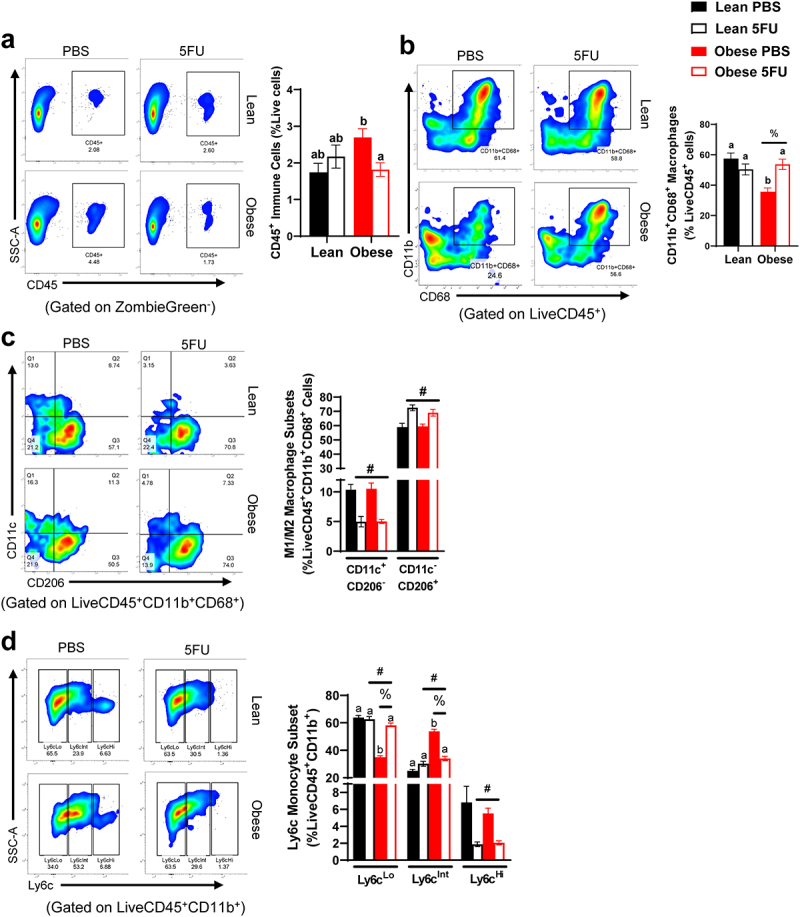
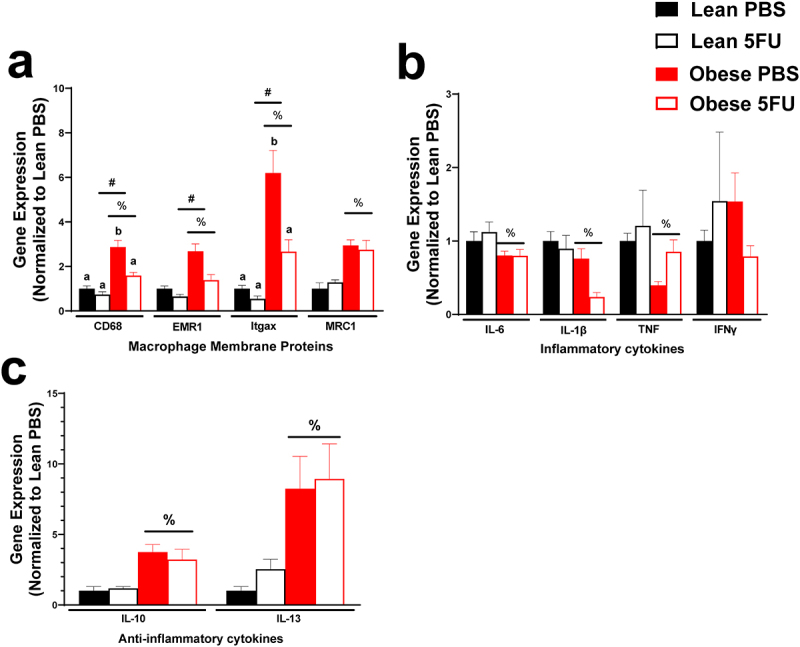
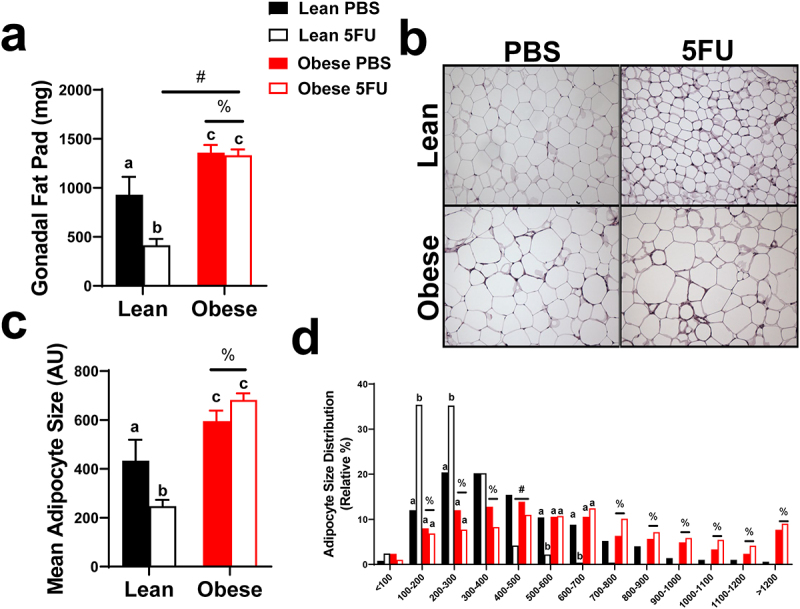
Fluorouracil/5-flourouracil (5FU) is a first-line chemotherapy drug for many cancer types; however, its associated toxicities contribute to poor quality of life and reduced dose intensities negatively impacting patient prognosis. While obesity remains a critical risk factor for most cancers, our understanding regarding how obesity may impact chemotherapy's toxicities is extremely limited. C56BL/6 mice were given high fat (Obese) or standard diets (Lean) for 4 months and then subjected to three cycles of 5FU (5d-40 mg/kg Lean Mass, 9d rest) or PBS vehicle control. Shockingly, only 60% of Obese survived 3 cycles compared to 100% of Lean, and Obese lost significantly more body weight. Dihydropyrimidine dehydrogenase (DPD), the enzyme responsible for 5FU catabolism, was reduced in obese livers. Total white blood cells, neutrophils, and lymphocytes were reduced in Obese 5FU compared to Lean 5FU and PBS controls. While adipocyte size was not affected by 5FU in Obese, skeletal muscle mass and myofibrillar cross section area were decreased following 5FU in Lean and Obese. Although adipose tissue inflammatory gene expression was not impacted by 5FU, distinct perturbations to skeletal muscle inflammatory gene expression and immune cell populations (CD45 Immune cells, CD45CD11bCD68 macrophages and CD45CD11bLy6c macrophage/monocytes) were observed in Obese only. Our evidence suggests that obesity induced liver pathologies and reduced DPD exacerbated 5FU toxicities. While obesity has been suggested to protect against cancer/chemotherapy-induced cachexia and other toxicities, our results demonstrate that obese mice are not protected, but rather show evidence of increased susceptibility to 5FU-induced cytotoxicity even when dosed for relative lean mass.
氟尿嘧啶/5-氟尿嘧啶(5FU)是多种癌症类型的一线化疗药物;然而,其相关毒性会导致生活质量下降,降低剂量强度,从而对患者预后产生负面影响。虽然肥胖仍然是大多数癌症的关键危险因素,但我们对肥胖如何影响化疗毒性的理解非常有限。C56BL/6 小鼠接受高脂肪(肥胖)或标准饮食(瘦)喂养 4 个月,然后接受三个周期的 5FU(瘦体重 5d-40mg/kg,9d 休息)或 PBS 载体对照。令人震惊的是,与 100%的瘦体重组相比,只有 60%的肥胖体重组能够耐受三个周期的 5FU 治疗,而且肥胖体重组体重明显下降更多。二氢嘧啶脱氢酶(DPD),负责 5FU 分解代谢的酶,在肥胖肝脏中减少。与瘦体重 5FU 和 PBS 对照组相比,肥胖体重 5FU 组的总白细胞、中性粒细胞和淋巴细胞减少。虽然 5FU 对肥胖体重的脂肪细胞大小没有影响,但在瘦体重和肥胖体重中,5FU 后骨骼肌质量和肌纤维横截面积减少。虽然 5FU 对脂肪组织炎症基因表达没有影响,但在肥胖体重中观察到骨骼肌炎症基因表达和免疫细胞群体(CD45 免疫细胞、CD45CD11bCD68 巨噬细胞和 CD45CD11bLy6c 巨噬细胞/单核细胞)的明显改变。我们的证据表明,肥胖诱导的肝脏病变和 DPD 减少加剧了 5FU 的毒性。虽然肥胖被认为可以预防癌症/化疗引起的恶病质和其他毒性,但我们的结果表明,肥胖小鼠不仅没有受到保护,反而表现出对 5FU 诱导的细胞毒性增加的易感性,即使按相对瘦体重给药。