Department of Women and Children's Health, School of Life Course and Population Sciences, King's College London, 10th Floor, North Wing, St Thomas' Hospital, Westminster Bridge Road, London, SE1 7EH, UK.
Tommy's National Centre for Maternity Improvement, Royal College of Obstetricians and Gynaecologists/Royal College of Midwives, 10-18 Union Street, London, SE1 1SZ, UK.
BMC Pregnancy Childbirth. 2022 Aug 15;22(1):639. doi: 10.1186/s12884-022-04867-w.
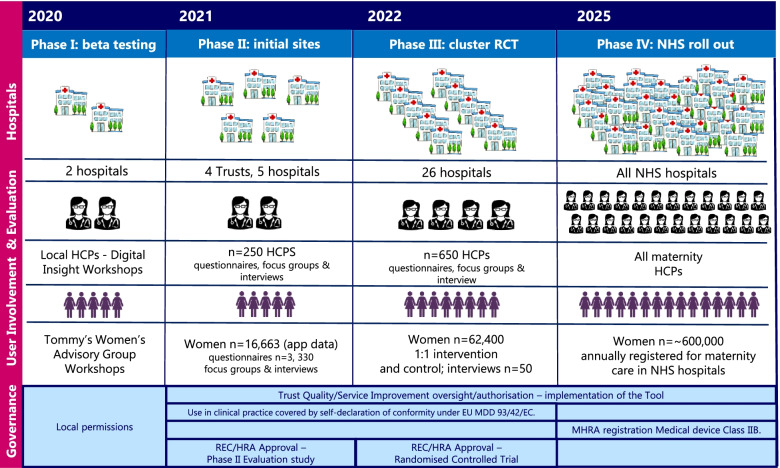
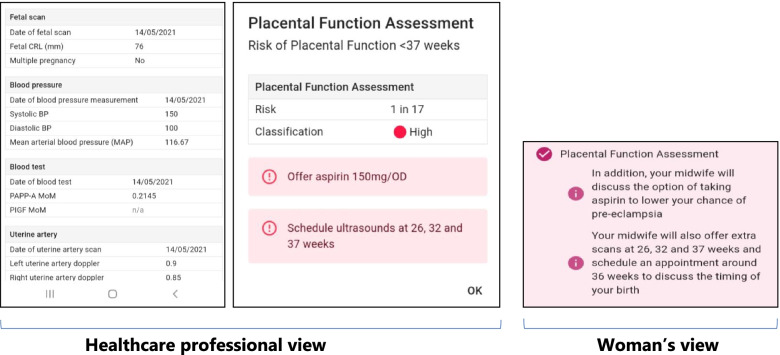
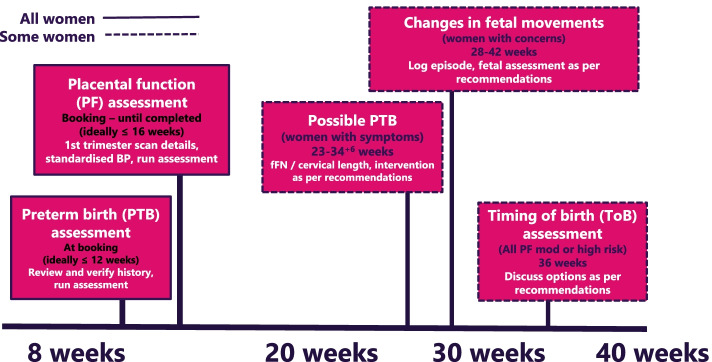
Disparities in stillbirth and preterm birth persist even after correction for ethnicity and social deprivation, demonstrating that there is wide geographical variation in the quality of care. To address this inequity, Tommy's National Centre for Maternity Improvement developed the Tommy's Clinical Decision Tool, which aims to support the provision of "the right care at the right time", personalising risk assessment and care according to best evidence. This web-based clinical decision tool assesses the risk of preterm birth and placental dysfunction more accurately than current methods, and recommends best evidenced-based care pathways in a format accessible to both women and healthcare professionals. It also provides links to reliable sources of pregnancy information for women. The aim of this study is to evaluate implementation of Tommy's Clinical Decision Tool in four early-adopter UK maternity services, to inform wider scale-up.
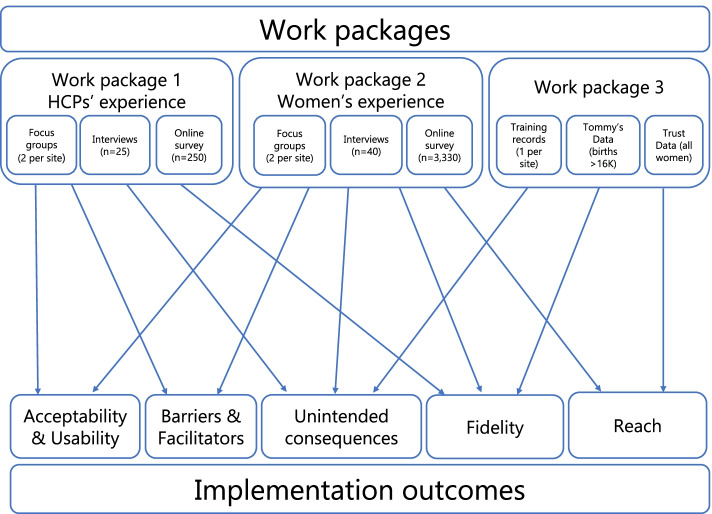
The Tommy's Clinical Decision Tool has been developed involving maternity service users and healthcare professionals in partnership. This mixed-methods study will evaluate: maternity service user and provider acceptability and experience; barriers and facilitators to implementation; reach (whether particular groups are excluded and why), fidelity (degree to which the intervention is delivered as intended), and unintended consequences. Data will be gathered over 25 months through interviews, focus groups, questionnaires and through the Tommy's Clinical Decision Tool itself. The NASSS framework (Non-adoption or Abandonment of technology by individuals and difficulties achieving Scale-up, Spread and Sustainability) will inform data analysis.
This paper describes the intervention, Tommy's Clinical Decision Tool, according to TiDIER guidelines, and the protocol for the early adopter implementation evaluation study. Findings will inform future scale up.
This study was prospectively registered on the ISRCTN registry no. 13498237 , on 31 January 2022.
即使在纠正种族和社会剥夺因素后,仍存在死产和早产的差异,这表明护理质量存在广泛的地域差异。为了解决这种不平等现象,汤米国家母婴改进中心开发了汤米临床决策工具,旨在支持“在正确的时间提供正确的护理”,根据最佳证据个性化风险评估和护理。这个基于网络的临床决策工具比目前的方法更准确地评估早产和胎盘功能障碍的风险,并以一种可供妇女和医疗保健专业人员使用的格式推荐最佳证据的护理路径。它还为妇女提供了可靠的妊娠信息来源的链接。本研究的目的是评估汤米临床决策工具在四个英国早期采用的产妇服务中的实施情况,为更广泛的推广提供信息。
汤米临床决策工具的开发涉及产妇服务使用者和医疗保健专业人员的合作。这项混合方法研究将评估:产妇服务使用者和提供者的可接受性和经验;实施的障碍和促进因素;(是否排除了特定群体以及原因)、保真度(干预措施实施的程度)和意外后果。数据将通过访谈、焦点小组、问卷调查以及通过汤米临床决策工具本身在 25 个月内收集。NASSS 框架(个体对技术的不采用或放弃以及实现规模化、推广和可持续性的困难)将为数据分析提供信息。
本文根据 TiDIER 指南描述了干预措施,即汤米临床决策工具,以及早期采用者实施评估研究的方案。研究结果将为未来的推广提供信息。
这项研究于 2022 年 1 月 31 日在 ISRCTN 注册处(注册号:13498237)进行了前瞻性注册。