Koven Alexander, Herschorn Sender
Department of Surgery, University of Toronto, Toronto, ON Canada.
Institute of Medical Science, University of Toronto, Toronto, ON Canada.
Curr Bladder Dysfunct Rep. 2022;17(4):241-249. doi: 10.1007/s11884-022-00665-4. Epub 2022 Aug 11.
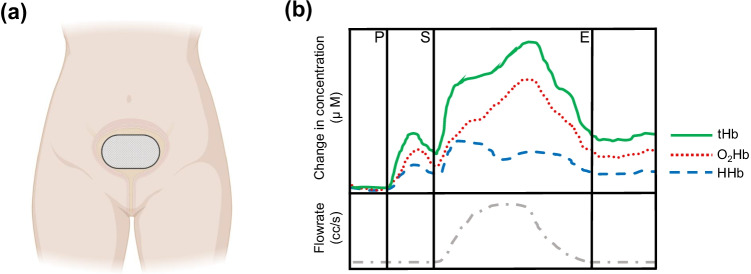
Near infrared spectroscopy (NIRS) is a non-invasive optical technique that uses near infrared light to detect the oxygenation status and hemodynamics of various organs. This article reviews the use of NIRS for the non-invasive assessment of lower urinary tract dysfunction (LUTD). Applications include assessment of bladder outlet obstruction, overactive and underactive bladder, neurogenic LUTD, pediatric LUTD, interstitial cystitis/bladder pain syndrome, and pelvic floor dysfunction. In addition, the article describes how NIRS is elucidating more about the brain-bladder connection. Technological advancements enabling these applications are also discussed.
While evidence exists for the application of NIRS throughout a wide range of LUTD, most of these studies are limited by small sample sizes without matched controls. Investigators have experienced problems with reproducibility and motion artifacts contaminating the data. The literature is also becoming dated with use of older technology.
NIRS holds potential for the non-invasive acquisition of urodynamic information over time scales and activities not previously accessible, but it is not yet ready for use in routine clinical practice. Advances in wearable technology will address some of the current limitations of NIRS, but to realize its full potential, larger scale validation studies will be required. Moreover, multidisciplinary collaboration between clinicians, scientists, engineers, and patient advocates will be critical to further optimize these systems.
近红外光谱(NIRS)是一种非侵入性光学技术,利用近红外光检测各器官的氧合状态和血流动力学。本文综述了NIRS在非侵入性评估下尿路功能障碍(LUTD)中的应用。应用包括评估膀胱出口梗阻、膀胱过度活动症和活动不足、神经源性LUTD、小儿LUTD、间质性膀胱炎/膀胱疼痛综合征以及盆底功能障碍。此外,本文还描述了NIRS如何更深入地揭示脑-膀胱联系。还讨论了实现这些应用的技术进步。
虽然有证据表明NIRS在广泛的LUTD应用中有效,但这些研究大多受样本量小且缺乏匹配对照的限制。研究人员在数据的可重复性和运动伪影污染方面遇到了问题。随着旧技术的使用,文献也逐渐过时。
NIRS有潜力在以前无法获取的时间尺度和活动中无创获取尿动力学信息,但尚未准备好在常规临床实践中使用。可穿戴技术的进步将解决NIRS目前的一些局限性,但要充分发挥其潜力,还需要大规模的验证研究。此外,临床医生、科学家、工程师和患者倡导者之间的多学科合作对于进一步优化这些系统至关重要。