Institute for Stroke and Dementia Research (ISD), University Hospital, LMU Munich, Munich, Germany.
Munich Cluster of Systems Neurology (SyNergy), Munich, Germany.
EMBO Mol Med. 2022 Sep 7;14(9):e16269. doi: 10.15252/emmm.202216269. Epub 2022 Aug 15.
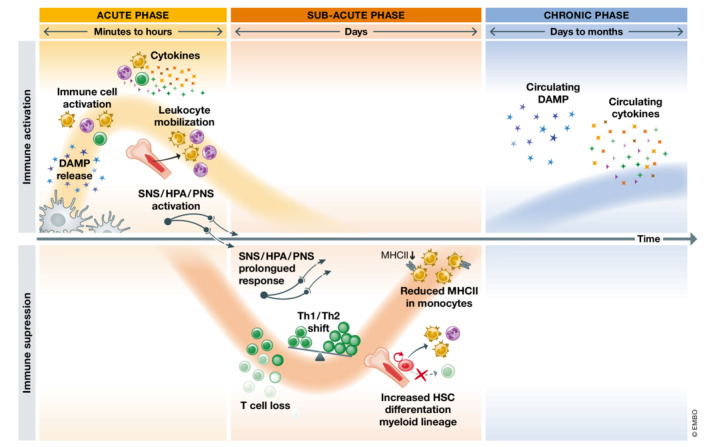
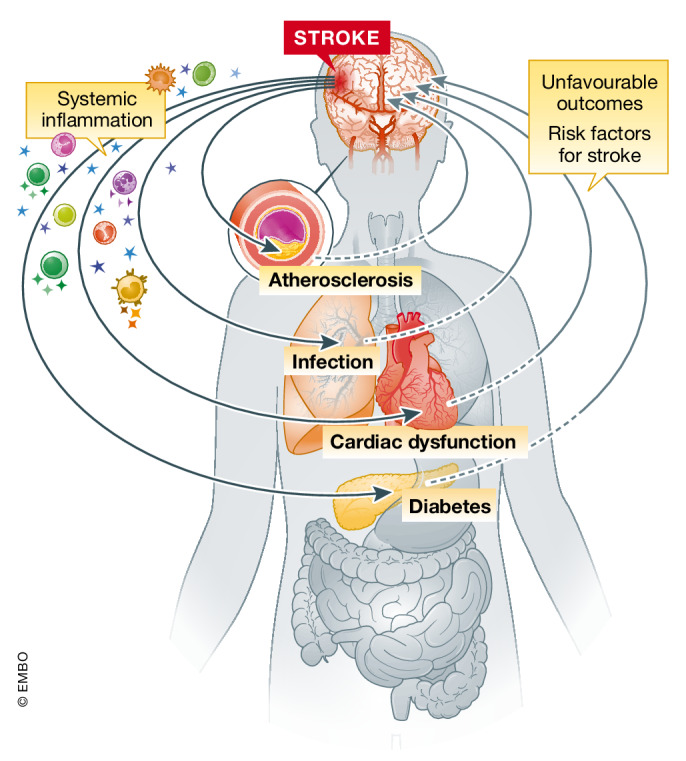
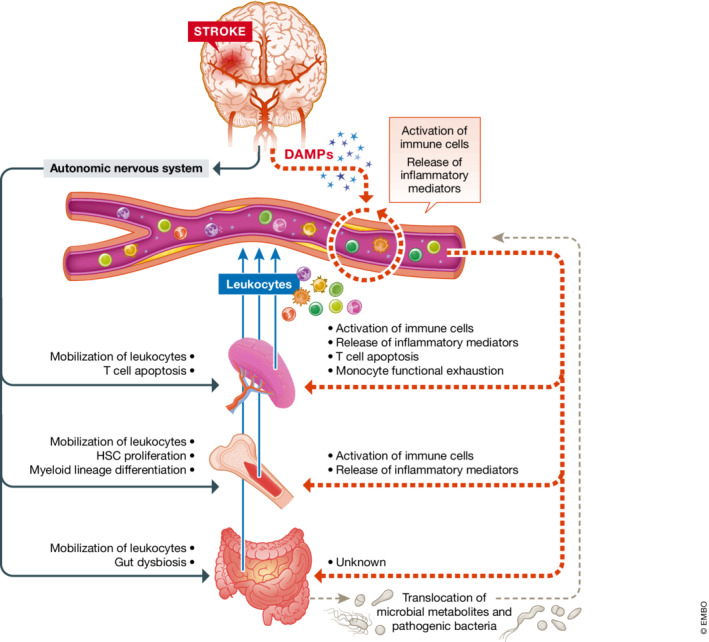
Immunological mechanisms have come into the focus of current translational stroke research, and the modulation of neuroinflammatory pathways has been identified as a promising therapeutic approach to protect the ischemic brain. However, stroke not only induces a local neuroinflammatory response but also has a profound impact on systemic immunity. In this review, we will summarize the consequences of ischemic stroke on systemic immunity at all stages of the disease, from onset to long-term outcome, and discuss underlying mechanisms of systemic brain-immune communication. Furthermore, since stroke commonly occurs in patients with multiple comorbidities, we will also overview the current understanding of the potential role of systemic immunity in common stroke-related comorbidities, such as cardiac dysfunction, atherosclerosis, diabetes, and infections. Finally, we will highlight how targeting systemic immunity after stroke could improve long-term outcomes and alleviate comorbidities of stroke patients.
免疫机制已成为当前转化性中风研究的焦点,神经炎症途径的调节已被确定为保护缺血性大脑的一种有前途的治疗方法。然而,中风不仅会引起局部的神经炎症反应,还会对全身免疫系统产生深远的影响。在这篇综述中,我们将总结从发病到长期预后的各个阶段,缺血性中风对全身免疫系统的影响,并讨论全身脑免疫通讯的潜在机制。此外,由于中风常发生在患有多种合并症的患者中,我们还将概述目前对全身免疫在常见中风相关合并症(如心功能障碍、动脉粥样硬化、糖尿病和感染)中潜在作用的理解。最后,我们将强调中风后靶向全身免疫如何改善中风患者的长期预后并减轻合并症。