Magee-Womens Research Institute, UPMC Hillman Cancer Center, Pittsburgh, Pennsylvania, USA.
Division of Gynecologic Oncology, Department of Obstetrics, Gynecology and Reproductive Sciences, Magee-Womens Hospital, Pittsburgh, Pennsylvania, USA.
JCI Insight. 2022 Sep 22;7(18):e160573. doi: 10.1172/jci.insight.160573.
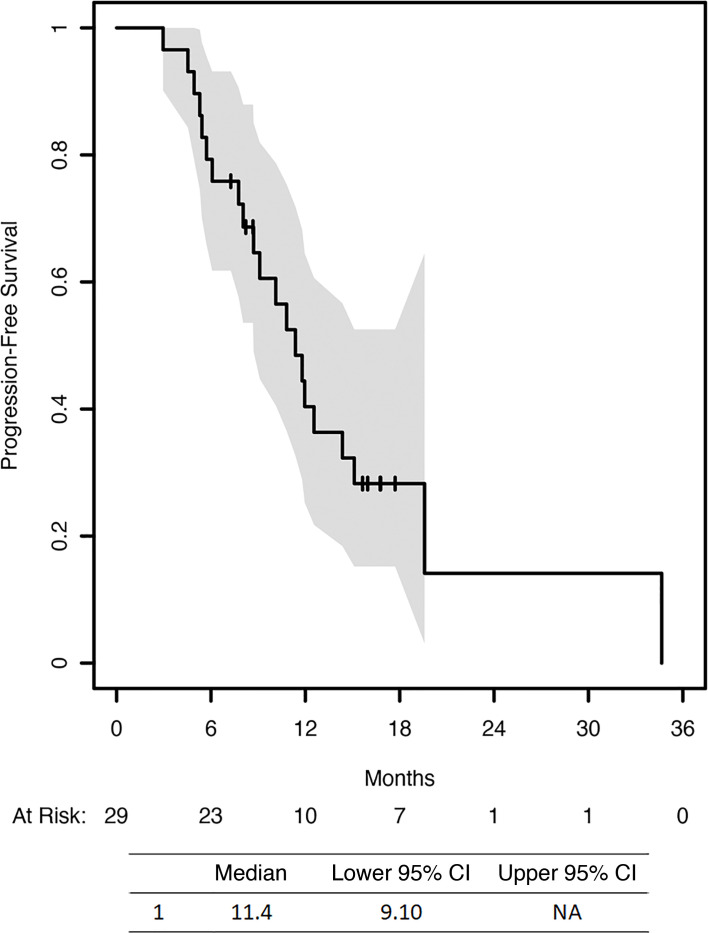
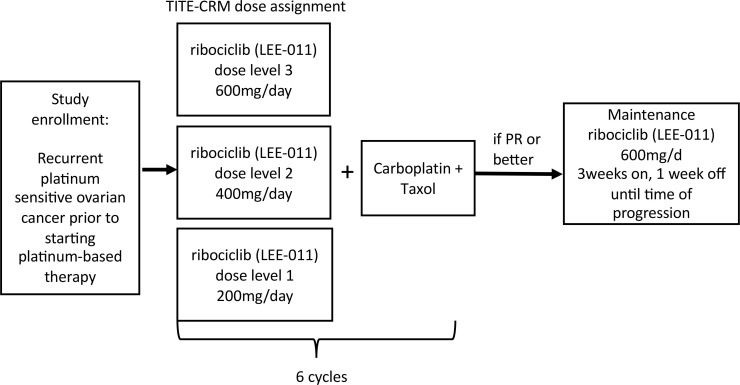
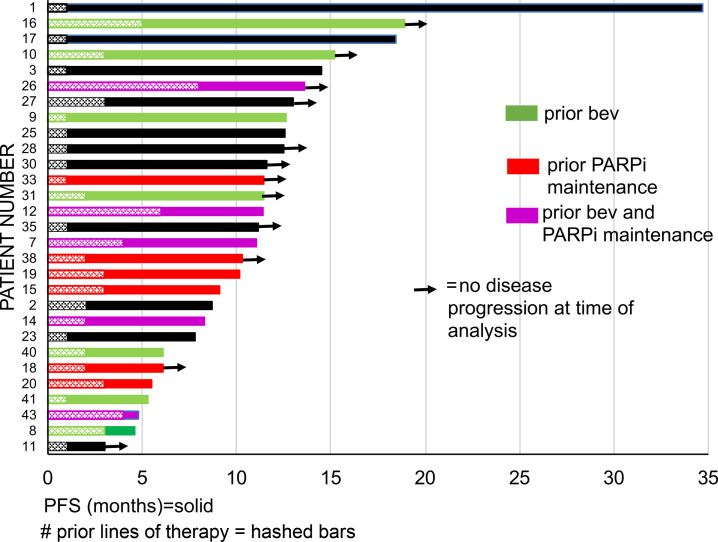
BACKGROUNDNew therapeutic combinations to improve outcomes of patients with ovarian cancer are clearly needed. Preclinical studies with ribociclib (LEE-011), a CDK4/6 cell cycle checkpoint inhibitor, demonstrate a synergistic effect with platinum chemotherapy and efficacy as a maintenance therapy after chemotherapy. We tested the safety and initial efficacy of ribociclib in combination with platinum-based chemotherapy in recurrent ovarian cancer.METHODSThis phase I trial combined weekly carboplatin and paclitaxel chemotherapy with ribociclib, followed by ribociclib maintenance in patients with recurrent platinum-sensitive ovarian cancer. Primary objectives were safety and maximum tolerated dose (MTD) of ribociclib when given with platinum and taxane chemotherapy. Secondary endpoints were response rate (RR) and progression-free survival (PFS).RESULTSThirty-five patients were enrolled. Patients had a mean of 2.5 prior lines of chemotherapy, and 51% received prior maintenance therapy with poly(ADP-ribose) polymerase inhibitors and/or bevacizumab. The MTD was 400 mg. The most common adverse events included anemia (82.9%), neutropenia (82.9%), fatigue (82.9%), and nausea (77.1%). The overall RR was 79.3%, with a stable disease rate of 18%, resulting in a clinical benefit rate of 96.6%. Median PFS was 11.4 months. RR and PFS did not differ based on the number of lines of prior chemotherapy or prior maintenance therapy.CONCLUSIONThis work demonstrates that the combination of ribociclib with chemotherapy in ovarian cancer is feasible and safe. With a clinical benefit rate of 97%, this work provides encouraging evidence of clinical efficacy in patients with recurrent platinum-sensitive disease.TRIAL REGISTRATIONClinicalTrials.gov NCT03056833.FUNDINGThis investigator-initiated trial was supported by Novartis, which provided drugs and funds for trial execution.
显然需要新的治疗组合来改善卵巢癌患者的预后。CDK4/6 细胞周期检查点抑制剂利波西利(LEE-011)的临床前研究表明,其与铂类化疗联合具有协同作用,并在化疗后作为维持治疗有效。我们检测了利波西利联合铂类化疗治疗复发性卵巢癌的安全性和初步疗效。
这项 I 期试验将每周卡铂和紫杉醇化疗与利波西利联合应用,然后在铂类敏感复发性卵巢癌患者中进行利波西利维持治疗。主要目的是确定利波西利与铂类和紫杉烷化疗联合应用的安全性和最大耐受剂量(MTD)。次要终点是缓解率(RR)和无进展生存期(PFS)。
共纳入 35 例患者。患者平均接受了 2.5 线化疗,51%的患者曾接受过聚 ADP-核糖聚合酶抑制剂和/或贝伐单抗的维持治疗。MTD 为 400mg。最常见的不良反应包括贫血(82.9%)、中性粒细胞减少(82.9%)、疲劳(82.9%)和恶心(77.1%)。总 RR 为 79.3%,疾病稳定率为 18%,临床获益率为 96.6%。中位 PFS 为 11.4 个月。RR 和 PFS 与既往化疗线数或既往维持治疗无关。
本研究表明,利波西利联合化疗治疗卵巢癌是可行且安全的。在复发性铂类敏感疾病患者中,该联合方案具有 97%的临床获益率,为其疗效提供了令人鼓舞的证据。
ClinicalTrials.gov NCT03056833。
本研究为研究者发起的试验,由诺华公司提供药物和试验执行资金。