Dept. of Neuropathology, Section for Translational Epilepsy Research, University Hospital Bonn, Bonn, Germany.
Inst. for Experimental Epileptology and Cognition Research, University Hospital Bonn, Bonn, Germany.
PLoS One. 2022 Aug 16;17(8):e0271995. doi: 10.1371/journal.pone.0271995. eCollection 2022.
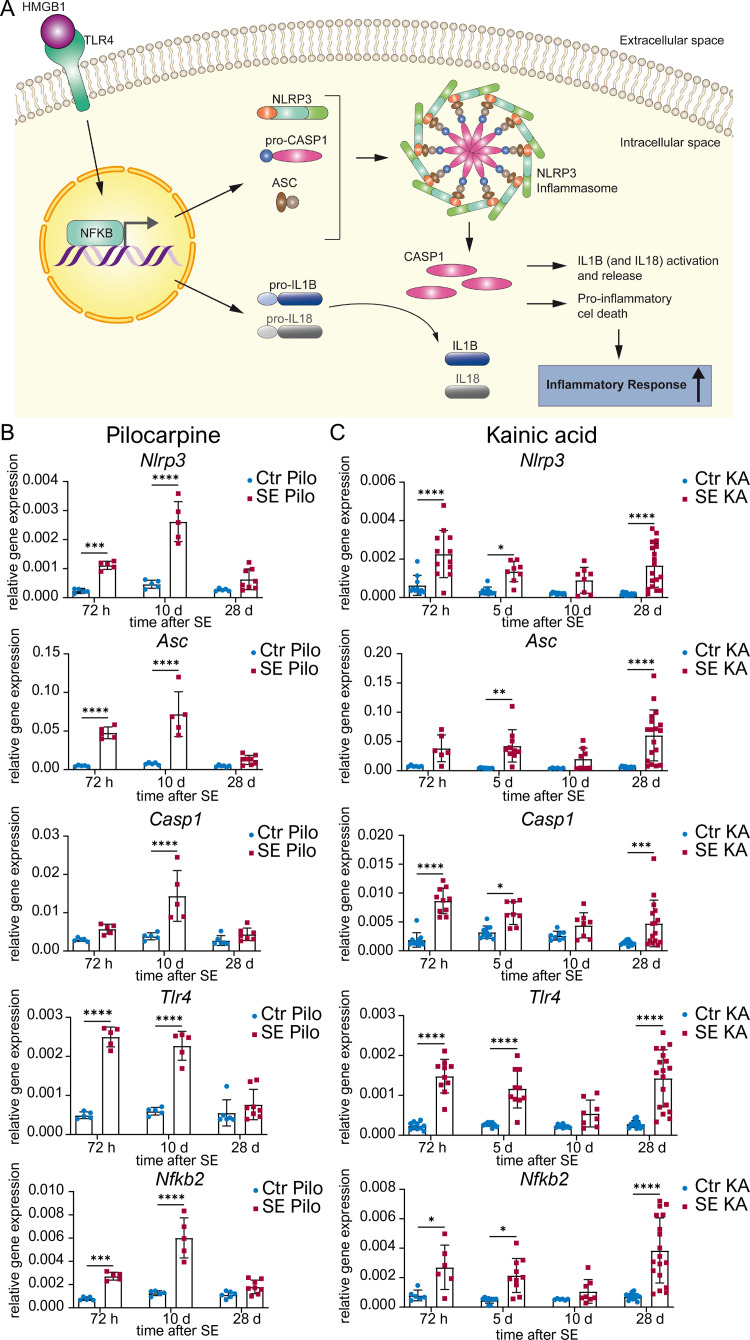
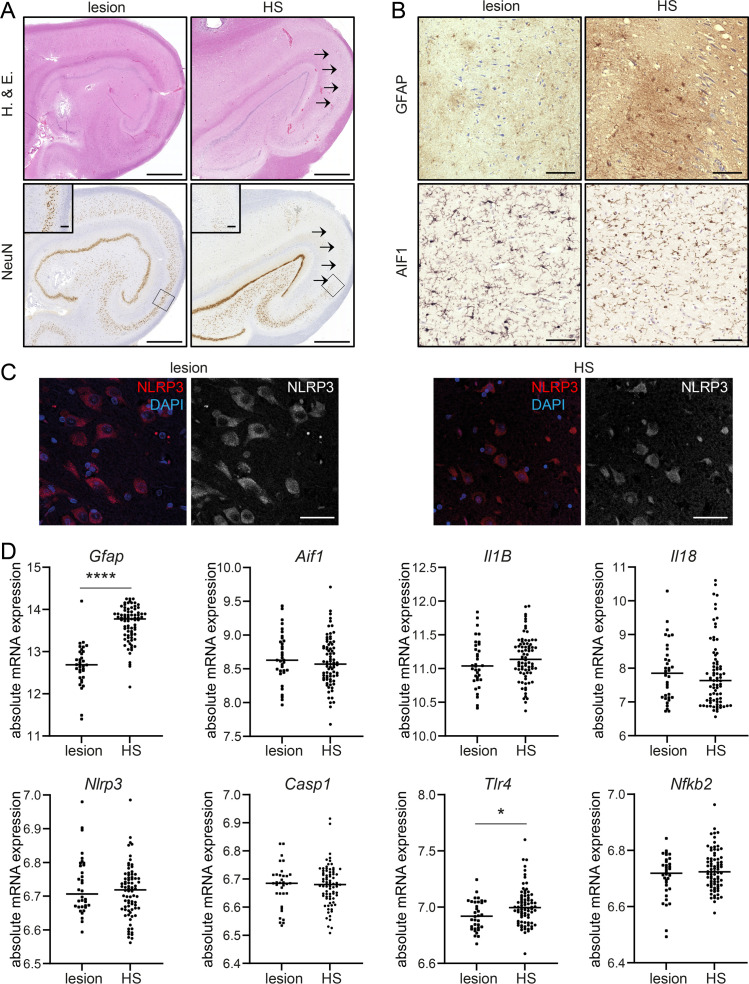
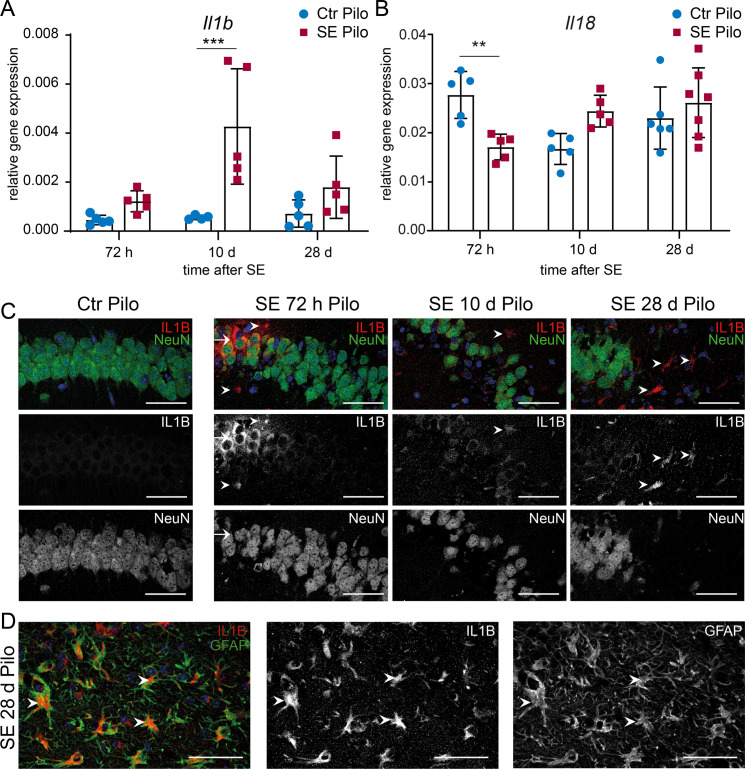
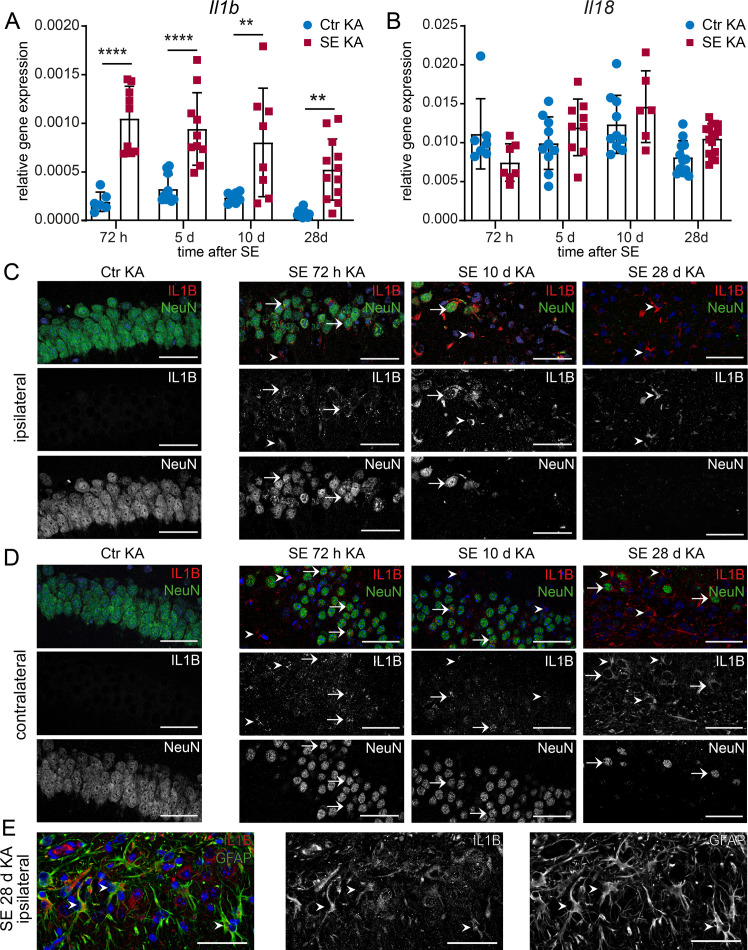
Inflammation of brain structures, in particular the hippocampal formation, can induce neuronal degeneration and be associated with increased excitability manifesting as propensity for repetitive seizures. An increase in the abundance of individual proinflammatory molecules including interleukin 1 beta has been observed in brain tissue samples of patients with pharmacoresistant temporal lobe epilepsy (TLE) and corresponding animal models. The NLRP3-inflammasome, a cytosolic protein complex, acts as a key regulator in proinflammatory innate immune signalling. Upon activation, it leads to the release of interleukin 1 beta and inflammation-mediated neurodegeneration. Transient brain insults, like status epilepticus (SE), can render hippocampi chronically hyperexcitable and induce segmental neurodegeneration. The underlying mechanisms are referred to as epileptogenesis. Here, we have tested the hypothesis that distinct NLRP3-dependent transcript and protein signalling dynamics are induced by SE and whether they differ between two classical SE models. We further correlated the association of NLRP3-related transcript abundance with convulsive activity in human TLE hippocampi of patients with and without associated neurodegenerative damage.
Hippocampal mRNA- and protein-expression of NLRP3 and associated signalling molecules were analysed longitudinally in pilocarpine- and kainic acid-induced SE TLE mouse models. Complementarily, we studied NLRP3 inflammasome-associated transcript patterns in epileptogenic hippocampi with different damage patterns of pharmacoresistant TLE patients that had undergone epilepsy surgery for seizure relief.
Pilocarpine- and kainic acid-induced SE elicit distinct hippocampal Nlrp3-associated molecular signalling. Transcriptional activation of NLRP3 pathway elements is associated with seizure activity but independent of the particular neuronal damage phenotype in KA-induced and in human TLE hippocampi.
These data suggest highly dynamic inflammasome signalling in SE-induced TLE and highlight a vicious cycle associated with seizure activity. Our results provide promising perspectives for the inflammasome signalling pathway as a target for anti-epileptogenic and -convulsive therapeutic strategies. The latter may even applicable to a particularly broad spectrum of TLE patients with currently pharmacoresistant disease.
脑结构的炎症,特别是海马体结构的炎症,可导致神经元变性,并与兴奋性增加相关,表现为易反复发作性癫痫。在耐药性颞叶癫痫(TLE)患者的脑组织样本和相应的动物模型中,观察到包括白细胞介素 1β在内的个别促炎分子的丰度增加。NLRP3 炎性小体是一种胞质蛋白复合物,作为促炎先天免疫信号的关键调节因子发挥作用。激活后,它会导致白细胞介素 1β的释放和炎症介导的神经退行性变。短暂的脑损伤,如癫痫持续状态(SE),可使海马长期过度兴奋并诱导节段性神经退行性变。其潜在机制被称为癫痫发生。在这里,我们测试了以下假设:SE 会诱导不同的 NLRP3 依赖性转录和蛋白信号转导动态,并且它们在两种经典 SE 模型之间是否存在差异。我们还将 NLRP3 相关转录物丰度的相关性与癫痫患者和无相关神经退行性损伤的患者 TLE 海马中的惊厥活动相关联。
纵向分析匹罗卡品和海人酸诱导的 SE TLE 小鼠模型中海马 NLRP3 和相关信号分子的 mRNA 和蛋白表达。此外,我们研究了癫痫发作缓解手术后接受癫痫手术的耐药性 TLE 患者具有不同损伤模式的致痫海马中 NLRP3 炎性小体相关转录模式。
匹罗卡品和海人酸诱导的 SE 引起不同的海马 NLRP3 相关分子信号。NLRP3 通路元件的转录激活与癫痫发作活动相关,但与 KA 诱导的和人类 TLE 海马中的特定神经元损伤表型无关。
这些数据表明 SE 诱导的 TLE 中存在高度动态的炎性小体信号,并强调了与癫痫发作活动相关的恶性循环。我们的结果为炎性小体信号通路作为抗癫痫发生和抗惊厥治疗策略的靶点提供了有希望的前景。这些方法甚至可能适用于目前耐药性疾病的广泛 TLE 患者。