Texas Tech University Health Sciences Center, Dept of Cell Physiology and Molecular Biophysics, Lubbock, TX, USA.
Texas Tech University, Dept. of Biological Sciences, Lubbock, TX, USA.
Commun Biol. 2022 Aug 16;5(1):825. doi: 10.1038/s42003-022-03755-5.
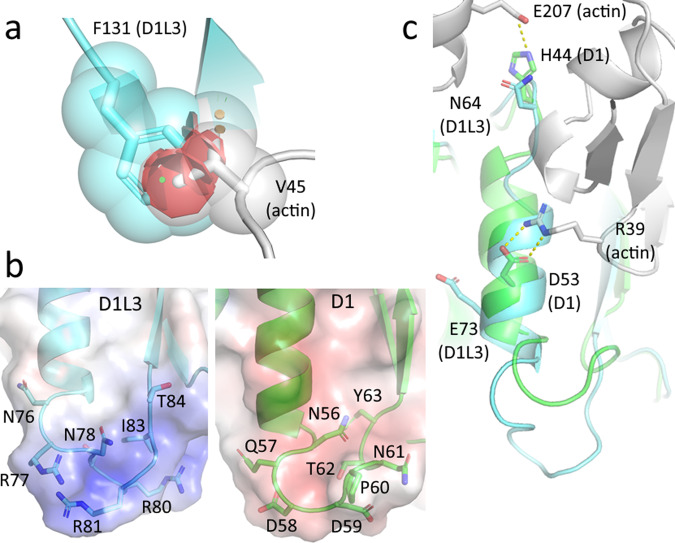
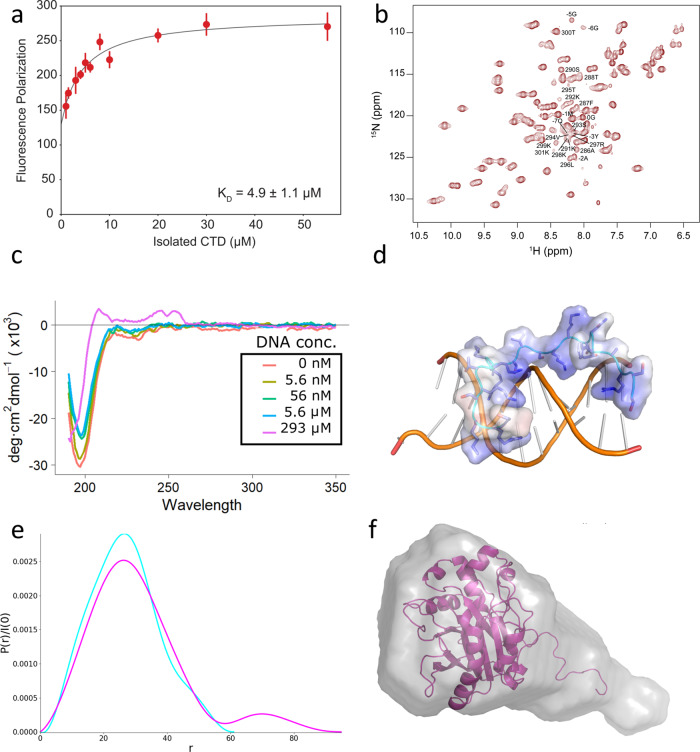
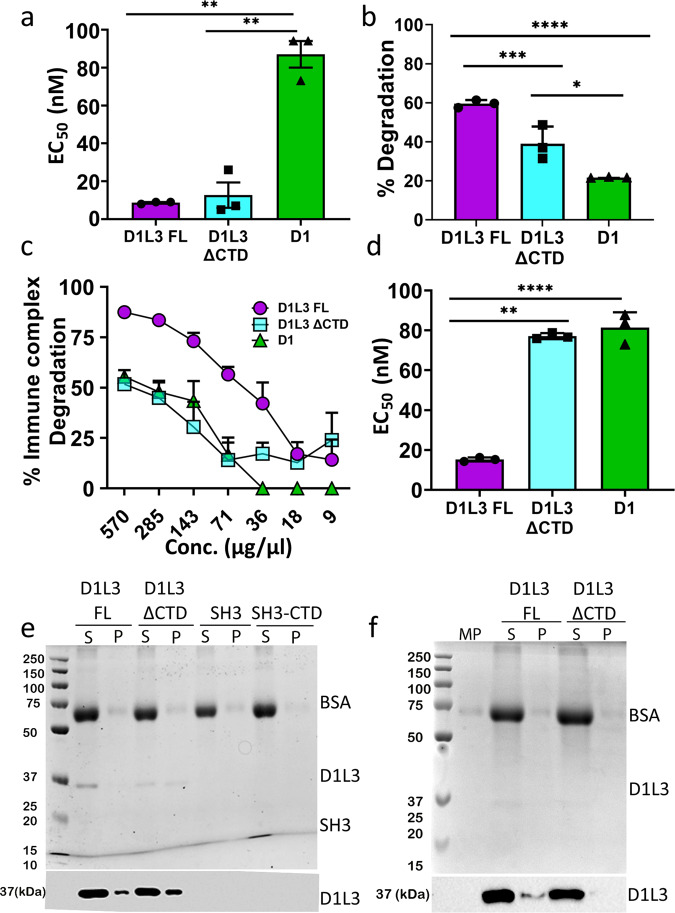
Autoimmunity develops when extracellular DNA released from dying cells is not cleared from serum. While serum DNA is primarily digested by Dnase1 and Dnase1L3, Dnase1 cannot rescue autoimmunity arising from Dnase1L3 deficiencies. Dnase1L3 uniquely degrades antigenic forms of cell-free DNA, including DNA complexed with lipids and proteins. The distinct activity of Dnase1L3 relies on its unique C-terminal Domain (CTD), but the mechanism is unknown. We used multiple biophysical techniques and functional assays to study the interplay between the core catalytic domain and the CTD. While the core domain resembles Dnase1, there are key structural differences between the two enzymes. First, Dnase1L3 is not inhibited by actin due to multiple differences in the actin recognition site. Second, the CTD augments the ability of the core to bind DNA, thereby facilitating the degradation of complexed DNA. Together, these structural insights will inform the development of Dnase1L3-based therapies for autoimmunity.
当来自死亡细胞的细胞外 DNA 未从血清中清除时,自身免疫就会发展。虽然血清 DNA 主要被 Dnase1 和 Dnase1L3 消化,但 Dnase1 不能挽救由 Dnase1L3 缺乏引起的自身免疫。Dnase1L3 独特地降解游离 DNA 的抗原形式,包括与脂质和蛋白质结合的 DNA。Dnase1L3 的独特活性依赖于其独特的 C 末端结构域(CTD),但机制尚不清楚。我们使用多种生物物理技术和功能测定来研究核心催化结构域和 CTD 之间的相互作用。虽然核心结构域类似于 Dnase1,但这两种酶之间存在关键的结构差异。首先,由于肌动蛋白识别位点的多种差异,Dnase1L3 不受肌动蛋白的抑制。其次,CTD 增强了核心与 DNA 结合的能力,从而促进了复合物 DNA 的降解。这些结构上的见解将为基于 Dnase1L3 的自身免疫疗法的发展提供信息。