Laboratoire de Génomique Biomédicale Et Oncogénétique (LR16IPT05), Institut Pasteur de Tunis, Tunis, Tunisia.
Université Tunis El Manar, Tunis, Tunisia.
Sci Rep. 2022 Aug 16;12(1):13854. doi: 10.1038/s41598-022-17928-z.
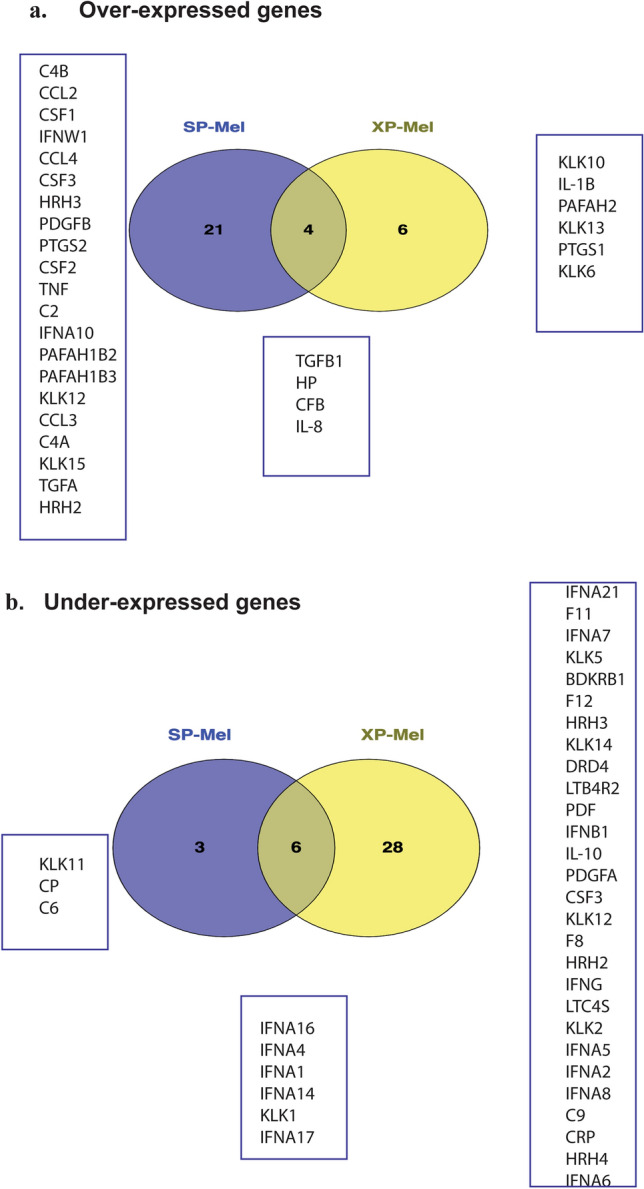
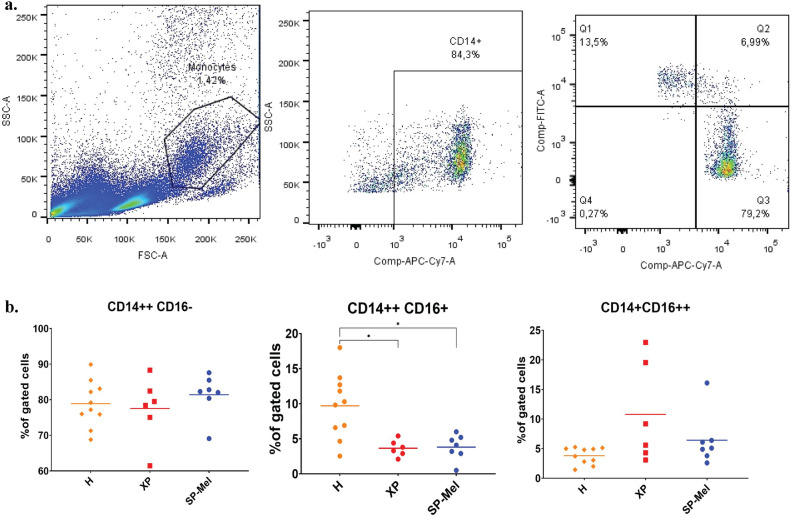
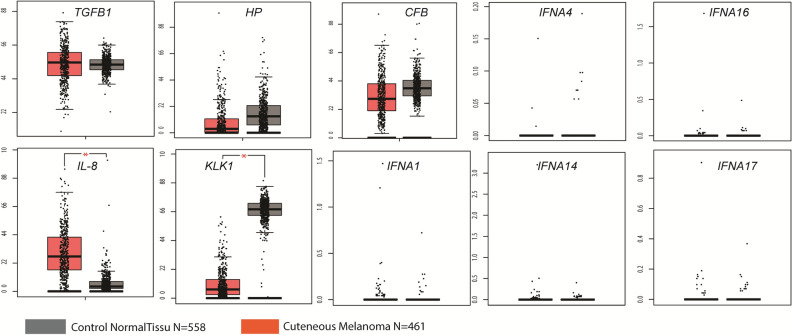
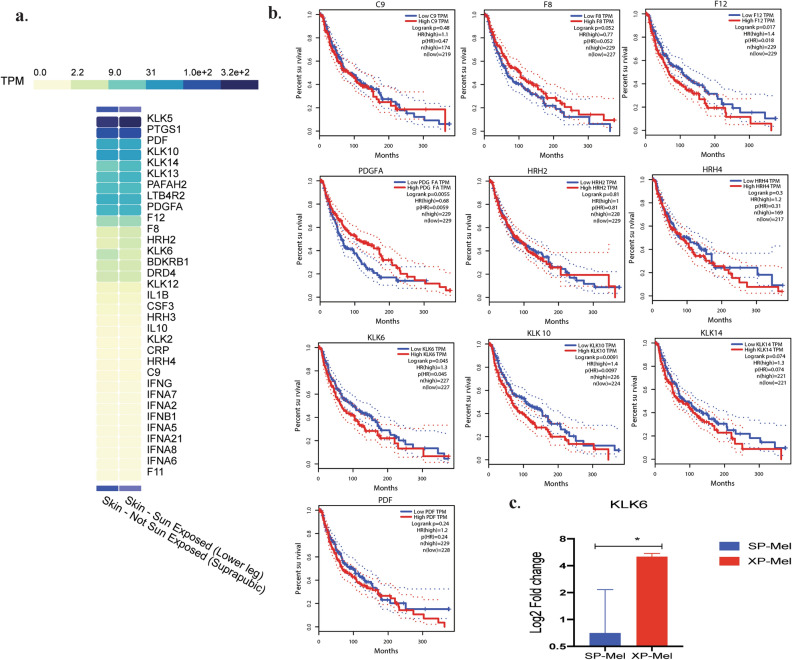
Xeroderma pigmentosum (XP) is a DNA repair disease that predisposes to early skin cancers as cutaneous melanoma. Melanoma microenvironment contains inflammatory mediators, which would be interesting biomarkers for the prognosis or for the identification of novel therapeutic targets. We used a PCR array to evaluate the transcriptional pattern of 84 inflammatory genes in melanoma tumors obtained from XP patients (XP-Mel) and in sporadic melanoma (SP-Mel) compared to healthy skin. Commonly expressed inflammatory genes were further explored via GTEx and GEPIA databases. The differentially expressed inflammatory genes in XP were compared to their expression in skin exposed to UVs, and evaluated on the basis of the overall survival outcomes of patients with melanoma. Monocyte subsets of patients with SP-Mel, XP and healthy donors were also assessed. PCR array data revealed that 34 inflammatory genes were under-expressed in XP-Mel compared to SP-Mel. Differentially expressed genes that were common in XP-Mel and SP-Mel were correlated with the transcriptomic datasets from GEPIA and GTEx and highlighted the implication of KLK1 and IL8 in the tumorigenesis. We showed also that in XP-Mel tumors, there was an overexpression of KLK6 and KLK10 genes, which seems to be associated with a bad survival rate. As for the innate immunity, we observed a decrease of intermediate monocytes in patients with SP-Mel and in XP. We highlight an alteration in the immune response in XP patients. We identified candidate biomarkers involved in the tumorigenesis, and in the survival of patients with melanoma. Intermediate monocyte's in patients at risk could be a prognostic biomarker for melanoma outcome.
着色性干皮病(XP)是一种 DNA 修复疾病,易导致皮肤黑色素瘤等早期皮肤癌。黑色素瘤微环境中含有炎症介质,这些介质可能成为预后或识别新治疗靶点的有趣生物标志物。我们使用 PCR 阵列评估了从 XP 患者(XP-Mel)和散发性黑色素瘤(SP-Mel)获得的黑色素瘤肿瘤中 84 个炎症基因的转录模式,并与健康皮肤进行了比较。通过 GTEx 和 GEPIA 数据库进一步探讨了常见表达的炎症基因。比较了 XP 中差异表达的炎症基因与暴露于 UV 下的皮肤的表达,并根据黑色素瘤患者的总生存结果进行了评估。还评估了 SP-Mel、XP 和健康供体患者的单核细胞亚群。PCR 阵列数据显示,与 SP-Mel 相比,34 个炎症基因在 XP-Mel 中表达下调。在 XP-Mel 和 SP-Mel 中共同差异表达的基因与 GEPIA 和 GTEx 的转录组数据集相关,并强调了 KLK1 和 IL8 在肿瘤发生中的作用。我们还表明,在 XP-Mel 肿瘤中,KLK6 和 KLK10 基因过度表达,这似乎与不良生存率相关。至于先天免疫,我们观察到 SP-Mel 和 XP 患者中间单核细胞减少。我们强调了 XP 患者免疫反应的改变。我们确定了参与肿瘤发生和黑色素瘤患者生存的候选生物标志物。处于风险中的患者中间单核细胞可能是黑色素瘤预后的预后生物标志物。