Social Cognition in Human Robot Interaction, Center for Human Technologies, Italian Institute of Technology, Via Enrico Melen 83, 16152, Genova, Italy.
Sci Rep. 2022 Aug 16;12(1):13845. doi: 10.1038/s41598-022-18151-6.
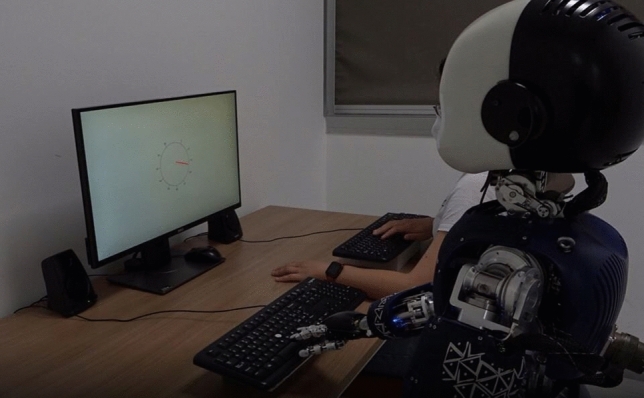
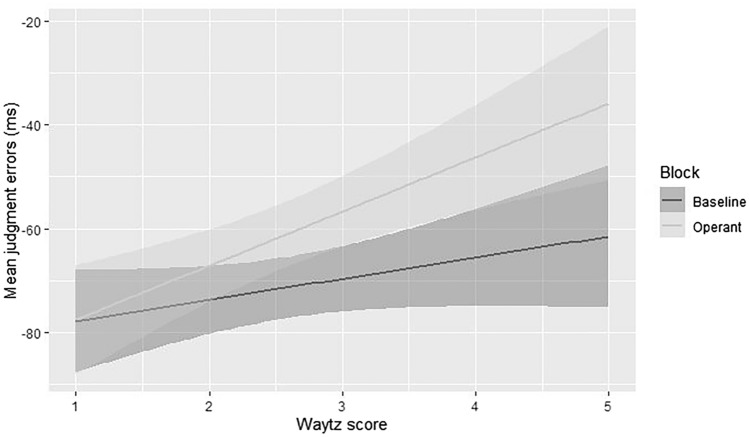
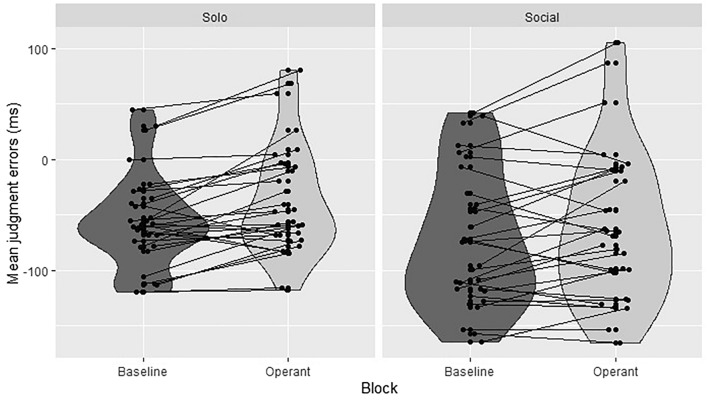
Sense of Agency (SoA) is the feeling of being in control of one's actions and their outcomes. In a social context, people can experience a "vicarious" SoA over another human's actions; however, it is still controversial whether the same occurs in Human-Robot Interaction (HRI). The present study aimed at understanding whether humanoid robots may elicit vicarious SoA in humans, and whether the emergence of this phenomenon depends on the attribution of intentionality towards robots. We asked adult participants to perform an Intentional Binding (IB) task alone and with the humanoid iCub robot, reporting the time of occurrence of both self- and iCub-generated actions. Before the experiment, participants' degree of attribution of intentionality towards robots was assessed. Results showed that participants experienced vicarious SoA over iCub-generated actions. Moreover, intentionality attribution positively predicted the magnitude of vicarious SoA. In conclusion, our results highlight the importance of factors such as human-likeness and attribution of intentionality for the emergence of vicarious SoA towards robots.
主体感(SoA)是指个体对自身行为及其结果的控制感。在社交情境中,人们可以对他人的行为产生一种“替代性”的主体感;然而,在人机交互(HRI)中是否会发生同样的情况仍然存在争议。本研究旨在探讨人形机器人是否会在人类中引发替代性主体感,以及这种现象的出现是否取决于对机器人的意向性归因。我们要求成年参与者单独和人形机器人 iCub 一起完成意图绑定(IB)任务,报告自己和 iCub 产生的动作的发生时间。在实验之前,评估了参与者对机器人的意向性归因程度。结果表明,参与者对 iCub 产生的动作产生了替代性主体感。此外,意向性归因正向预测了替代性主体感的程度。总之,我们的研究结果强调了类似人类的特征和对机器人的意向性归因等因素对机器人的替代性主体感的出现的重要性。