Magalhães Thaís Rodrigues, Fernandes Daniel César Magalhães, Gomide Roberto, Nakano Hideki, Afiune André Vespasiano, Silva Rômulo Mendes, Moreira Paulo Ricardo Alves, de Sousa Lima Rosa Tanmirys
Hospital Geral de Goiânia Dr. Alberto Rassi - HGG, Goiânia, GO, Brasil.
J Vasc Bras. 2022 Jul 29;21:e20220016. doi: 10.1590/1677-5449.202200161. eCollection 2022.
Peripheral artery disease (PAD) has high prevalence and is associated with high risk of cardiovascular events. Surgical or endovascular intervention is necessary in chronic limb-threatening ischemia.
To evaluate the distribution of open and endovascular revascularizations in different regions of Brazil, analyzing the health system costs and mortality related to these procedures.
A descriptive, cross-sectional, observational, epidemiological study was carried out to evaluate open and endovascular surgeries performed on the SUS public healthcare system in Brazil, from 2010 to 2020. Data were collected from the SUS Department of Informatics (Datasus).
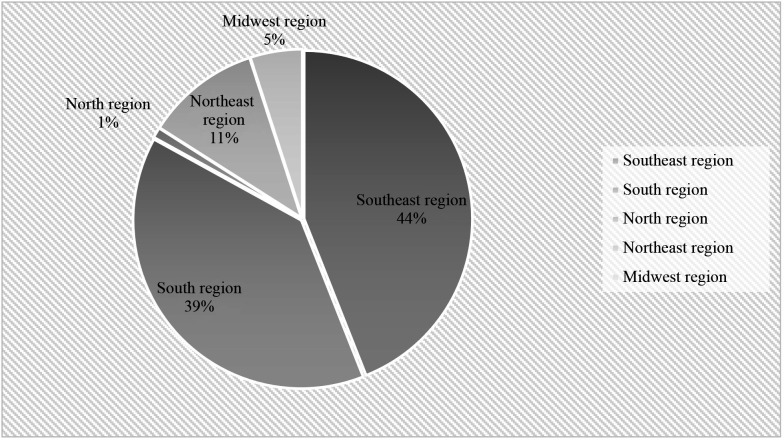
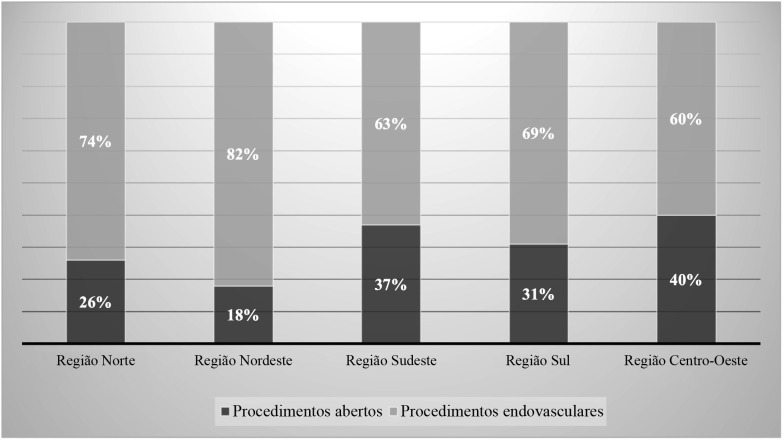
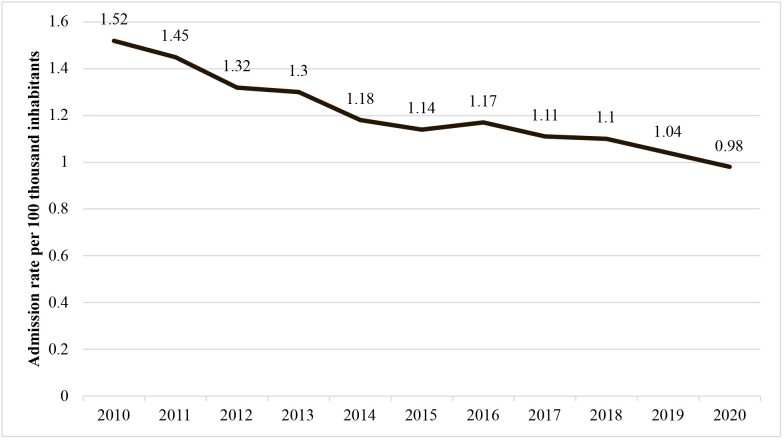
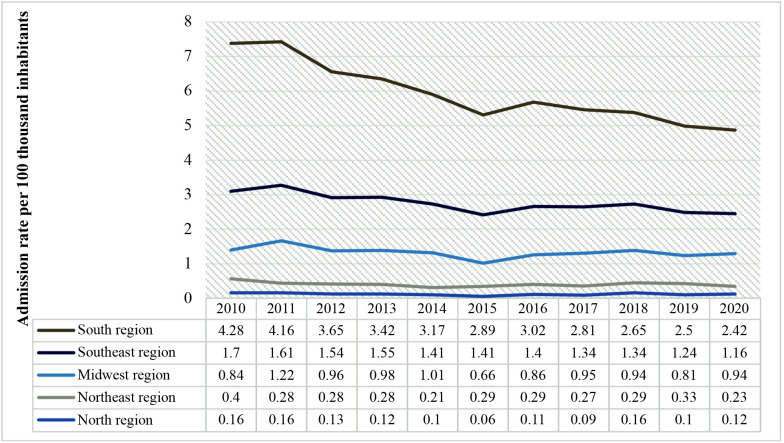
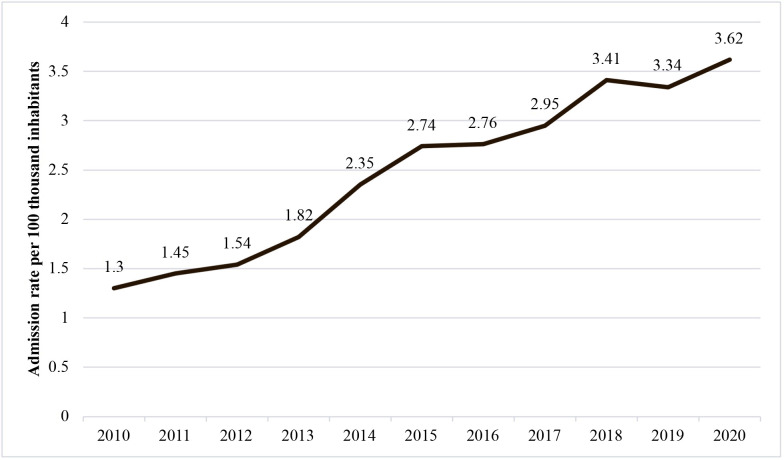
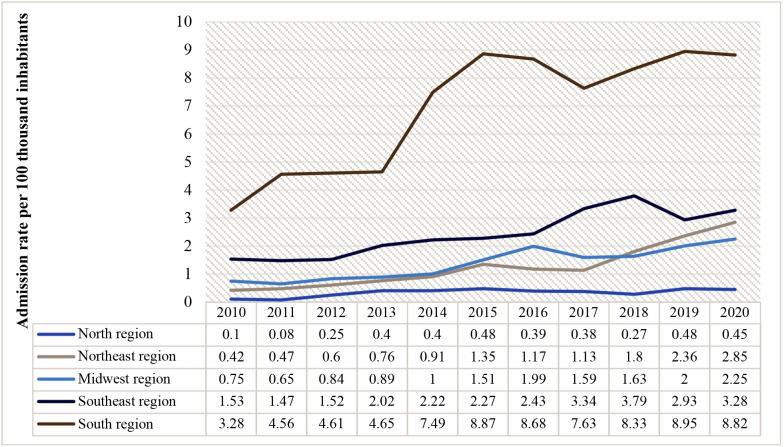
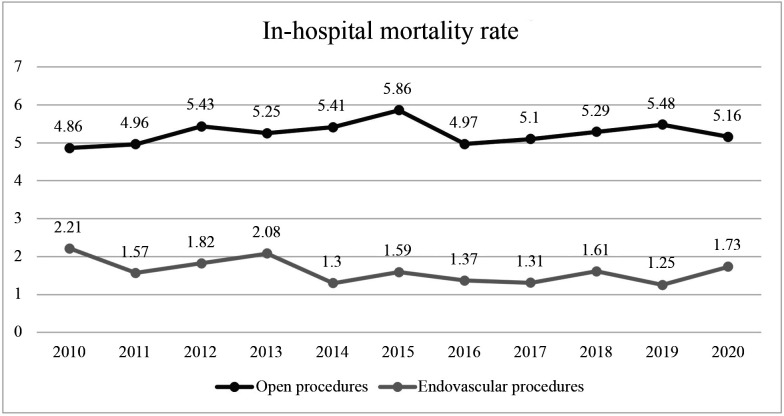
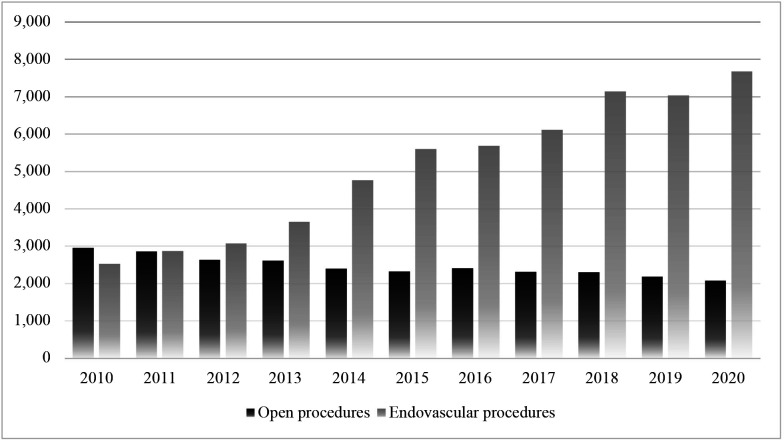
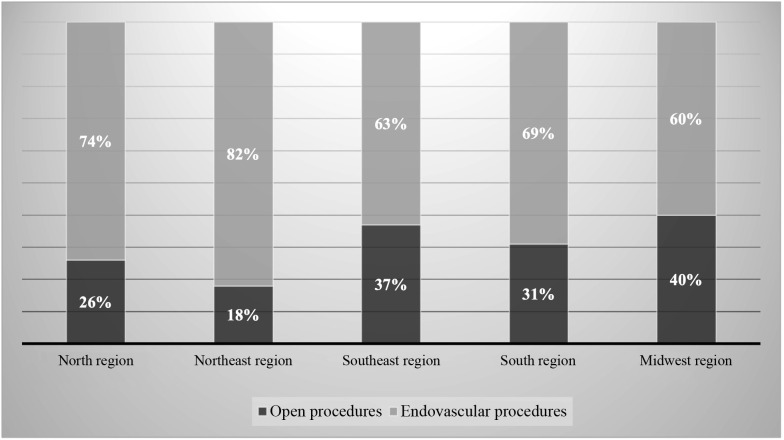
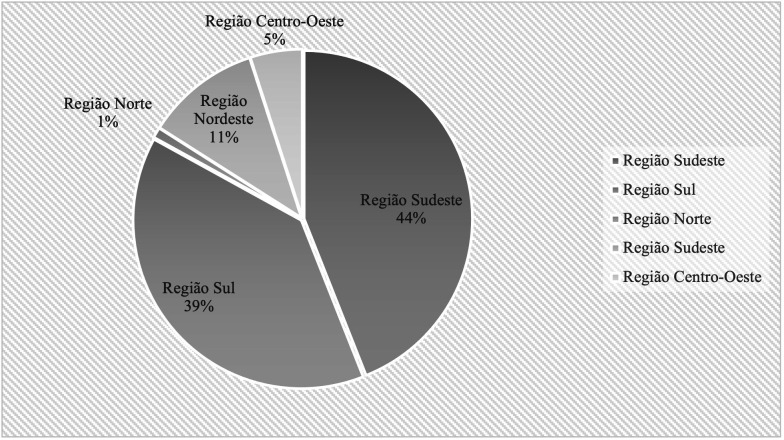
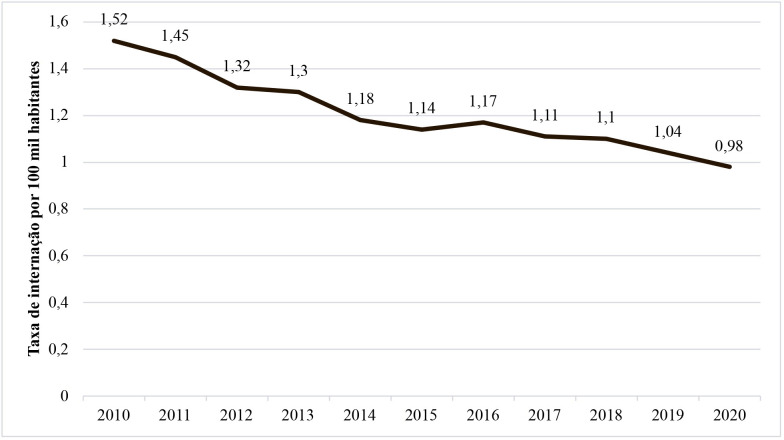
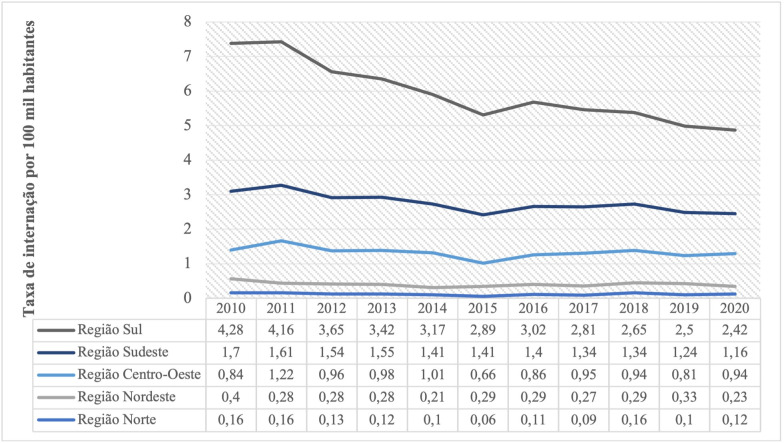
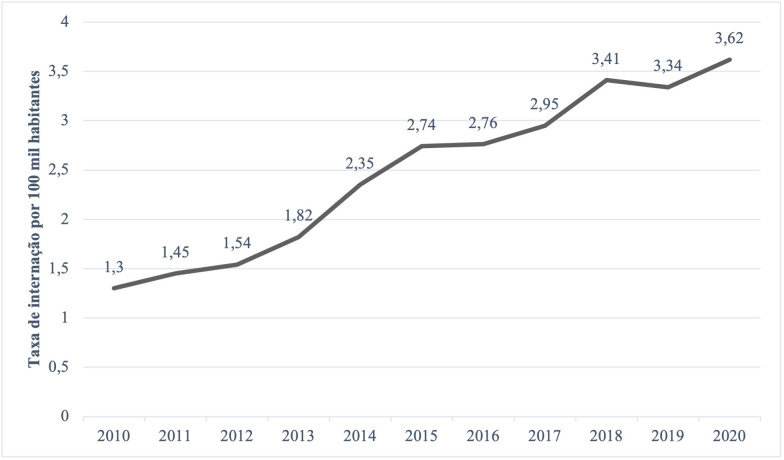
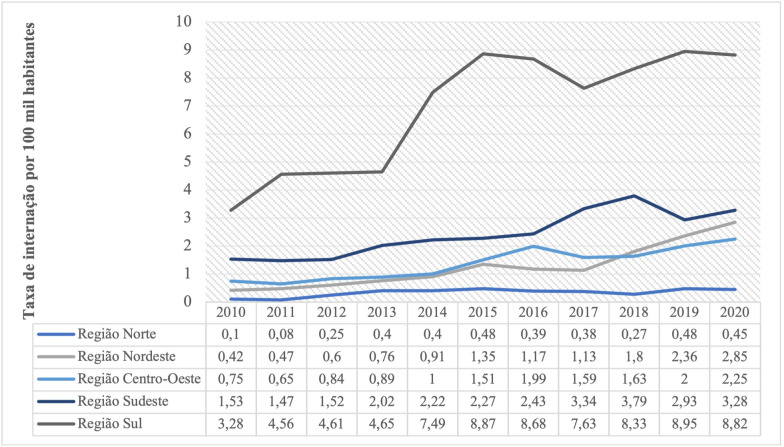
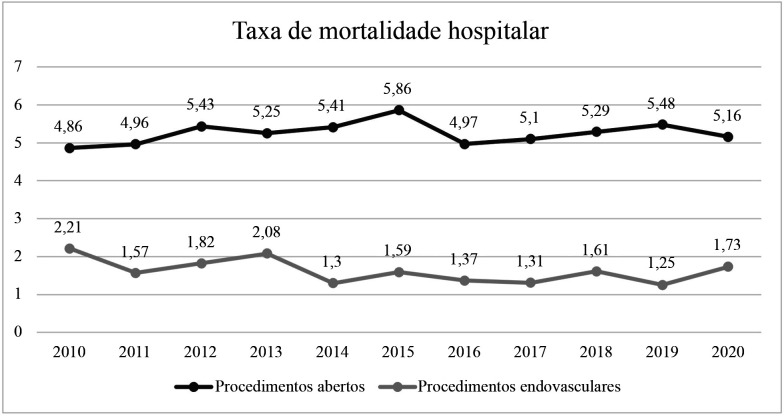
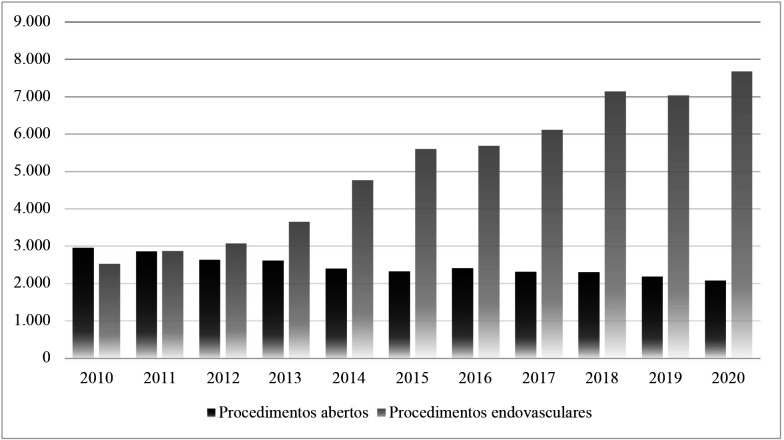
Over the period analyzed, 83,218 admissions for open and endovascular surgeries were registered, with a total cost of R$ 333,989,523.17. There were more hospital admissions for percutaneous procedures (56,132) than for conventional surgery (27,086). Most of the procedures (83%) were performed in the country's Southeast and South regions, while the North region had the lowest number of procedures. Over the period evaluated, there was a decreasing trend for open procedures and an increasing trend for endovascular procedures. The average hospital stay was shorter for endovascular procedures (5.3 days) than for open surgery (10.2 days). The analysis of mortality related to these procedures revealed a higher rate of in-hospital mortality associated with open revascularization than with endovascular (5.24% vs. 1.56%).
Endovascular techniques constituted the primary approach for revascularization treatment in critical limb-threatening ischemia, with a lower in-hospital mortality rate and shorter hospital stay when compared to open surgeries.
外周动脉疾病(PAD)患病率高,且与心血管事件的高风险相关。对于慢性肢体威胁性缺血,手术或血管内介入治疗是必要的。
评估巴西不同地区开放和血管内血运重建术的分布情况,分析与这些手术相关的卫生系统成本和死亡率。
开展了一项描述性、横断面、观察性流行病学研究,以评估2010年至2020年在巴西统一卫生系统(SUS)公共医疗系统中进行的开放和血管内手术。数据从SUS信息部(Datasus)收集。
在分析的时间段内,登记了83218例开放和血管内手术入院病例,总成本为333989523.17雷亚尔。经皮手术的住院病例数(56132例)多于传统手术(27086例)。大多数手术(83%)在该国东南部和南部地区进行,而北部地区的手术数量最少。在评估期间,开放手术呈下降趋势,血管内手术呈上升趋势。血管内手术的平均住院时间(5.3天)比开放手术(10.2天)短。对与这些手术相关的死亡率分析显示,开放血运重建术的院内死亡率高于血管内手术(5.24%对1.56%)。
血管内技术是严重肢体威胁性缺血血运重建治疗的主要方法,与开放手术相比,院内死亡率更低,住院时间更短。