Department of Ecology, Evolution, and Marine Biology, University of California, Santa Barbara, Santa Barbara, California, USA.
Biology Department, Woods Hole Oceanographic Institution, Woods Hole, Massachusetts, USA.
J Eukaryot Microbiol. 2023 Jan;70(1):e12940. doi: 10.1111/jeu.12940. Epub 2022 Sep 1.
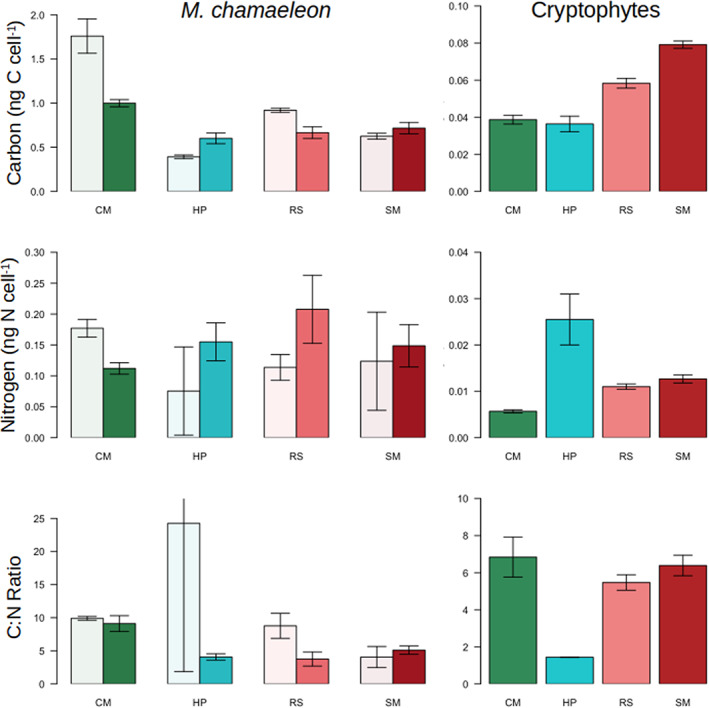
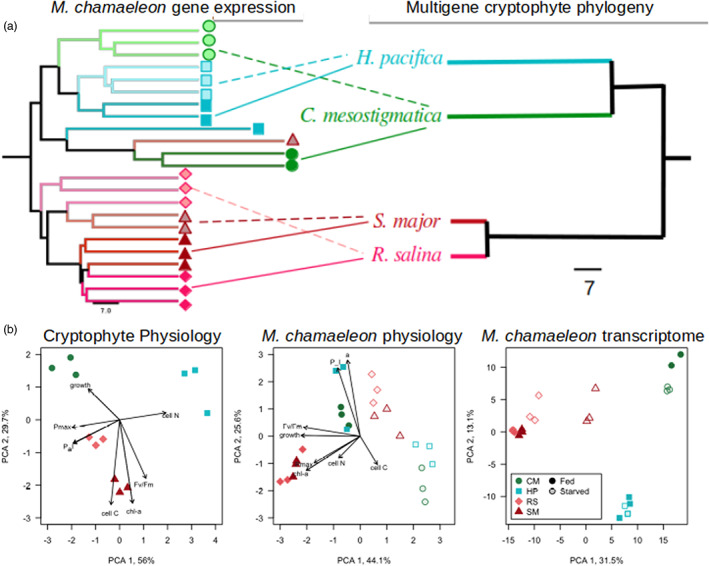
Kleptoplastidic, or chloroplast stealing, lineages transiently retain functional photosynthetic machinery from algal prey. This machinery, and its photosynthetic outputs, must be integrated into the host's metabolism, but the details of this integration are poorly understood. Here, we study this metabolic integration in the ciliate Mesodinium chamaeleon, a coastal marine species capable of retaining chloroplasts from at least six distinct genera of cryptophyte algae. To assess the effects of feeding history on ciliate physiology and gene expression, we acclimated M. chamaeleon to four different types of prey and contrasted well-fed and starved treatments. Consistent with previous physiological work on the ciliate, we found that starved ciliates had lower chlorophyll content, photosynthetic rates, and growth rates than their well-fed counterparts. However, ciliate gene expression mirrored prey phylogenetic relationships rather than physiological status, suggesting that, even as M. chamaeleon cells were starved of prey, their overarching regulatory systems remained tuned to the prey type to which they had been acclimated. Collectively, our results indicate a surprising degree of prey-specific host transcriptional adjustments, implying varied integration of prey metabolic potential into many aspects of ciliate physiology.
偷叶绿体的,或叶绿体窃取的,谱系从藻类猎物中短暂保留功能性光合作用机制。该机制及其光合作用产物必须整合到宿主的新陈代谢中,但这种整合的细节知之甚少。在这里,我们研究了沿海海洋物种Mesodinium chamaeleon 中的这种代谢整合,该物种能够从至少六个不同属的隐藻藻类中保留叶绿体。为了评估摄食史对纤毛虫生理学和基因表达的影响,我们将 M. chamaeleon 适应于四种不同类型的猎物,并比较了饱食和饥饿处理。与纤毛虫先前的生理学研究一致,我们发现饥饿的纤毛虫的叶绿素含量、光合作用率和生长速率均低于饱食的纤毛虫。然而,纤毛虫的基因表达反映了猎物的系统发育关系,而不是生理状态,这表明,即使 M. chamaeleon 细胞因缺乏猎物而饥饿,它们的总体调节系统仍然适应于它们已经适应的猎物类型。总的来说,我们的结果表明宿主转录的惊人程度的猎物特异性调整,暗示了猎物代谢潜力在纤毛虫生理学的许多方面的不同整合。