Division of Molecular and Clinical Medicine, Ninewells Hospital and Medical School, Dundee, DD1 9SY, UK.
Insmed Incorporated, Bridgewater, NJ, USA.
Clin Pharmacokinet. 2022 Oct;61(10):1457-1469. doi: 10.1007/s40262-022-01147-w. Epub 2022 Jul 25.
Brensocatib is an investigational, first-in-class, selective, and reversible dipeptidyl peptidase 1 inhibitor that blocks activation of neutrophil serine proteases (NSPs). The NSPs neutrophil elastase, cathepsin G, and proteinase 3 are believed to be central to the pathogenesis of several chronic inflammatory diseases, including bronchiectasis. In a phase II study, oral brensocatib 10 mg and 25 mg reduced sputum neutrophil elastase activity and prolonged the time to pulmonary exacerbation in patients with non-cystic fibrosis bronchiectasis (NCFBE). A population pharmacokinetic (PPK) model was developed to characterize brensocatib exposure, determine potential relationships between brensocatib exposure and efficacy and safety measures, and inform dose selection in clinical studies.
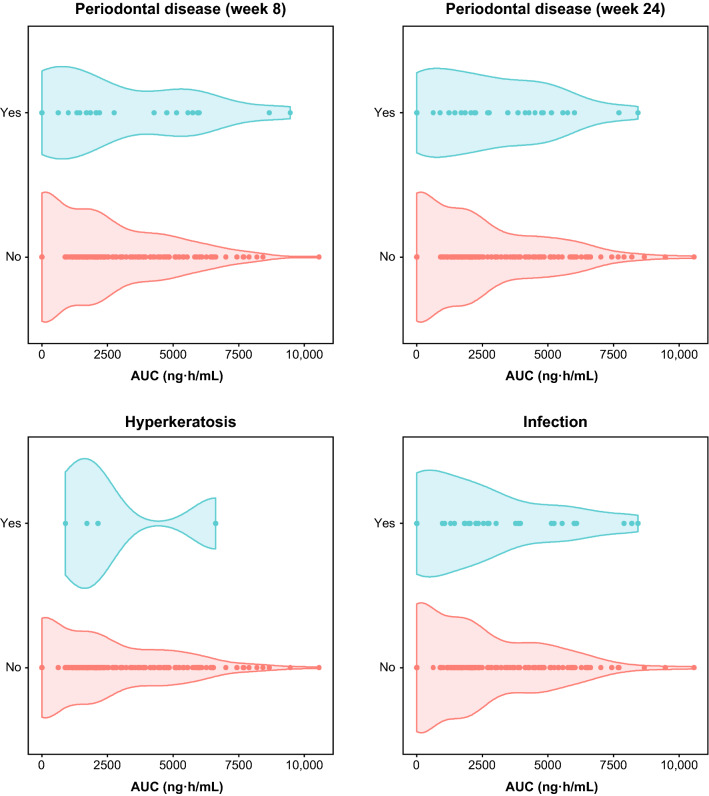
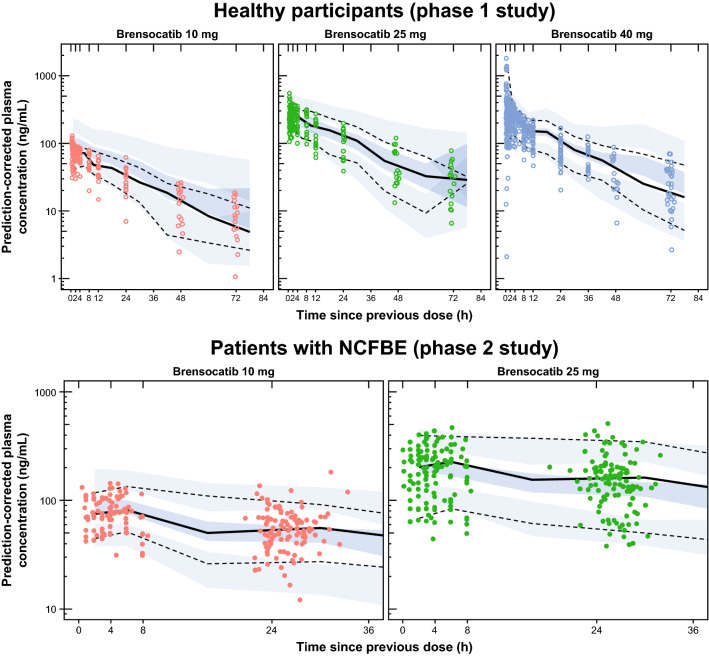
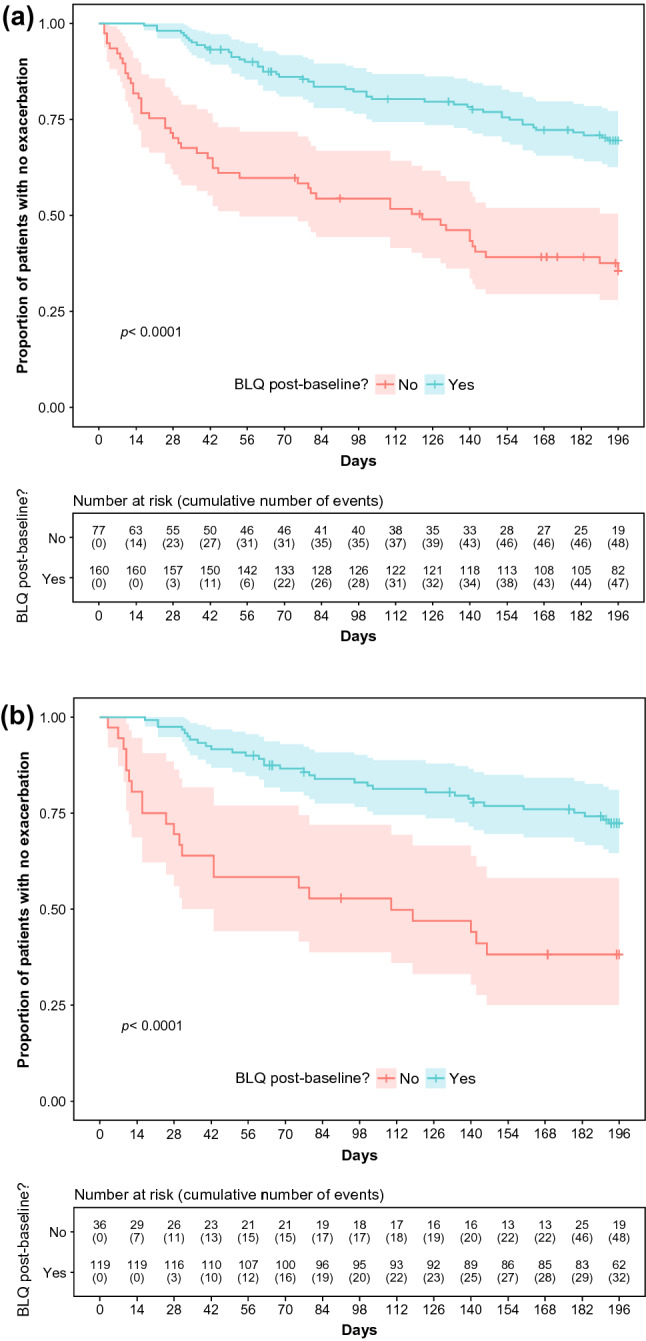
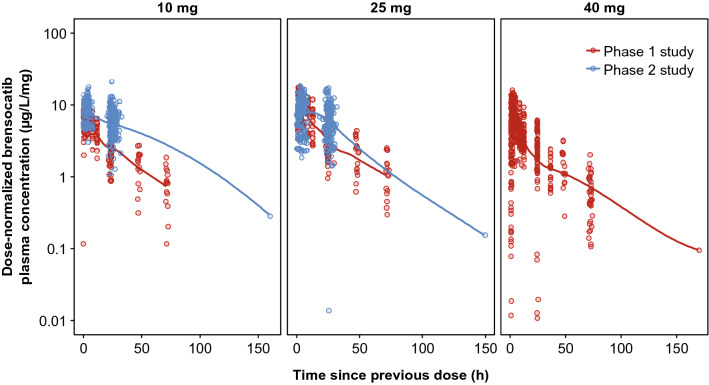
Pharmacokinetic (PK) data pooled from a phase I study of once-daily brensocatib (10, 25, and 40 mg) in healthy adults and a phase II study of once-daily brensocatib (10 mg and 25 mg) in adults with NCFBE were used to develop a PPK model and to evaluate potential covariate effects on brensocatib pharmacokinetics. PK-efficacy relationships for sputum neutrophil elastase below the level of quantification (BLQ) and reduction in pulmonary exacerbation and PK-safety relationships for adverse events of special interest (AESIs; periodontal disease, hyperkeratosis, and infections other than pulmonary infections) were evaluated based on model-predicted brensocatib exposure. A total of 1284 steady-state brensocatib concentrations from 225 individuals were included in the PPK data set; 241 patients with NCFBE from the phase II study were included in the pharmacodynamic (PD) population for the PK/PD analyses.
The PPK model that best described the observed data consisted of two distributional compartments and linear clearance. Two significant covariates were found: age on volume of distribution and renal function on apparent oral clearance. PK-efficacy analysis revealed a threshold brensocatib exposure (area under the concentration-time curve) effect for attaining sputum neutrophil elastase BLQ and a strong relationship between sputum neutrophil elastase BLQ and reduction in pulmonary exacerbations. A PK-safety evaluation showed no noticeable trends between brensocatib exposure and the incidence of AESIs. Based on the predicted likelihood of clinical outcomes for sputum neutrophil elastase BLQ and pulmonary exacerbations, brensocatib doses of 10 mg and 25 mg once daily were selected for a phase III clinical trial in patients with NCFBE (ClinicalTrials.gov identifier: NCT04594369).
PPK results revealed that age and renal function have a moderate effect on brensocatib exposure. However, this finding does not warrant dose adjustments based on age or in those with mild or moderate renal impairment. The PK/PD evaluation demonstrated the clinically meaningful relationship between suppression of neutrophil elastase activity and reduction in exacerbations in brensocatib-treated patients with NCFBE, supporting further development of brensocatib for bronchiectasis.
布仑司他丁是一种研究性的、首创的、选择性的和可逆的二肽基肽酶 1 抑制剂,可阻断中性粒细胞丝氨酸蛋白酶(NSPs)的激活。中性粒细胞弹性蛋白酶、组织蛋白酶 G 和蛋白酶 3 等 NSPs 被认为是几种慢性炎症性疾病(包括支气管扩张症)发病机制的核心。在一项 2 期研究中,口服布仑司他丁 10mg 和 25mg 可降低非囊性纤维化支气管扩张症(NCFBE)患者的痰中性粒细胞弹性蛋白酶活性,并延长肺部恶化时间。开发了一种群体药代动力学(PPK)模型,以描述布仑司他丁的暴露情况,确定布仑司他丁暴露与疗效和安全性措施之间的潜在关系,并为临床研究中的剂量选择提供信息。
使用来自健康成年人每日一次布仑司他丁(10、25 和 40mg)的 1 期研究和每日一次布仑司他丁(10mg 和 25mg)治疗 NCFBE 成人的 2 期研究的合并药代动力学(PK)数据来开发 PPK 模型,并评估对布仑司他丁药代动力学的潜在协变量效应。根据模型预测的布仑司他丁暴露情况,评估了痰中性粒细胞弹性蛋白酶低于定量下限(BLQ)和减少肺部恶化的 PK-疗效关系,以及对牙周病、角化过度和除肺部感染以外的感染等特殊关注不良事件(AESI)的 PK-安全性关系。来自 225 人的 1284 个稳态布仑司他丁浓度被纳入 PPK 数据集;来自 2 期研究的 241 名 NCFBE 患者被纳入 PK/PD 分析的药效学(PD)人群。
最能描述观察到的数据的 PPK 模型由两个分布区室和线性清除组成。发现了两个显著的协变量:年龄对分布容积和肾功能对表观口服清除率的影响。PK-疗效分析显示,达到痰中性粒细胞弹性蛋白酶 BLQ 的布仑司他丁暴露阈值效应,以及痰中性粒细胞弹性蛋白酶 BLQ 与肺部恶化减少之间的强烈关系。PK-安全性评估显示,布仑司他丁暴露与 AESI 发生率之间没有明显的趋势。根据痰中性粒细胞弹性蛋白酶 BLQ 和肺部恶化的临床结果的预测可能性,选择了布仑司他丁 10mg 和 25mg 每日一次剂量用于 NCFBE 患者的 3 期临床试验(ClinicalTrials.gov 标识符:NCT04594369)。
PPK 结果表明,年龄和肾功能对布仑司他丁的暴露有中度影响。然而,这一发现并不需要根据年龄或轻度或中度肾功能损害进行剂量调整。PK/PD 评估表明,在接受布仑司他丁治疗的 NCFBE 患者中,中性粒细胞弹性蛋白酶活性的抑制与恶化的减少之间存在临床意义上的关系,这支持了布仑司他丁在支气管扩张症中的进一步开发。