Department of Organismal Biology, SciLifeLab, Uppsala University, Uppsala, Sweden.
Department of Biological and Environmental Sciences, University of Gothenburg, Gothenburg, Sweden.
Nat Commun. 2022 Aug 17;13(1):4833. doi: 10.1038/s41467-022-32300-5.
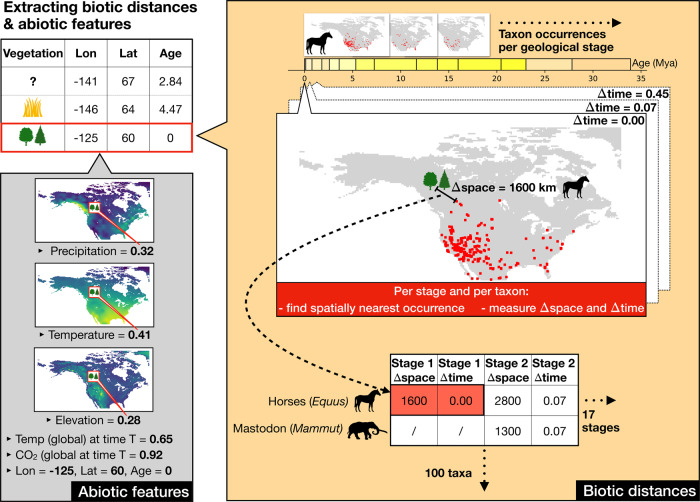
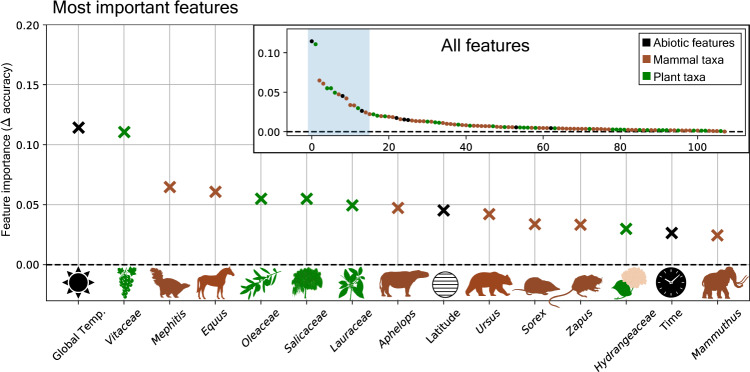
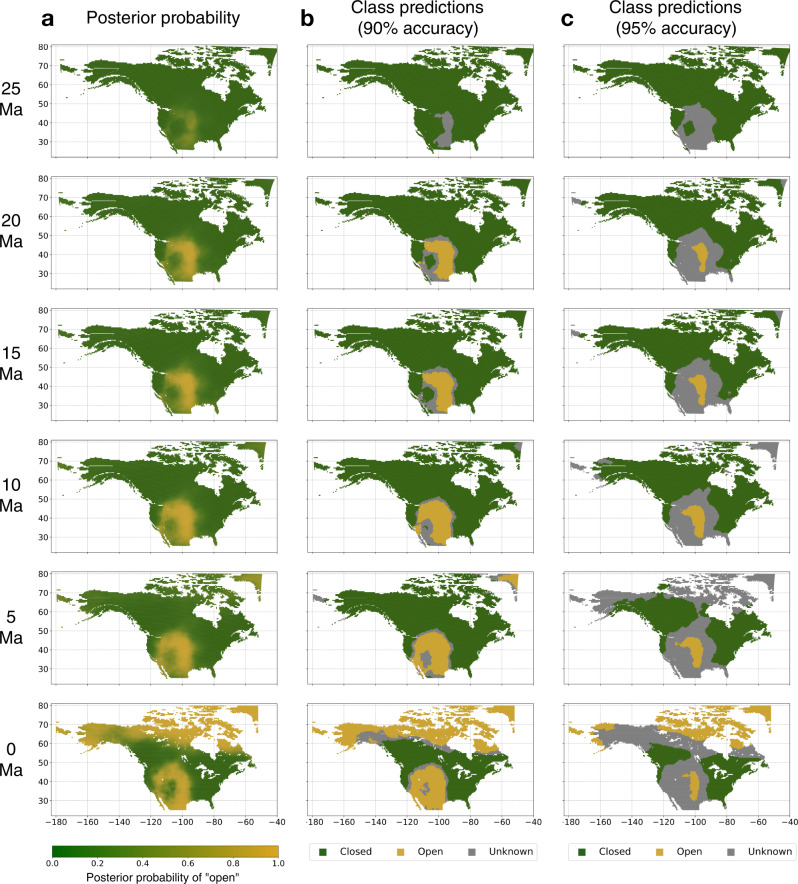
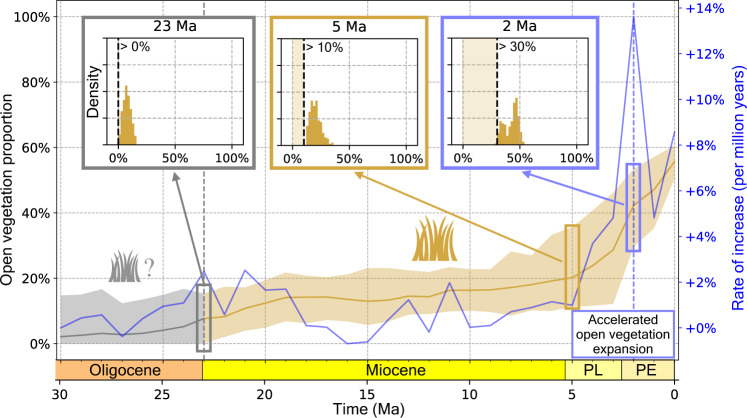
Some of the most extensive terrestrial biomes today consist of open vegetation, including temperate grasslands and tropical savannas. These biomes originated relatively recently in Earth's history, likely replacing forested habitats in the second half of the Cenozoic. However, the timing of their origination and expansion remains disputed. Here, we present a Bayesian deep learning model that utilizes information from fossil evidence, geologic models, and paleoclimatic proxies to reconstruct paleovegetation, placing the emergence of open habitats in North America at around 23 million years ago. By the time of the onset of the Quaternary glacial cycles, open habitats were covering more than 30% of North America and were expanding at peak rates, to eventually become the most prominent natural vegetation type today. Our entirely data-driven approach demonstrates how deep learning can harness unexplored signals from complex data sets to provide insights into the evolution of Earth's biomes in time and space.
如今,一些最广泛的陆地生物群系由开阔植被组成,包括温带草原和热带稀树草原。这些生物群系在地球历史上相对较晚才出现,可能在新生代后半期取代了森林栖息地。然而,它们的起源和扩张的时间仍然存在争议。在这里,我们提出了一种贝叶斯深度学习模型,该模型利用化石证据、地质模型和古气候代理的信息来重建古植被,将北美的开阔生境的出现时间定在大约 2300 万年前。到第四纪冰川循环开始时,开阔生境已经覆盖了北美洲的 30%以上,并以峰值速度扩张,最终成为今天最突出的自然植被类型。我们完全基于数据的方法证明了深度学习如何利用来自复杂数据集的未被探索的信号,从而深入了解地球生物群系在时间和空间上的演变。