Division of Surgery & Interventional Science, University College London, 9th Floor Royal Free Hospital, London, NW3 2QG, UK.
Department of Cell & Developmental Biology, University College London, London, WC1E 6BT, UK.
Sci Rep. 2022 Aug 17;12(1):13944. doi: 10.1038/s41598-022-18067-1.
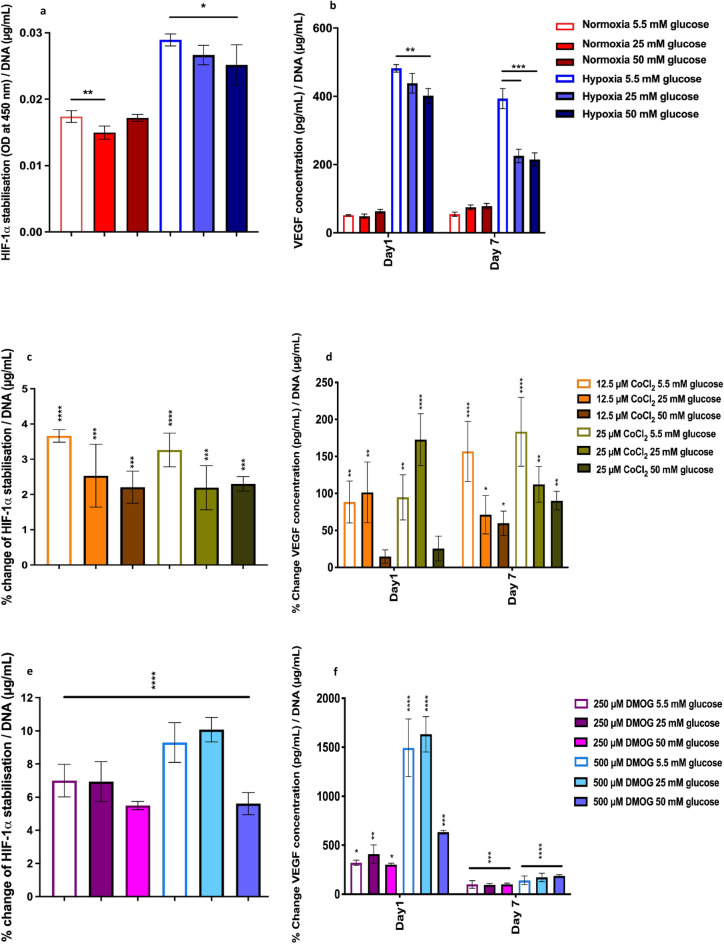
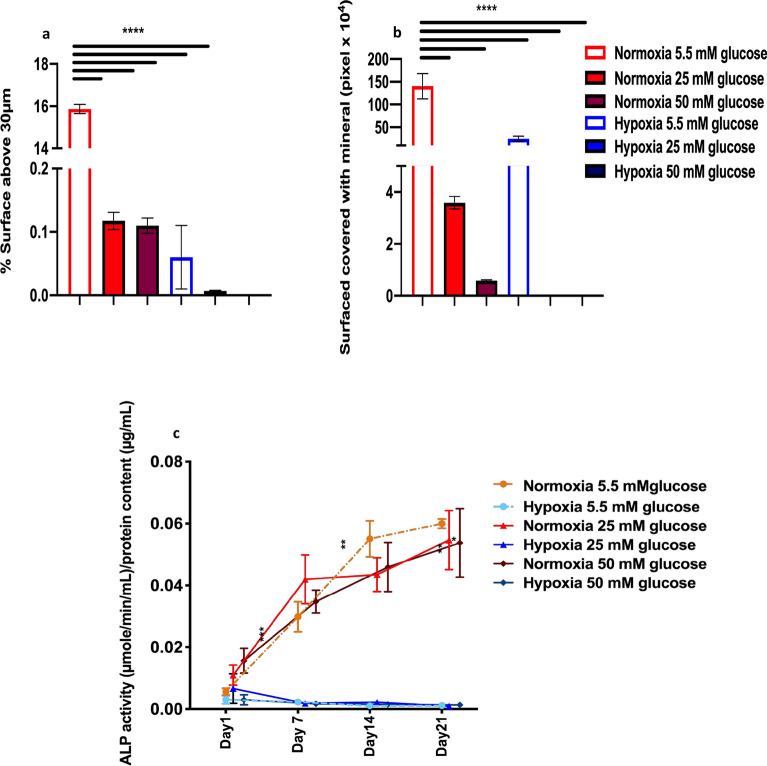
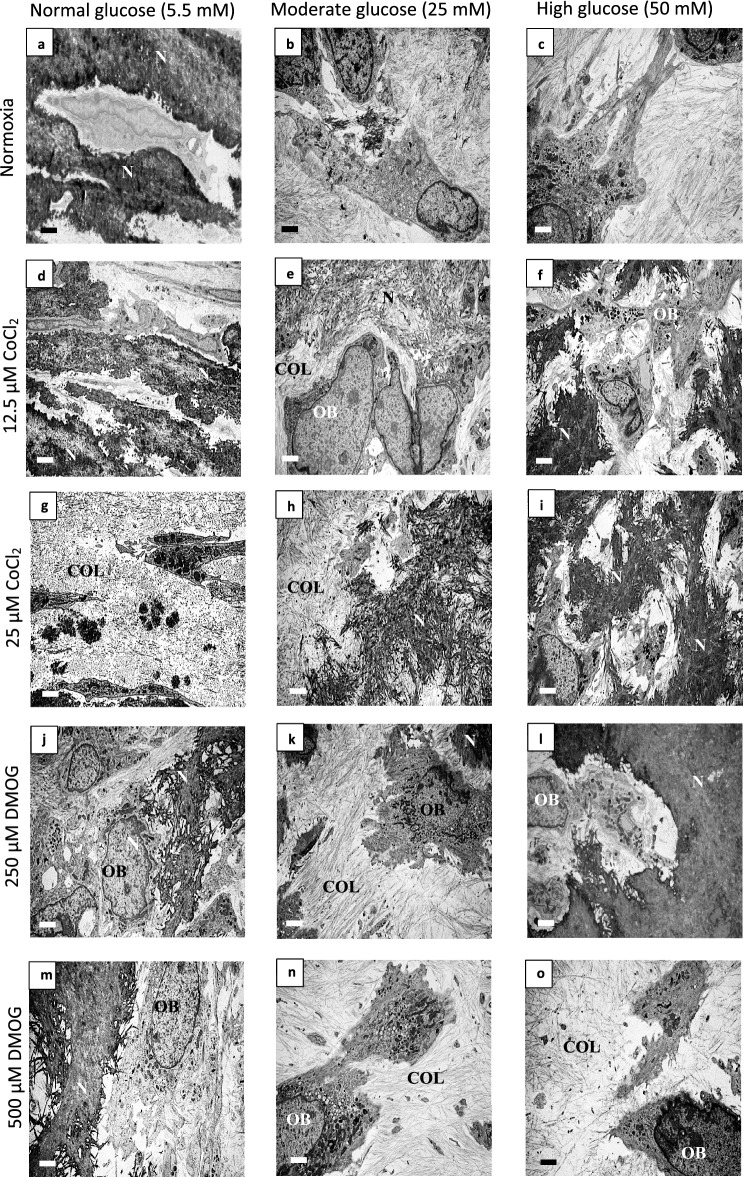
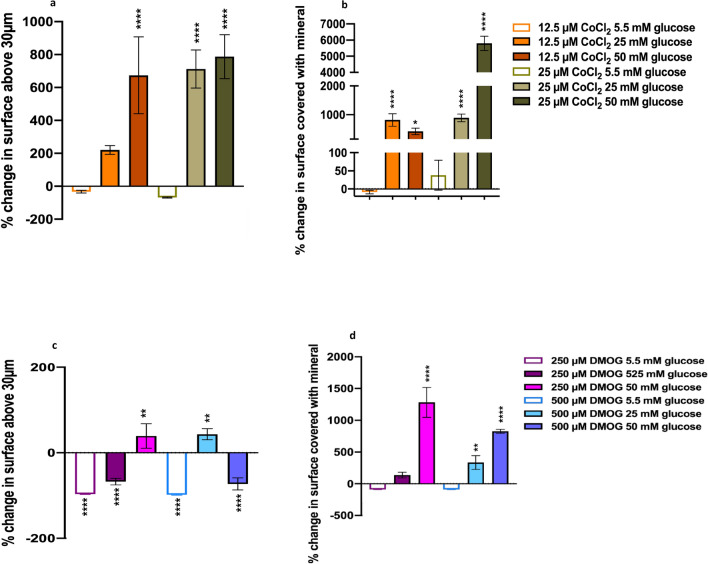
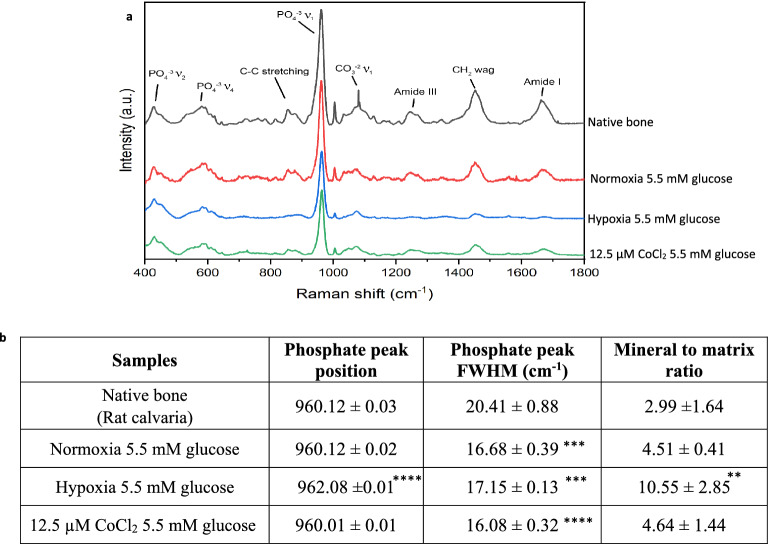
Diabetic patients have an increased risk of fracture and an increased occurrence of impaired fracture healing. Diabetic and hyperglycaemic conditions have been shown to impair the cellular response to hypoxia, via an inhibited hypoxia inducible factor (HIF)-1α pathway. We investigated, using an in vitro hyperglycaemia bone tissue engineering model (and a multidisciplinary bone characterisation approach), the differing effects of glucose levels, hypoxia and chemicals known to stabilise HIF-1α (CoCl and DMOG) on bone formation. Hypoxia (1% O) inhibited bone nodule formation and resulted in discrete biomineralisation as opposed to the mineralised extracellular collagen fibres found in normoxia (20% O). Unlike hypoxia, the use of hypoxia mimetics did not prevent nodule formation in normal glucose level. Hyperglycaemic conditions (25 mM and 50 mM glucose) inhibited biomineralisation. Interestingly, both hypoxia mimetics (CoCl and DMOG) partly restored hyperglycaemia inhibited bone nodule formation. These results highlight the difference in osteoblast responses between hypoxia mimetics and actual hypoxia and suggests a role of HIF-1α stabilisation in bone biomineralisation that extends that of promoting neovascularisation, or other system effects associated with hypoxia and bone regeneration in vivo. This study demonstrates that targeting the HIF pathway may represent a promising strategy for bone regeneration in diabetic patients.
糖尿病患者骨折风险增加,骨折愈合不良的发生率也增加。研究表明,糖尿病和高血糖状态会通过抑制低氧诱导因子-1α(HIF-1α)通路来抑制细胞对缺氧的反应。我们使用体外高血糖骨组织工程模型(以及多学科骨特征分析方法),研究了不同葡萄糖水平、缺氧以及已知能稳定 HIF-1α的化学物质(CoCl 和 DMOG)对骨形成的不同影响。缺氧(1% O)抑制骨结节形成,并导致离散的矿化,而不是在常氧(20% O)条件下发现的矿化细胞外胶原纤维。与缺氧不同,缺氧模拟物在正常葡萄糖水平下并不能阻止结节形成。高血糖状态(25 mM 和 50 mM 葡萄糖)抑制矿化。有趣的是,两种缺氧模拟物(CoCl 和 DMOG)部分恢复了高血糖抑制的骨结节形成。这些结果突出了缺氧模拟物与实际缺氧对成骨细胞反应的差异,并表明 HIF-1α稳定在骨矿化中的作用超出了促进血管新生或与体内缺氧和骨再生相关的其他系统效应。本研究表明,靶向 HIF 通路可能是糖尿病患者骨再生的一种有前途的策略。