Davies Sarah R, Vaughan Ian P, Thomas Robert J, Drake Lorna E, Marchbank Angela, Symondson William O C
Cardiff School of Biosciences Cardiff University Cardiff UK.
Ecol Evol. 2022 Aug 11;12(8):e9180. doi: 10.1002/ece3.9180. eCollection 2022 Aug.
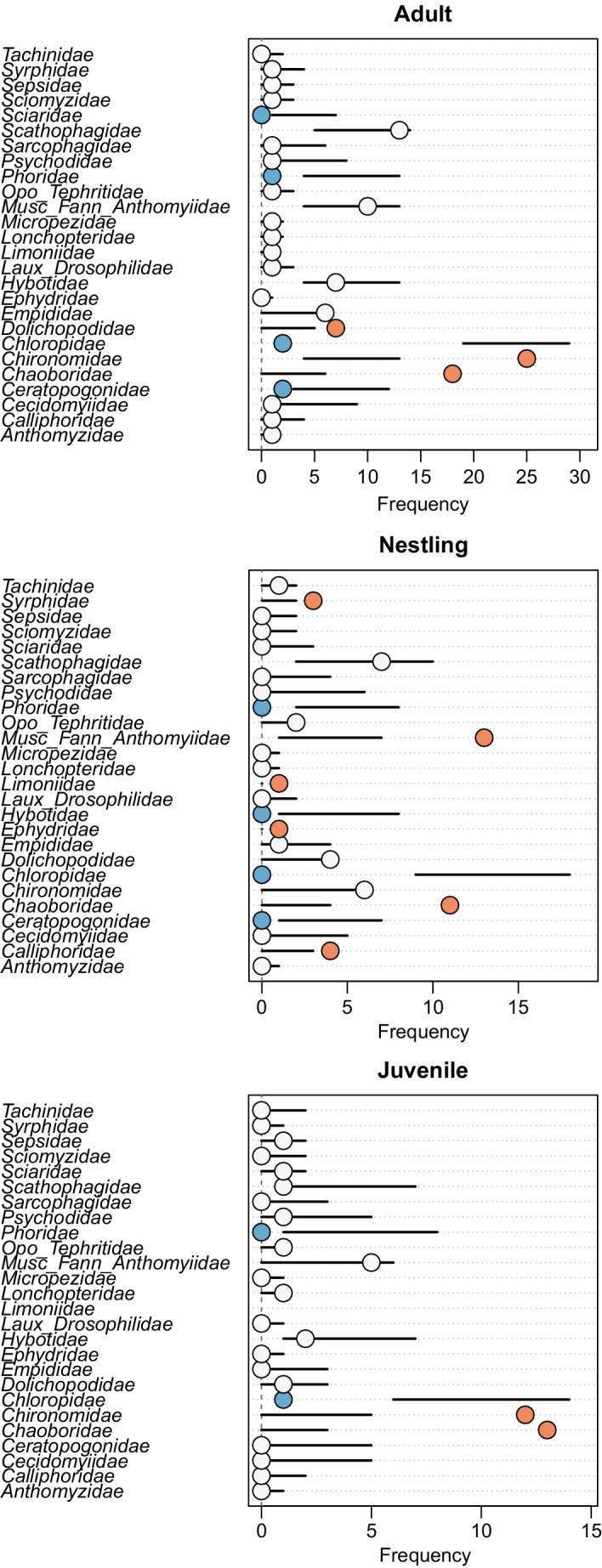
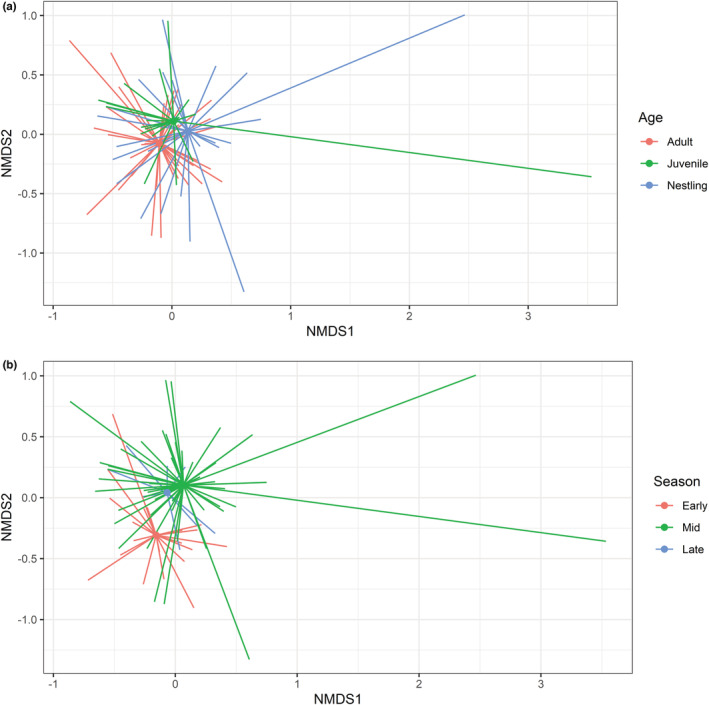
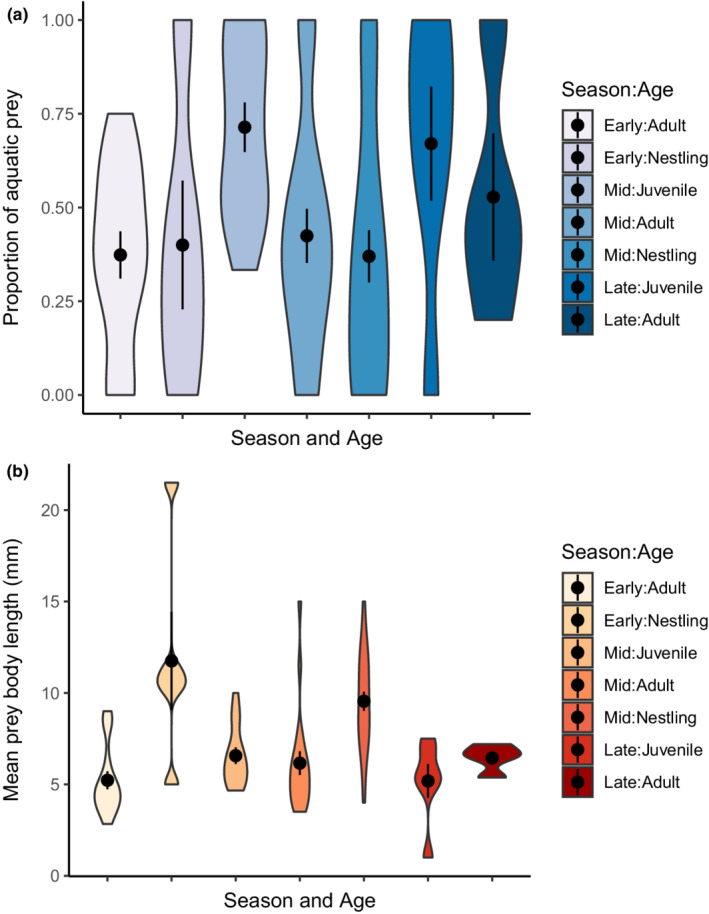
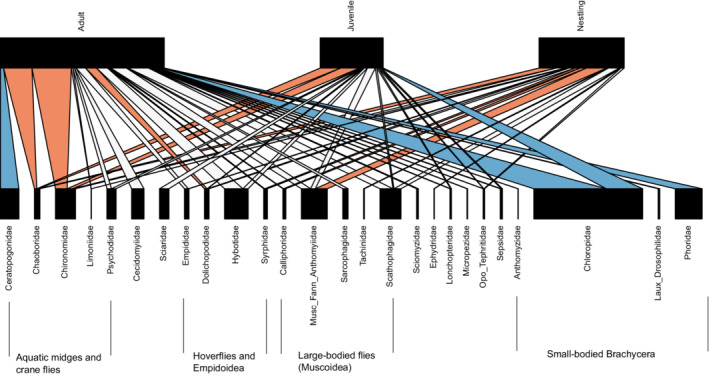
The diet of an individual animal is subject to change over time, both in response to short-term food fluctuations and over longer time scales as an individual ages and meets different challenges over its life cycle. A metabarcoding approach was used to elucidate the diet of different life stages of a migratory songbird, the Eurasian reed warbler () over the 2017 summer breeding season in Somerset, the United Kingdom. The feces of adult, juvenile, and nestling warblers were screened for invertebrate DNA, enabling the identification of prey species. Dietary analysis was coupled with monitoring of Diptera in the field using yellow sticky traps. Seasonal changes in warbler diet were subtle, whereas age class had a greater influence on overall diet composition. Age classes showed high dietary overlap, but significant dietary differences were mediated through the selection of prey; (i) from different taxonomic groups, (ii) with different habitat origins (aquatic vs. terrestrial), and (iii) of different average approximate sizes. Our results highlight the value of metabarcoding data for enhancing ecological studies of insectivores in dynamic environments.
个体动物的饮食会随时间变化,这既是对短期食物波动的响应,也是在更长的时间尺度上,随着个体年龄增长以及在其生命周期中面临不同挑战而发生的变化。在英国萨默塞特郡2017年夏季繁殖季节,采用元条形码方法来阐明一种迁徙鸣禽——欧柳莺()不同生命阶段的饮食情况。对成年、幼年和雏鸟的粪便进行筛选,以检测无脊椎动物的DNA,从而确定猎物种类。饮食分析与使用黄色粘虫板在野外监测双翅目昆虫相结合。柳莺饮食的季节性变化较为细微,而年龄类别对总体饮食构成的影响更大。不同年龄类别显示出较高的饮食重叠,但显著的饮食差异是通过对猎物的选择来介导的;(i)来自不同的分类群,(ii)具有不同的栖息地来源(水生与陆生),以及(iii)不同的平均近似大小。我们的结果突出了元条形码数据在加强对动态环境中食虫动物的生态学研究方面的价值。