Institute of Experimental Medicine and Systems Biology, RWTH Aachen University, Aachen, Germany; Institute of Cell and Tumor Biology, RWTH Aachen University, Aachen, Germany; Division of Nephrology and Clinical Immunology, RWTH Aachen University, Aachen, Germany.
Institute of Experimental Medicine and Systems Biology, RWTH Aachen University, Aachen, Germany; Department of Pathology, Radboud Institute for Molecular Life Sciences, Radboud University Medical Center, Nijmegen, the Netherlands; Department of Pediatric Nephrology, Radboud Institute for Molecular Life Sciences, Radboud University Medical Center, Amalia Children's Hospital, Nijmegen, the Netherlands.
STAR Protoc. 2022 Jul 19;3(3):101612. doi: 10.1016/j.xpro.2022.101612. eCollection 2022 Sep 16.
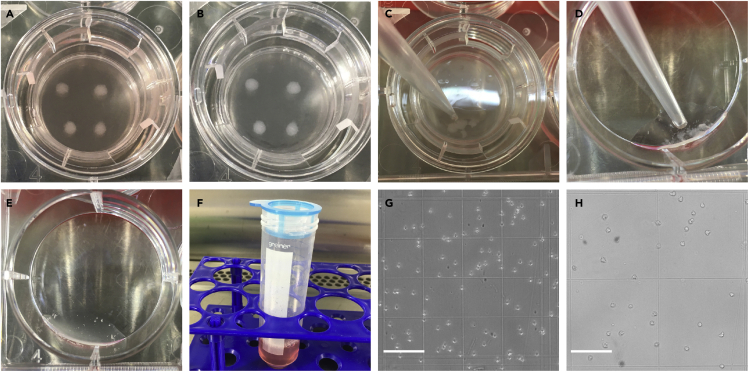
We describe a protocol for single-cell RNA sequencing of SARS-CoV-2-infected human induced pluripotent stem cell (iPSC)-derived kidney organoids. After inoculation of kidney organoids with virus, we use mechanical and enzymatic disruption to obtain single cell suspensions. Next, we process the organoid-derived cells into sequencing-ready SARS-CoV-2-targeted libraries. Subsequent sequencing analysis reveals changes in kidney cells after virus infection. The protocol was designed for kidney organoids cultured in a 6-well transwell format but can be adapted to organoids with different organ backgrounds. For complete details on the use and execution of this protocol, please refer to Jansen et al. (2022).
我们描述了一种用于对 SARS-CoV-2 感染的人诱导多能干细胞(iPSC)衍生肾类器官进行单细胞 RNA 测序的方案。在将肾类器官接种病毒后,我们使用机械和酶解破坏来获得单细胞悬液。接下来,我们将类器官衍生的细胞加工成测序就绪的 SARS-CoV-2 靶向文库。随后的测序分析揭示了病毒感染后肾脏细胞的变化。该方案是为在 6 孔 Transwell 培养板中培养的肾类器官设计的,但可以适应具有不同器官背景的类器官。有关该方案使用和执行的完整详细信息,请参阅 Jansen 等人(2022 年)。