Wu Rong, Li Jinhua, Guo Yuhuang
Department of Cardiology.
Department of Respiratory Medicine, Chenzhou Third People's Hospital, Chenzhou, Hunan, China.
Cardiovasc Endocrinol Metab. 2022 Aug 10;11(3):e0269. doi: 10.1097/XCE.0000000000000269. eCollection 2022 Sep.
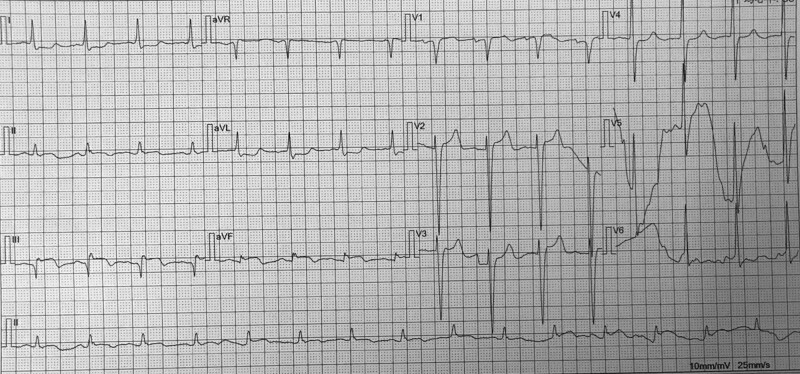
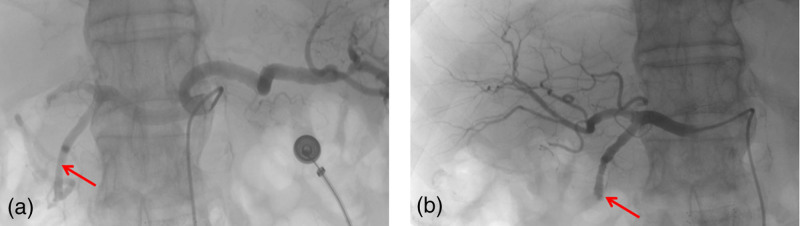
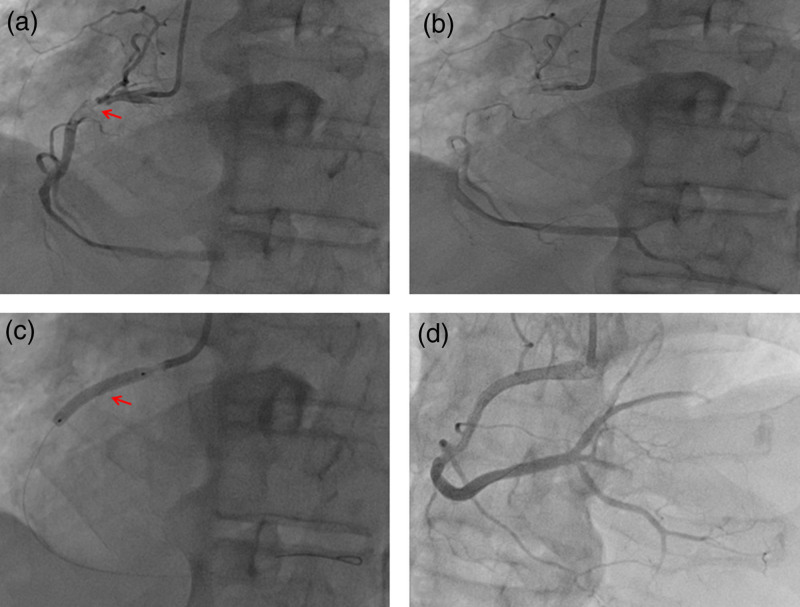
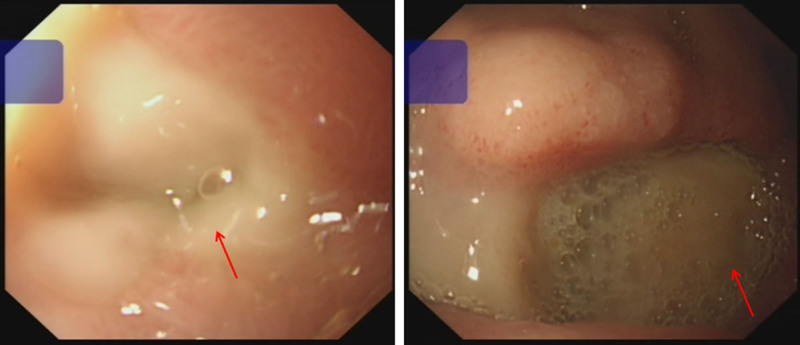
Upper gastrointestinal (UGI) bleeding after percutaneous coronary intervention (PCI) for acute myocardial infarction (AMI) in ordinary patients is a common complication and poses a dilemma for clinical doctors to treat. In patients with renal impairment, that is more difficult and has rarely been reported. This case report involves an 82-year-old man who received regular hemodialysis and underwent PCI for acute inferior wall ST-segment elevation myocardial infarction. On the third day after PCI, the patient developed acute UGI bleeding, and gastroscopy confirmed that he had developed compound gastroduodenal ulcers (active stage) with hyperemia of the surrounding mucosa. After fasting, blood transfusion, acid inhibition, gastric protection and symptomatic support treatment, the patient's UGI bleeding remained uncontrolled. Finally, upper gastrointestinal bleeding was stopped by empiric transcatheter arterial embolization (TAE). The patient's condition was controlled through active treatment, and he was eventually discharged from the hospital. Bleeding complications after coronary stenting often present a dilemma, particularly in patients with renal impairment. Therefore, patients such as this should be thoroughly evaluated before any treatment. In the case of no obvious hemorrhagic spots found on endoscopic examination and failure of conservative medical treatment, empiric transcatheter arterial embolization TAE is a well-tolerated and effective treatment for UGI bleeding.
普通患者急性心肌梗死(AMI)行经皮冠状动脉介入治疗(PCI)后发生上消化道(UGI)出血是一种常见并发症,给临床医生的治疗带来了两难困境。在肾功能损害患者中,情况更为棘手且鲜有报道。本病例报告涉及一名82岁男性,他接受定期血液透析,因急性下壁ST段抬高型心肌梗死接受了PCI治疗。PCI术后第三天,患者发生急性UGI出血,胃镜检查证实其出现复合性胃十二指肠溃疡(活动期),周围黏膜充血。禁食、输血、抑酸、胃保护及对症支持治疗后,患者的UGI出血仍未得到控制。最终,通过经验性经导管动脉栓塞术(TAE)止住了上消化道出血。患者病情经积极治疗得到控制,最终出院。冠状动脉支架置入术后的出血并发症常常带来两难局面,尤其是在肾功能损害患者中。因此,对于此类患者,在任何治疗前都应进行全面评估。在内镜检查未发现明显出血点且保守药物治疗无效的情况下,经验性经导管动脉栓塞术TAE是一种耐受性良好且有效的UGI出血治疗方法。