Department of Otolaryngology Head and Neck Surgery, Beijing Tongren Hospital, Capital Medical University, Beijing, People's Republic of China.
Key Laboratory of Otolaryngology Head and Neck Surgery (Ministry of Education of China), Beijing Institute of Otolaryngology, Beijing, People's Republic of China.
Medicine (Baltimore). 2022 Aug 19;101(33):e26120. doi: 10.1097/MD.0000000000026120.
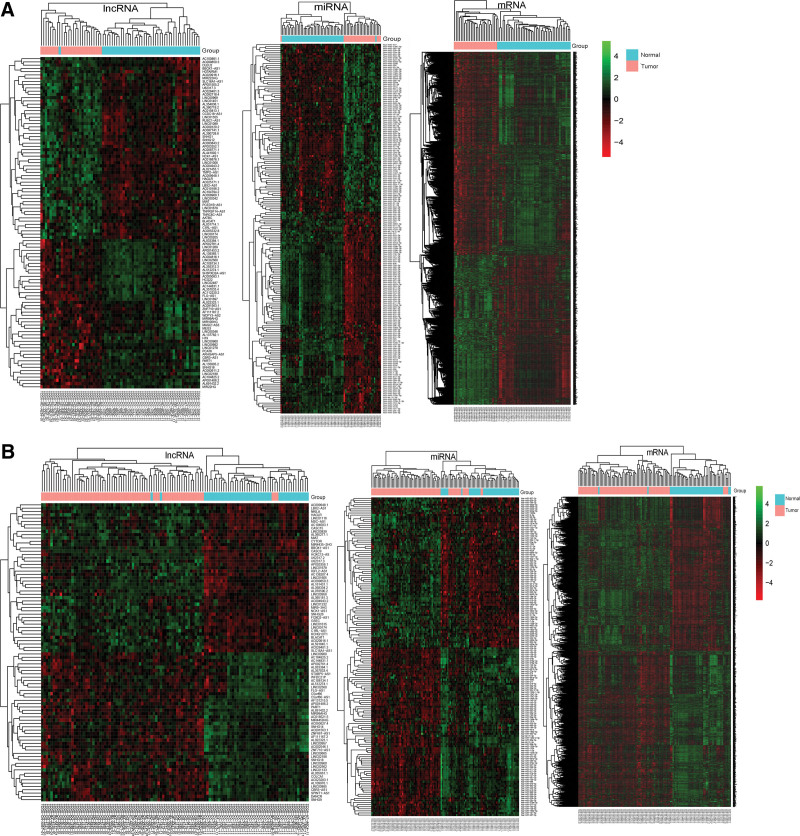
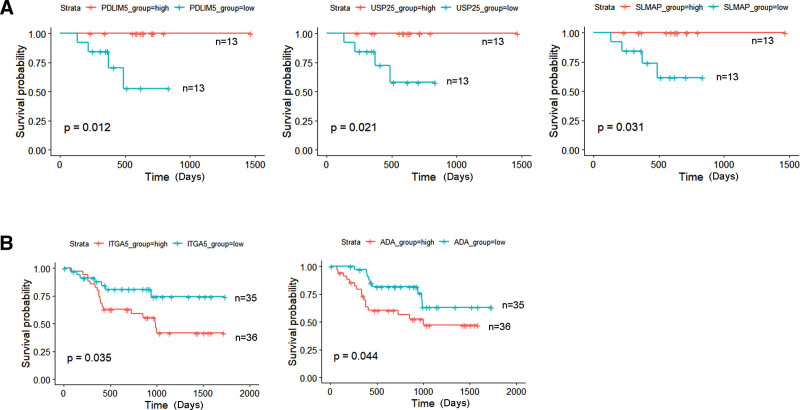
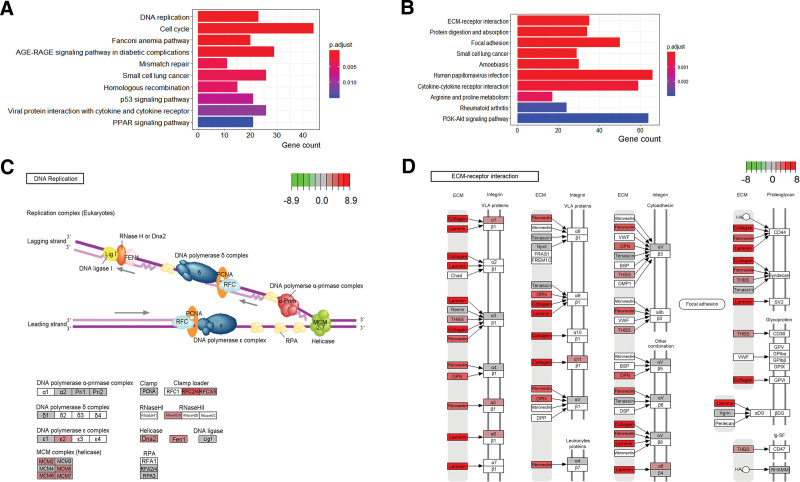
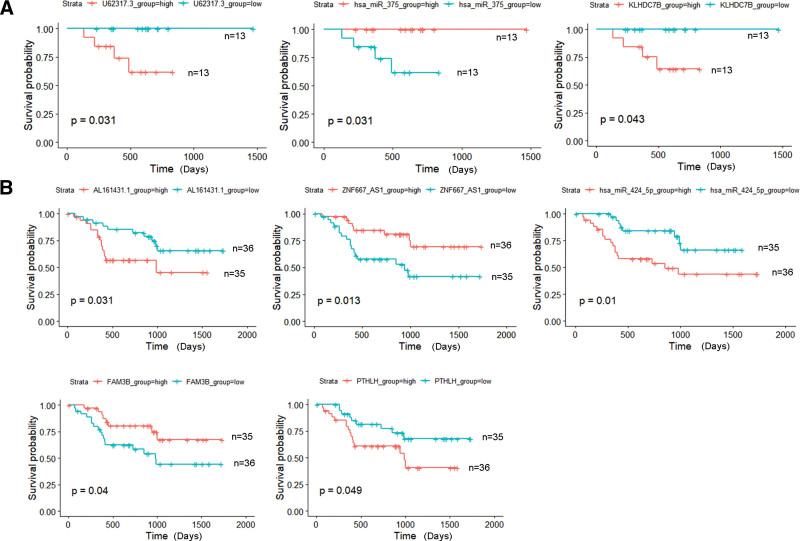
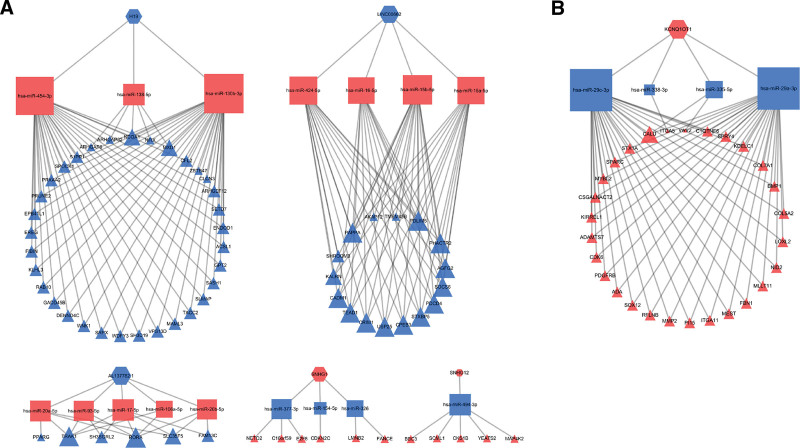
Determination of human papillomavirus (HPV) status has become clinically relevant for head and neck squamous cell carcinoma (HNSCC) patients. p16 immunohistochemistry is one of the recommended methods for classifying HPV status. However, long noncoding RNAs (lncRNAs) and related competing endogenous RNA (ceRNA) networks linked to different p16-status HNSCC are still absent. In the present study, The Cancer Genome Atlas database provided RNA profiles as well as clinical information from 26 p16-positive HNSCC samples, 71 p16-negative HNSCC samples, and 44 adjacent normal control samples. Differentially expressed RNAs (DERNAs) between HNSCC samples and normal samples were identified by limma package in R. Functional enrichment analysis of differentially expressed mRNAs was performed using Clusterprofiler package in R. Survival analysis of DERNAs was carried out by survival package in R. The ceRNA network was constructed using GDCRNATools package in R. A total of 102 lncRNAs, 196 microRNAs (miRNAs), and 2282 mRNAs were identified as p16-positive-specific DERNAs. There were 90 lncRNAs, 153 miRNAs, and 2038 mRNAs were identified as p16-negative-specific DERNAs. Functional enrichment analysis revealed that the differentially expressed mRNAs in the p16-positive and the p16-negative group were mainly enriched in the "DNA replication" and "extracellular matrix -receptor interaction" pathway, respectively. Among the top 25 DERNAs, there were 1 key lncRNA, 1 key miRNA, and 1 key messenger RNA in the p16-positive group and 2 key lncRNAs, 1 key miRNA, and 2 key mRNAs in the p16-negative group were significantly related to the overall survival. Then the ceRNA network in the p16-positive and p16-negative group was constructed. There were 5 lncRNAs, 16 miRNAs, and 66 mRNAs included in the p16-positive group ceRNA network and 1 lncRNA, 4 miRNAs, and 28 mRNAs included in the p16-negative group ceRNA network. Among the RNAs in the ceRNA network, 5 mRNAs were significantly related to the overall survival. Taken together, we revealed the differential RNA expression profiling and the differential ceRNA network in the p16-positive and p16-negative group of HNSCC. Our findings provided a novel insight into this HPV-related cancer and potential biomarkers and therapeutic targets for HNSCC based on p16 status.
HPV 状态的确定已成为头颈部鳞状细胞癌(HNSCC)患者的临床相关内容。p16 免疫组化是用于分类 HPV 状态的推荐方法之一。然而,与不同 p16 状态的 HNSCC 相关的长链非编码 RNA(lncRNA)和相关竞争内源性 RNA(ceRNA)网络仍然缺失。在本研究中,The Cancer Genome Atlas 数据库提供了 RNA 图谱以及 26 例 p16 阳性 HNSCC 样本、71 例 p16 阴性 HNSCC 样本和 44 例相邻正常对照样本的临床信息。通过 R 中的 limma 包鉴定了 HNSCC 样本与正常样本之间的差异表达 RNA(DERNAs)。通过 R 中的 Clusterprofiler 包对差异表达的 mRNAs 进行功能富集分析。通过 R 中的 survival 包对 DERNAs 进行生存分析。通过 R 中的 GDCRNATools 包构建了 ceRNA 网络。共鉴定出 102 个 lncRNA、196 个 microRNA(miRNA)和 2282 个 mRNA 为 p16 阳性特异性 DERNAs。鉴定出 90 个 lncRNA、153 个 miRNA 和 2038 个 mRNA 为 p16 阴性特异性 DERNAs。功能富集分析表明,p16 阳性和 p16 阴性组中差异表达的 mRNAs 主要富集在“DNA 复制”和“细胞外基质-受体相互作用”途径中。在 top25 的 DERNAs 中,p16 阳性组中有 1 个关键 lncRNA、1 个关键 miRNA 和 1 个关键 mRNA,p16 阴性组中有 2 个关键 lncRNA、1 个关键 miRNA 和 2 个关键 mRNAs 与总生存期显著相关。然后构建了 p16 阳性和 p16 阴性组的 ceRNA 网络。p16 阳性组 ceRNA 网络中包含 5 个 lncRNA、16 个 miRNA 和 66 个 mRNA,p16 阴性组 ceRNA 网络中包含 1 个 lncRNA、4 个 miRNA 和 28 个 mRNA。ceRNA 网络中的 RNA 中,有 5 个 mRNA 与总生存期显著相关。总之,我们揭示了 HNSCC 中 p16 阳性和 p16 阴性组的差异 RNA 表达谱和差异 ceRNA 网络。我们的研究结果为 HPV 相关癌症以及基于 p16 状态的 HNSCC 潜在的生物标志物和治疗靶点提供了新的见解。