Eco-anthropologie (EA), Muséum National d'Histoire Naturelle, CNRS, Université de Paris, Paris, France.
CNRS, Aix Marseille Univ, Minist Culture, LAMPEA, Aix-en-Provence, France.
Rapid Commun Mass Spectrom. 2022 Nov 15;36(21):e9380. doi: 10.1002/rcm.9380.
The last decade has seen a dramatic increase in the application of serial sampling of human dentine in archaeology. Rapid development in the field has provided many improvements in the methodology, in terms of both time resolution as well as the ability to integrate more isotope systems in the analysis. This study provides a comparison of two common sampling approaches, allowing researchers to select the most suitable approach for addressing specific research questions.
Two common approaches for sequential sampling of human dentine (micro-punches and micro-slices) are compared in terms of viability and efficacy. Using archaeological deciduous second molars and permanent first molars, this study demonstrates how the two approaches capture aspects of the weaning process in different ways. In addition, different aspects related to the extraction protocols, such as the thickness of the central slide and the solubilisation step, are also evaluated.
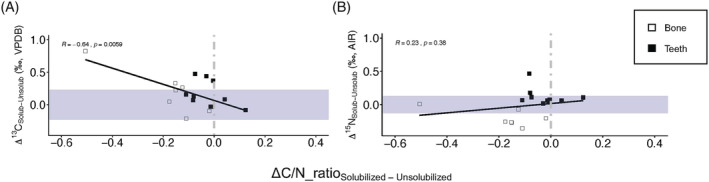
While both approaches show similar intra-tooth isotopic patterns, the micro-punches approach is preferable for research that requires a very fine temporal resolution, while the micro-slices approach is best for research where δ S values are needed, or when the samples are poorly preserved. In addition, the solubilisation step has a large effect on collagen yield, and, to a lesser extent, on isotopic compositions. Therefore, it is important to ensure that only samples that have undergone the same pre-treatment protocol are directly compared.
We present the pros and cons of the two micro-sampling approaches and offer possible mitigation strategies to address some of the most important issues related to each approach.
在过去的十年中,人类牙本质的连续采样在考古学中得到了广泛的应用。该领域的快速发展在时间分辨率和分析中整合更多同位素系统的能力方面为方法提供了许多改进。本研究比较了两种常见的采样方法,使研究人员能够选择最适合解决特定研究问题的方法。
本研究比较了两种常见的人类牙本质连续采样方法(微钻孔和微切片)在可行性和效果方面的差异。使用考古学中的乳牙第二磨牙和恒牙第一磨牙,本研究展示了这两种方法如何以不同的方式捕捉断奶过程的各个方面。此外,还评估了与提取方案相关的不同方面,例如中央切片的厚度和溶解步骤。
尽管两种方法在牙齿内的同位素模式上都显示出相似性,但微钻孔方法更适合需要非常精细时间分辨率的研究,而微切片方法最适合需要δ S 值的研究,或者当样品保存不佳时。此外,溶解步骤对胶原蛋白产率有很大影响,对同位素组成的影响较小。因此,重要的是要确保只有经过相同预处理方案的样品才能直接进行比较。
我们提出了两种微采样方法的优缺点,并提供了可能的缓解策略,以解决与每种方法相关的一些最重要的问题。