• 文献检索
  • 文档翻译
  • 深度研究
  • 学术资讯
  • Suppr Zotero 插件Zotero 插件
  • 邀请有礼
  • 套餐&价格
  • 历史记录
应用&插件
Suppr Zotero 插件Zotero 插件浏览器插件Mac 客户端Windows 客户端微信小程序
定价
高级版会员购买积分包购买API积分包
服务
文献检索文档翻译深度研究API 文档MCP 服务
关于我们
关于 Suppr公司介绍联系我们用户协议隐私条款
关注我们

Suppr 超能文献

核心技术专利:CN118964589B侵权必究
粤ICP备2023148730 号-1Suppr @ 2026

文献检索

告别复杂PubMed语法,用中文像聊天一样搜索,搜遍4000万医学文献。AI智能推荐,让科研检索更轻松。

立即免费搜索

文件翻译

保留排版,准确专业,支持PDF/Word/PPT等文件格式,支持 12+语言互译。

免费翻译文档

深度研究

AI帮你快速写综述,25分钟生成高质量综述,智能提取关键信息,辅助科研写作。

立即免费体验

使用基于冶金学家思维过程的机器学习框架识别对材料性能有重大影响的微观结构。

Identification of microstructures critically affecting material properties using machine learning framework based on metallurgists' thinking process.

机构信息

Department of Advanced Interdisciplinary Studies, The University of Tokyo, 4-6-1 Komaba, Meguro, Tokyo, 153-8904, Japan.

Institute for Industrial Science, The University of Tokyo, 5-1-5 Kashiwanoha, Kashiwa, Chiba, 277-0082, Japan.

出版信息

Sci Rep. 2022 Aug 20;12(1):14238. doi: 10.1038/s41598-022-17614-0.

DOI:10.1038/s41598-022-17614-0
PMID:35987983
原文链接:https://pmc.ncbi.nlm.nih.gov/articles/PMC9392751/
Abstract

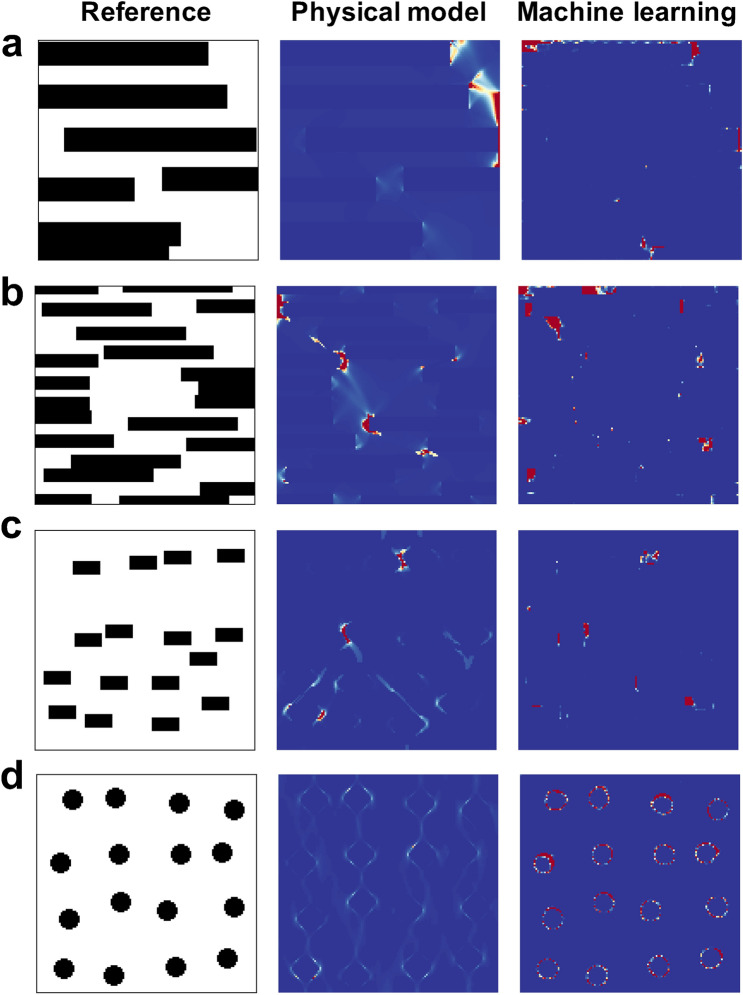
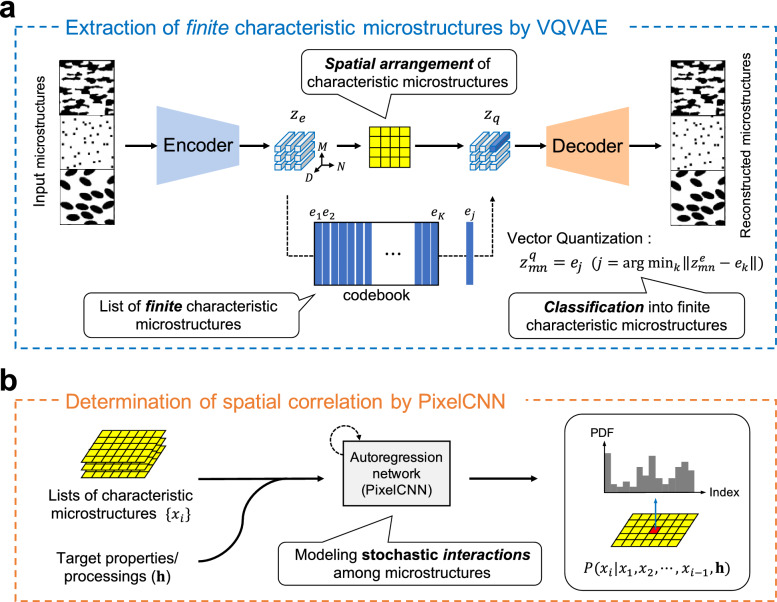
In materials science, machine learning has been intensively researched and used in various applications. However, it is still far from achieving intelligence comparable to that of human experts in terms of creativity and explainability. In this paper, we investigate whether machine learning can acquire explainable knowledge without directly introducing problem-specific information such as explicit physical mechanisms. In particular, a potential of machine learning to obtain the capability to identify a part of material structures that critically affects a physical property without human prior knowledge is mainly discussed. The guide for constructing the machine learning framework adopted in this paper is to imitate human researchers' process of thinking in the interpretation and development of materials. Our framework was applied to the optimization of structures of artificial dual-phase steels in terms of a fracture property. A comparison of results of the framework with those of numerical simulation based on governing physical laws demonstrated the potential of our framework for the identification of a part of microstructures critically affecting the target property. Consequently, this implies that our framework can implicitly acquire an intuition in a similar way that human researchers empirically attain the general strategy for material design consistent with the physical background.

摘要

在材料科学中,机器学习已经得到了广泛的研究和应用。然而,在创造力和可解释性方面,它仍然远远无法达到人类专家的水平。在本文中,我们研究了机器学习是否可以在不直接引入特定于问题的信息(例如明确的物理机制)的情况下获得可解释的知识。特别是,主要讨论了机器学习是否有可能在没有人类先验知识的情况下获得识别对物理性质有重大影响的材料结构部分的能力。本文中采用的机器学习框架的构建指南是模仿人类研究人员在材料解释和开发过程中的思维过程。我们的框架应用于人工双相钢结构的断裂性能优化。框架结果与基于控制物理定律的数值模拟结果的比较表明,该框架具有识别对目标性能有重大影响的微观结构部分的潜力。因此,这意味着我们的框架可以以类似于人类研究人员通过经验获得与物理背景一致的材料设计总体策略的方式,隐式地获得直觉。
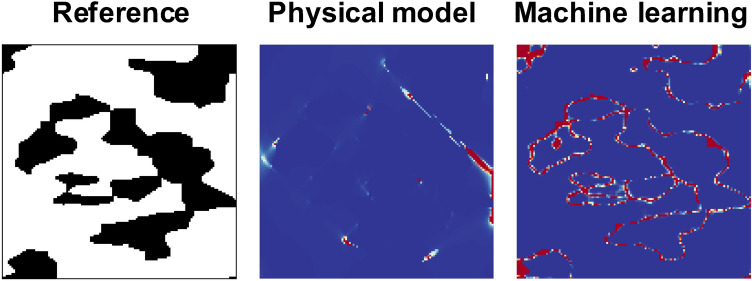
https://cdn.ncbi.nlm.nih.gov/pmc/blobs/dada/9392751/841bab42ec09/41598_2022_17614_Fig9_HTML.jpg
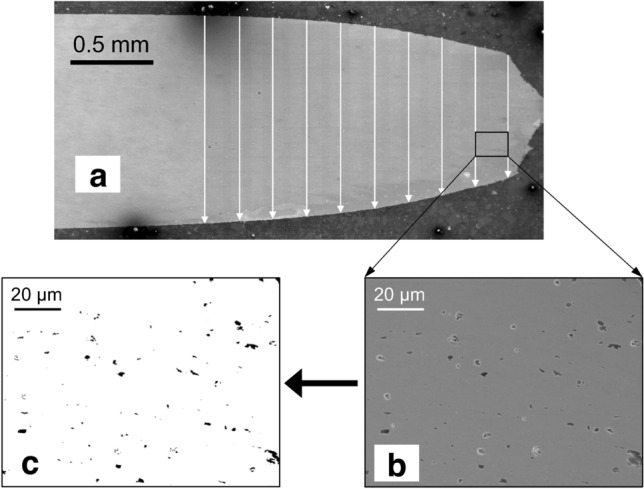
https://cdn.ncbi.nlm.nih.gov/pmc/blobs/dada/9392751/b7ddffc84f6c/41598_2022_17614_Fig1_HTML.jpg
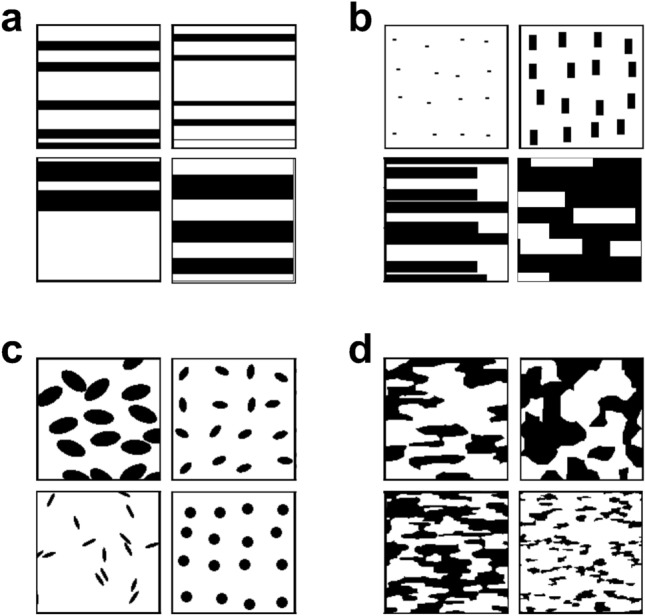
https://cdn.ncbi.nlm.nih.gov/pmc/blobs/dada/9392751/2ab308aeaada/41598_2022_17614_Fig2_HTML.jpg
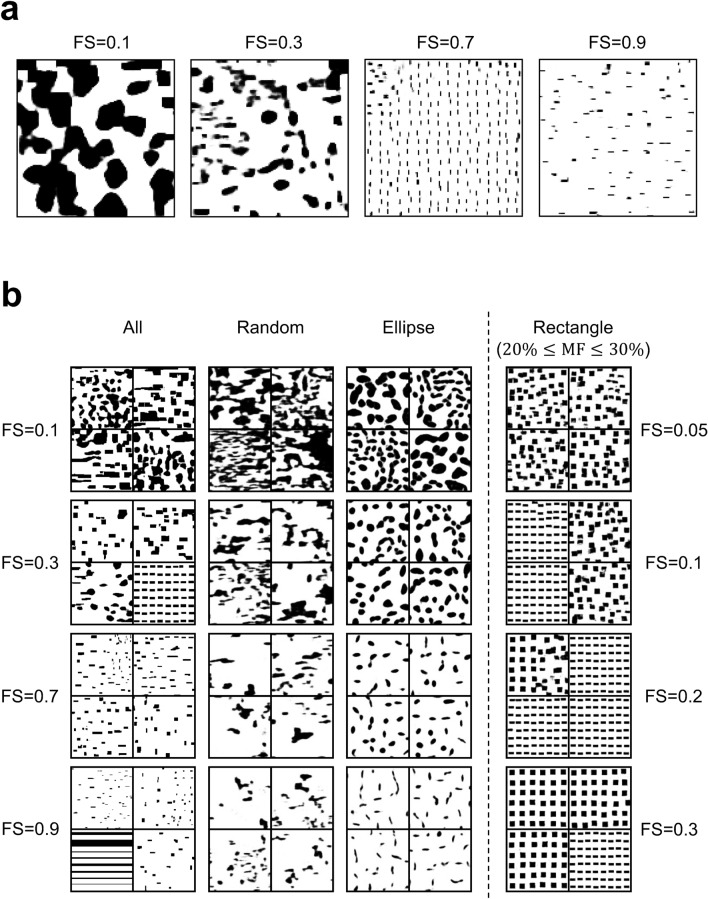
https://cdn.ncbi.nlm.nih.gov/pmc/blobs/dada/9392751/29e88965e4eb/41598_2022_17614_Fig3_HTML.jpg
https://cdn.ncbi.nlm.nih.gov/pmc/blobs/dada/9392751/151855e21334/41598_2022_17614_Fig4_HTML.jpg
https://cdn.ncbi.nlm.nih.gov/pmc/blobs/dada/9392751/321ecc99374d/41598_2022_17614_Fig5_HTML.jpg
https://cdn.ncbi.nlm.nih.gov/pmc/blobs/dada/9392751/641cde8d239b/41598_2022_17614_Fig6_HTML.jpg
https://cdn.ncbi.nlm.nih.gov/pmc/blobs/dada/9392751/7698d3a6ebc5/41598_2022_17614_Fig7_HTML.jpg
https://cdn.ncbi.nlm.nih.gov/pmc/blobs/dada/9392751/ee27439e76df/41598_2022_17614_Fig8_HTML.jpg
https://cdn.ncbi.nlm.nih.gov/pmc/blobs/dada/9392751/841bab42ec09/41598_2022_17614_Fig9_HTML.jpg
https://cdn.ncbi.nlm.nih.gov/pmc/blobs/dada/9392751/b7ddffc84f6c/41598_2022_17614_Fig1_HTML.jpg
https://cdn.ncbi.nlm.nih.gov/pmc/blobs/dada/9392751/2ab308aeaada/41598_2022_17614_Fig2_HTML.jpg
https://cdn.ncbi.nlm.nih.gov/pmc/blobs/dada/9392751/29e88965e4eb/41598_2022_17614_Fig3_HTML.jpg
https://cdn.ncbi.nlm.nih.gov/pmc/blobs/dada/9392751/151855e21334/41598_2022_17614_Fig4_HTML.jpg
https://cdn.ncbi.nlm.nih.gov/pmc/blobs/dada/9392751/321ecc99374d/41598_2022_17614_Fig5_HTML.jpg
https://cdn.ncbi.nlm.nih.gov/pmc/blobs/dada/9392751/641cde8d239b/41598_2022_17614_Fig6_HTML.jpg
https://cdn.ncbi.nlm.nih.gov/pmc/blobs/dada/9392751/7698d3a6ebc5/41598_2022_17614_Fig7_HTML.jpg
https://cdn.ncbi.nlm.nih.gov/pmc/blobs/dada/9392751/ee27439e76df/41598_2022_17614_Fig8_HTML.jpg
https://cdn.ncbi.nlm.nih.gov/pmc/blobs/dada/9392751/841bab42ec09/41598_2022_17614_Fig9_HTML.jpg

相似文献

1
Identification of microstructures critically affecting material properties using machine learning framework based on metallurgists' thinking process.使用基于冶金学家思维过程的机器学习框架识别对材料性能有重大影响的微观结构。
Sci Rep. 2022 Aug 20;12(1):14238. doi: 10.1038/s41598-022-17614-0.
2
Perspectives on development of biomedical polymer materials in artificial intelligence age.人工智能时代生物医用高分子材料的发展展望。
J Biomater Appl. 2023 Mar;37(8):1355-1375. doi: 10.1177/08853282231151822. Epub 2023 Jan 11.
3
Artificial Intelligence in Medical Education: Best Practices Using Machine Learning to Assess Surgical Expertise in Virtual Reality Simulation.医学教育中的人工智能:利用机器学习评估虚拟现实模拟中的手术专业技能的最佳实践
J Surg Educ. 2019 Nov-Dec;76(6):1681-1690. doi: 10.1016/j.jsurg.2019.05.015. Epub 2019 Jun 13.
4
Explanatory pragmatism: a context-sensitive framework for explainable medical AI.解释性实用主义:一个用于可解释医学人工智能的上下文敏感框架。
Ethics Inf Technol. 2022;24(1):13. doi: 10.1007/s10676-022-09632-3. Epub 2022 Feb 28.
5
Unsupervised microstructure segmentation by mimicking metallurgists' approach to pattern recognition.通过模拟冶金学家的模式识别方法进行无监督微观结构分割。
Sci Rep. 2020 Oct 20;10(1):17835. doi: 10.1038/s41598-020-74935-8.
6
Data-driven modeling and prediction of blood glucose dynamics: Machine learning applications in type 1 diabetes.基于数据驱动的血糖动力学建模与预测:机器学习在 1 型糖尿病中的应用。
Artif Intell Med. 2019 Jul;98:109-134. doi: 10.1016/j.artmed.2019.07.007. Epub 2019 Jul 26.
7
Integrating Machine Learning with Human Knowledge.将机器学习与人类知识相结合。
iScience. 2020 Oct 9;23(11):101656. doi: 10.1016/j.isci.2020.101656. eCollection 2020 Nov 20.
8
Hybrid Data-Driven Deep Learning Framework for Material Mechanical Properties Prediction with the Focus on Dual-Phase Steel Microstructures.用于材料力学性能预测的混合数据驱动深度学习框架,重点关注双相钢微观结构
Materials (Basel). 2023 Jan 3;16(1):447. doi: 10.3390/ma16010447.
9
Center-environment feature models for materials image segmentation based on machine learning.基于机器学习的材料图像分割的中心环境特征模型。
Sci Rep. 2022 Jul 28;12(1):12960. doi: 10.1038/s41598-022-16824-w.
10
Machine Learning-Assisted Design of Material Properties.机器学习辅助材料性能设计。
Annu Rev Chem Biomol Eng. 2022 Jun 10;13:235-254. doi: 10.1146/annurev-chembioeng-092220-024340. Epub 2022 Mar 17.

引用本文的文献

1
Machine Learning-Aided Analysis of the Rolling and Recrystallization Textures of Pure Iron with Different Cold Reduction Ratios and Cold-Rolling Directions.基于机器学习的不同冷轧压下率和轧制方向纯铁的再结晶织构与轧制织构分析
Materials (Basel). 2024 Jul 10;17(14):3402. doi: 10.3390/ma17143402.

本文引用的文献

1
Stochastic characterization and reconstruction of material microstructures for establishment of process-structure-property linkage using the deep generative model.使用深度生成模型对材料微观结构进行随机表征和重建,以建立工艺-结构-性能联系。
Phys Rev E. 2021 Aug;104(2-2):025302. doi: 10.1103/PhysRevE.104.025302.
2
Integrating Machine Learning with Human Knowledge.将机器学习与人类知识相结合。
iScience. 2020 Oct 9;23(11):101656. doi: 10.1016/j.isci.2020.101656. eCollection 2020 Nov 20.
3
Unsupervised microstructure segmentation by mimicking metallurgists' approach to pattern recognition.
通过模拟冶金学家的模式识别方法进行无监督微观结构分割。
Sci Rep. 2020 Oct 20;10(1):17835. doi: 10.1038/s41598-020-74935-8.
4
Inverse molecular design using machine learning: Generative models for matter engineering.基于机器学习的反向分子设计:物质工程生成模型。
Science. 2018 Jul 27;361(6400):360-365. doi: 10.1126/science.aat2663. Epub 2018 Jul 26.
5
Building machines that learn and think like people.建造像人一样学习和思考的机器。
Behav Brain Sci. 2017 Jan;40:e253. doi: 10.1017/S0140525X16001837. Epub 2016 Nov 24.
6
Characterization and reconstruction of 3D stochastic microstructures via supervised learning.通过监督学习对三维随机微观结构进行表征与重建。
J Microsc. 2016 Dec;264(3):282-297. doi: 10.1111/jmi.12441. Epub 2016 Jul 5.