Department of Neurobiology, Care Sciences and Society, Division of Physiotherapy, Karolinska Institutet, Alfred Nobels Allé 23, 141 83, Huddinge, Sweden.
Department of Occupational Therapy and Physiotherapy, Women's Health and Allied Health Professionals' Theme, Karolinska University Hospital, Stockholm, Sweden.
BMC Musculoskelet Disord. 2022 Aug 22;23(1):801. doi: 10.1186/s12891-022-05722-x.
In chronic LBP (CLBP), guideline-endorsed treatment is to stay active, return to normal activity, and to exercise. Several reviews on various exercise types used in CLBP have been published. We aimed to identify systematic reviews of common exercise types used in CLBP, to appraise their quality, and to summarize and compare their effect on pain and disability.
We searched the databases OVID MEDLINE, EMBASE, COCHRANE LIBRARY, and WEB OF SCIENCE (Core collection) for systematic reviews and meta-analyses on adults between 18 and 70 years of age suffering from chronic or recurrent LBP for a period of at least 12 weeks, which investigated the effects of exercises on pain and disability. All searches were conducted without language restriction. The search was performed up until 2022-01-26. The included reviews were grouped into nine exercise types: aerobic training, aquatic exercises, motor control exercises (MCE), resistance training, Pilates, sling exercises, traditional Chinese exercises (TCE), walking, and yoga. The study quality was assessed with AMSTAR-2. For each exercise type, a narrative analysis was performed, and the level of evidence for the effects of exercise was assessed through GRADE.
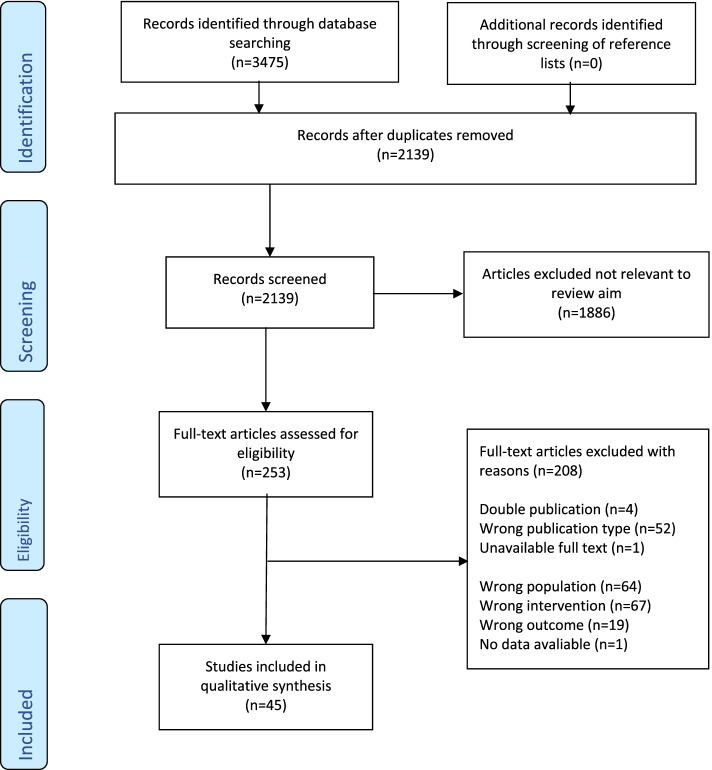
Our database search resulted in 3,475 systematic reviews. Out of the 253 full texts that were screened, we included 45 systematic reviews and meta-analyses. The quality of the included reviews ranged from high to critically low. Due to large heterogeneity, no meta-analyses were performed. We found low-to-moderate evidence of mainly short-term and small beneficial effects on pain and disability for MCE, Pilates, resistance training, TCE, and yoga compared to no or minimal intervention.
Our findings show that the effect of various exercise types used in CLBP on pain and disability varies with no major difference between exercise types. Many of the included systematic reviews were of low-to-moderate quality and based on randomized controlled trials with high risk of bias. The conflicting results seen, undermine the certainty of the results leading to very-low-to-moderate quality of evidence for our results. Future systematic reviews should be of higher quality to minimize waste of resources.
PROSPERO: Reg no 190409 Registration date 01AUG 2020.
在慢性下腰痛(CLBP)中,指南推荐的治疗方法是保持活动、恢复正常活动和锻炼。已经发表了几篇关于 CLBP 中使用的各种运动类型的综述。我们的目的是确定对 CLBP 中常用运动类型的系统评价,评估其质量,并总结和比较它们对疼痛和残疾的影响。
我们在 OVID MEDLINE、EMBASE、COCHRANE 图书馆和 WEB OF SCIENCE(核心合集)数据库中搜索了针对 18 至 70 岁患有慢性或复发性下腰痛至少 12 周的成年人的系统评价和荟萃分析,这些研究调查了运动对疼痛和残疾的影响。所有搜索均无语言限制。搜索截止日期为 2022-01-26。纳入的综述分为九种运动类型:有氧运动、水上运动、运动控制练习(MCE)、抗阻训练、普拉提、吊带运动、传统中医练习(TCE)、散步和瑜伽。使用 AMSTAR-2 评估研究质量。对于每种运动类型,我们进行了叙述性分析,并通过 GRADE 评估运动效果的证据水平。
我们的数据库搜索产生了 3475 篇系统评价。在筛选出的 253 篇全文中,我们纳入了 45 篇系统评价和荟萃分析。纳入综述的质量从高到低不等。由于存在很大的异质性,因此没有进行荟萃分析。我们发现,与无干预或最小干预相比,MCE、普拉提、抗阻训练、TCE 和瑜伽对疼痛和残疾的短期和小的有益影响的证据为低至中等,主要来自短期和小的随机对照试验。
我们的研究结果表明,CLBP 中使用的各种运动类型对疼痛和残疾的影响因运动类型而异,没有明显差异。许多纳入的系统评价质量较低,基于偏倚风险较高的随机对照试验。我们看到相互矛盾的结果,降低了结果的确定性,导致我们的结果证据质量非常低至中等。未来的系统评价应具有更高的质量,以最大限度地减少资源浪费。
PROSPERO:注册号 190409,注册日期 2020 年 8 月 1 日。