Department of Medicine, University of California, San Diego School of Medicine, La Jolla, California.
Department of Surgery, University of California, San Diego School of Medicine, La Jolla, California.
Semin Liver Dis. 2022 Aug;42(3):233-249. doi: 10.1055/s-0042-1755316. Epub 2022 Aug 24.
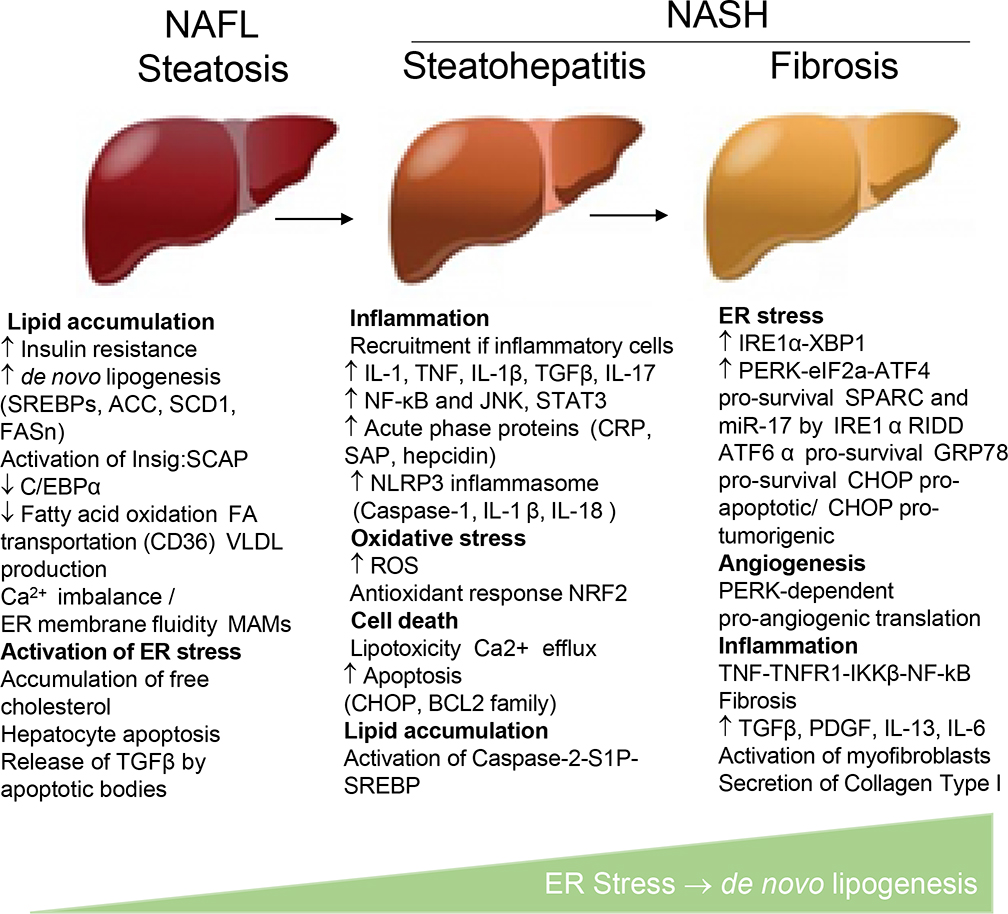
Nonalcoholic liver disease is a component of metabolic syndrome associated with obesity, insulin resistance, and hyperlipidemia. Excessive alcohol consumption may accelerate the progression of steatosis, steatohepatitis, and fibrosis. While simple steatosis is considered a benign condition, nonalcoholic steatohepatitis with inflammation and fibrosis may progress to cirrhosis, liver failure, and hepatocellular cancer. Studies in rodent experimental models and primary cell cultures have demonstrated several common cellular and molecular mechanisms in the pathogenesis and regression of liver fibrosis. Chronic injury and death of hepatocytes cause the recruitment of myeloid cells, secretion of inflammatory and fibrogenic cytokines, and activation of myofibroblasts, resulting in liver fibrosis. In this review, we discuss the role of metabolically injured hepatocytes in the pathogenesis of nonalcoholic steatohepatitis and alcohol-associated liver disease. Specifically, the role of chemokine production and de novo lipogenesis in the development of steatotic hepatocytes and the pathways of steatosis regulation are discussed.
非酒精性肝病是代谢综合征的一个组成部分,与肥胖、胰岛素抵抗和高脂血症有关。过量饮酒可能会加速脂肪变性、脂肪性肝炎和纤维化的进展。虽然单纯性脂肪变性被认为是一种良性疾病,但伴有炎症和纤维化的非酒精性脂肪性肝炎可能会进展为肝硬化、肝功能衰竭和肝细胞癌。在啮齿动物实验模型和原代细胞培养中的研究已经证明了肝纤维化发生和消退的几种常见的细胞和分子机制。慢性肝损伤和肝细胞死亡导致髓样细胞的募集、炎症和纤维生成细胞因子的分泌以及肌成纤维细胞的激活,导致肝纤维化。在这篇综述中,我们讨论了代谢损伤的肝细胞在非酒精性脂肪性肝炎和酒精相关性肝病发病机制中的作用。具体来说,讨论了趋化因子产生和从头脂肪生成在脂肪变性肝细胞发生中的作用以及脂肪变性调节途径。