Amat Farah, Zimdahl Jack W, Barry Kristin M, Rodger Jennifer, Mulders Wilhelmina H A M
The Auditory Laboratory, School of Human Sciences, University of Western Australia, Crawley, WA 6009, Australia.
School of Biological Sciences, University of Western Australia, Crawley, WA 6009, Australia.
Brain Sci. 2022 Aug 18;12(8):1096. doi: 10.3390/brainsci12081096.
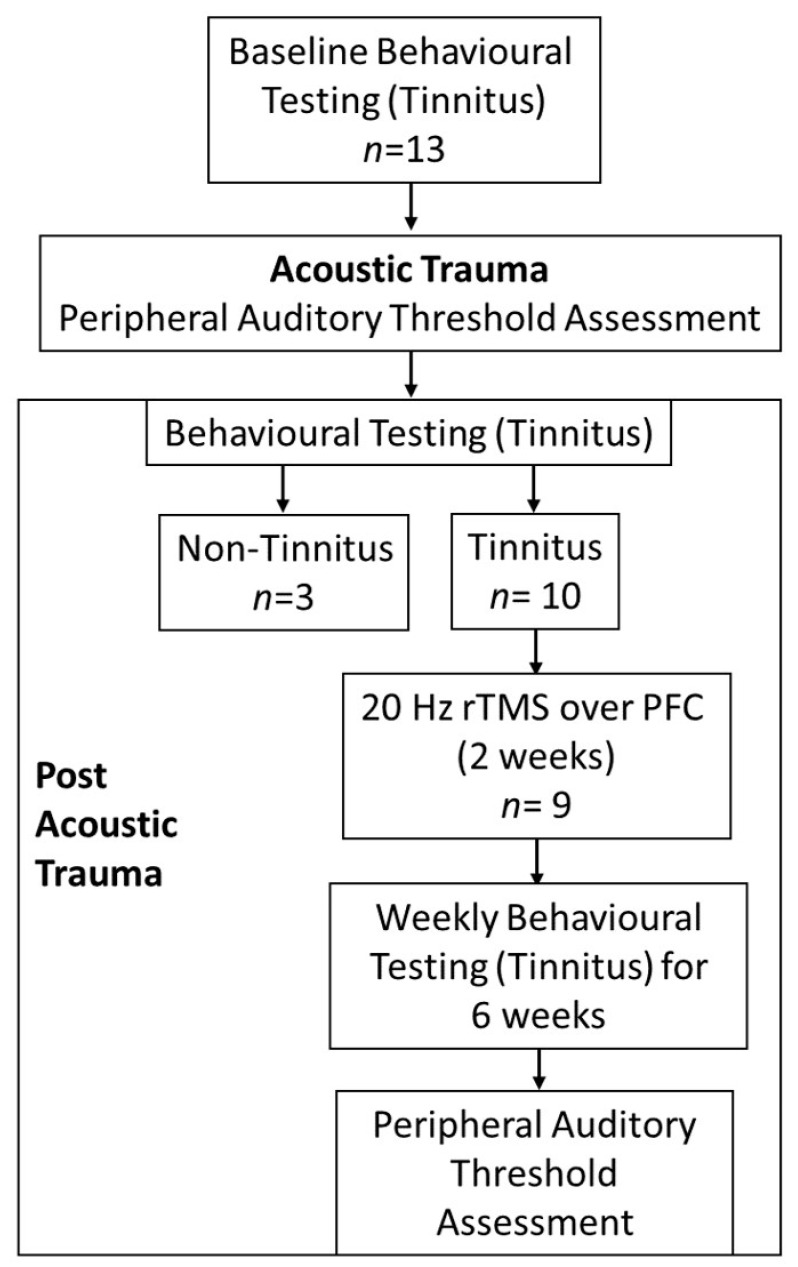
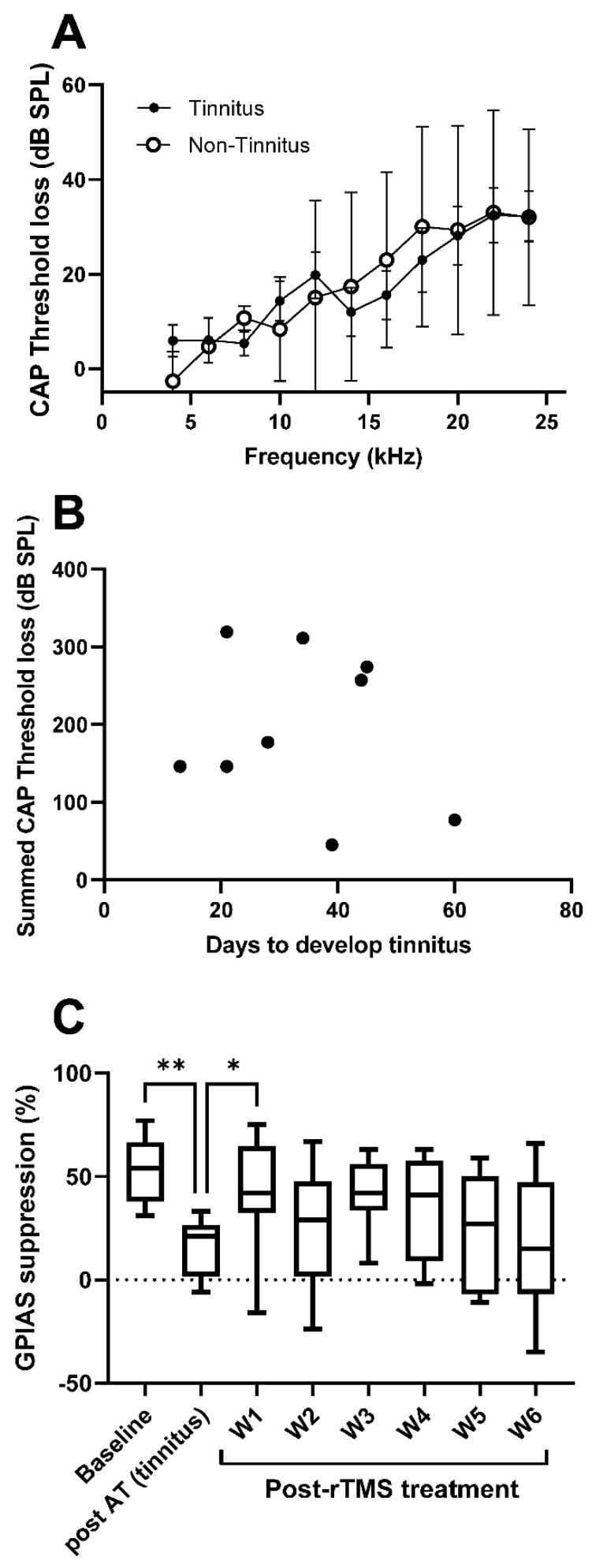
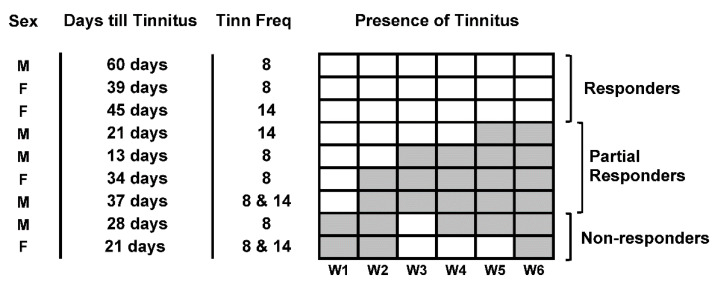
The auditory phantom sensation of tinnitus is associated with neural hyperactivity. Modulating this hyperactivity using repetitive transcranial magnetic stimulation (rTMS) has shown beneficial effects in human studies. Previously, we investigated rTMS in a tinnitus animal model and showed that rTMS over prefrontal cortex (PFC) attenuated tinnitus soon after treatment, likely via indirect effects on auditory pathways. Here, we explored the duration of these beneficial effects. Acoustic trauma was used to induce hearing loss and tinnitus in guinea pigs. Once tinnitus developed, high-frequency (20 Hz), high-intensity rTMS was applied over PFC for two weeks (weekdays only; 10 min/day). Behavioral signs of tinnitus were monitored for 6 weeks after treatment ended. Tinnitus developed in 77% of animals between 13 and 60 days post-trauma. rTMS treatment significantly reduced the signs of tinnitus at 1 week on a group level, but individual responses varied greatly at week 2 until week 6. Three (33%) of the animals showed the attenuation of tinnitus for the full 6 weeks, 45% for 1-4 weeks and 22% were non-responders. This study provides further support for the efficacy of high-frequency repetitive stimulation over the PFC as a therapeutic tool for tinnitus, but also highlights individual variation observed in human studies.
耳鸣的听觉幻听与神经活动亢进有关。在人体研究中,使用重复经颅磁刺激(rTMS)调节这种活动亢进已显示出有益效果。此前,我们在耳鸣动物模型中研究了rTMS,结果表明,对前额叶皮质(PFC)进行rTMS治疗后不久,耳鸣就会减轻,这可能是通过对听觉通路的间接作用实现的。在此,我们探究了这些有益效果的持续时间。采用声创伤诱导豚鼠听力损失和耳鸣。一旦耳鸣形成,就在PFC上施加高频(20 Hz)、高强度rTMS,持续两周(仅工作日;每天10分钟)。治疗结束后,对耳鸣的行为体征进行6周的监测。77%的动物在创伤后13至60天出现耳鸣。rTMS治疗在第1周时在组水平上显著降低了耳鸣体征,但在第2周至第6周,个体反应差异很大。3只(33%)动物在整整6周内耳鸣减轻,45%在1至4周内减轻,22%无反应。本研究进一步支持了对PFC进行高频重复刺激作为耳鸣治疗工具的有效性,但也突出了在人体研究中观察到的个体差异。