Denton Alexa J, Finberg Ariel, Ashman Peter E, Bencie Nathalie B, Scaglione Tricia, Kuzbyt Brianna, Telischi Fred F, Mittal Rahul, Eshraghi Adrien A
University of Miami Ear Institute, Department of Otolaryngology, University of Miami Miller School of Medicine, Miami, FL 33136, USA.
Department of Neurological Surgery, University of Miami Miller School of Medicine, Miami, FL 333136, USA.
J Clin Med. 2021 Nov 20;10(22):5422. doi: 10.3390/jcm10225422.
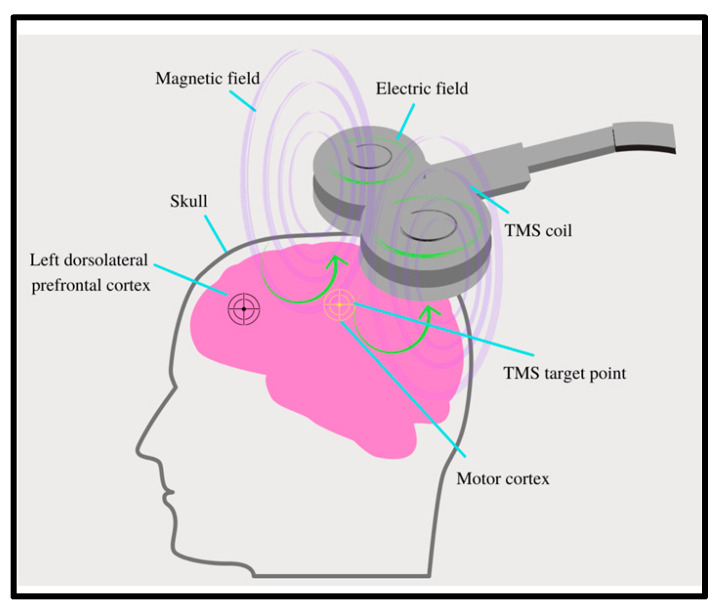
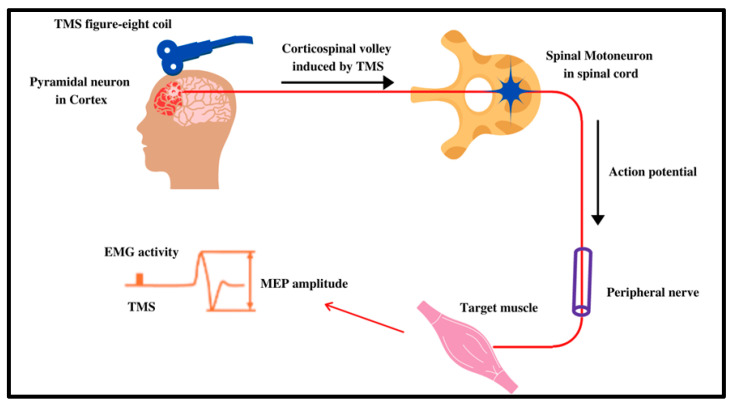
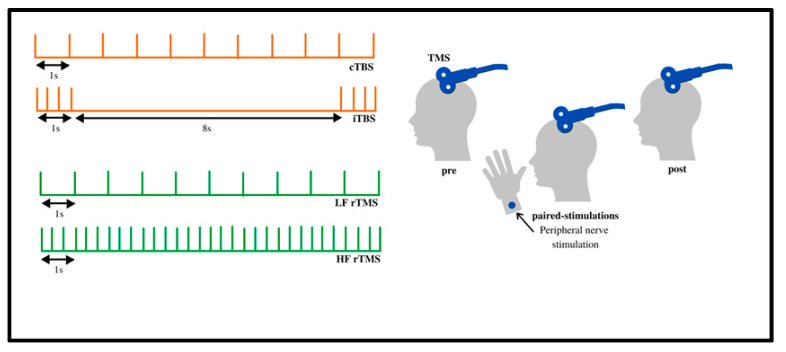
Repetitive transcranial magnetic stimulation (rTMS) is a non-invasive, neuromodulating technique for brain hyperexcitability disorders. The objective of this paper is to discuss the mechanism of action of rTMS as well as to investigate the literature involving the application of rTMS in the treatment of tinnitus. The reviewed aspects of the protocols included baseline evaluation, the total number of sessions, frequency and the total number of stimuli, the location of treatment, and the outcome measures. Even with heterogeneous protocols, most studies utilized validated tinnitus questionnaires as baseline and outcome measures. Low frequency (1 Hz) stimulation throughout 10 consecutive sessions was the most widely used frequency and treatment duration; however, there was no consensus on the total number of stimuli necessary to achieve significant results. The auditory cortex (AC) was the most targeted location, with most studies supporting changes in neural activity with multi-site stimulation to areas in the frontal cortex (FC), particularly the dorsolateral prefrontal cortex (DLPFC). The overall efficacy across most of the reviewed trials reveals positive statistically significant results. Though rTMS has proven to impact neuroplasticity at the microscopic and clinical level, further studies are warranted to demonstrate and support the clinical use of rTMS in tinnitus treatment with a standardized protocol.
重复经颅磁刺激(rTMS)是一种用于治疗大脑过度兴奋障碍的非侵入性神经调节技术。本文旨在探讨rTMS的作用机制,并研究有关rTMS在耳鸣治疗中应用的文献。对方案的回顾方面包括基线评估、疗程总数、频率和刺激总数、治疗部位以及结果测量。即使方案存在异质性,大多数研究仍使用经过验证的耳鸣问卷作为基线和结果测量指标。连续10个疗程的低频(1Hz)刺激是最广泛使用的频率和治疗持续时间;然而,对于取得显著效果所需的刺激总数尚无共识。听觉皮层(AC)是最常靶向的部位,大多数研究支持通过对额叶皮层(FC)区域,特别是背外侧前额叶皮层(DLPFC)进行多部位刺激来改变神经活动。大多数综述试验的总体疗效显示出具有统计学意义的积极结果。尽管rTMS已被证明在微观和临床水平上会影响神经可塑性,但仍需要进一步研究以证明并支持rTMS在耳鸣治疗中采用标准化方案的临床应用。