Zhai Xingjian, Jiang Xiaoyan
Terry Fox Laboratory, British Columbia Cancer Research Institute, Vancouver, BC V5Z 1L3, Canada.
Experimental Medicine, Department of Medicine, University of British Columbia, Vancouver, BC V5Z 1M9, Canada.
Biomedicines. 2022 Jul 30;10(8):1841. doi: 10.3390/biomedicines10081841.
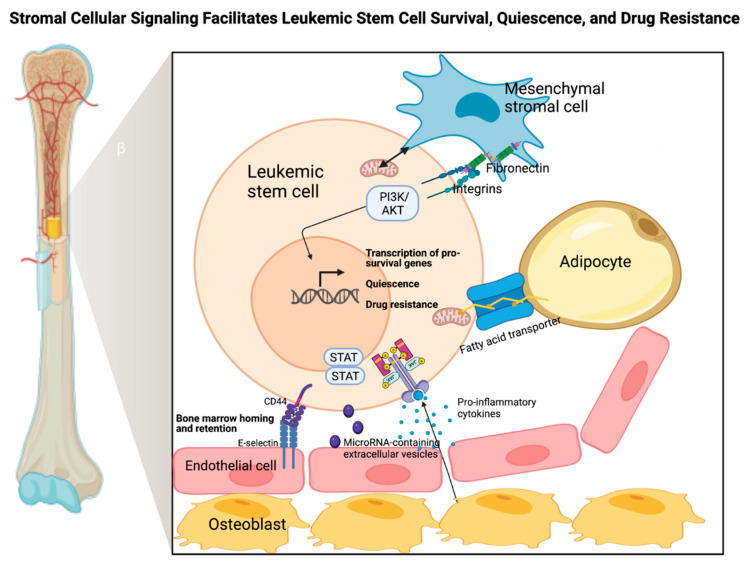
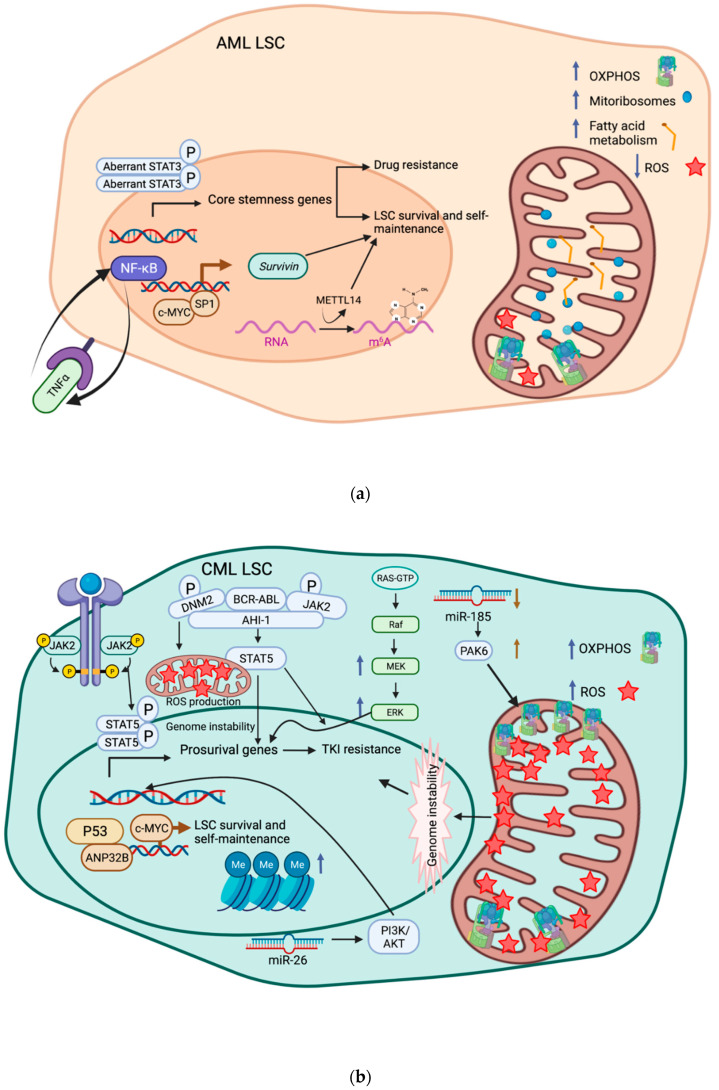
Notoriously known for their capacity to reconstitute hematological malignancies in vivo, leukemic stem cells (LSCs) represent key drivers of therapeutic resistance and disease relapse, posing as a major medical dilemma. Despite having low abundance in the bulk leukemic population, LSCs have developed unique molecular dependencies and intricate signaling networks to enable self-renewal, quiescence, and drug resistance. To illustrate the multi-dimensional landscape of LSC-mediated leukemogenesis, in this review, we present phenotypical characteristics of LSCs, address the LSC-associated leukemic stromal microenvironment, highlight molecular aberrations that occur in the transcriptome, epigenome, proteome, and metabolome of LSCs, and showcase promising novel therapeutic strategies that potentially target the molecular vulnerabilities of LSCs.
白血病干细胞(LSCs)以其在体内重建血液系统恶性肿瘤的能力而臭名昭著,它们是治疗耐药性和疾病复发的关键驱动因素,构成了一个重大的医学难题。尽管LSCs在大量白血病细胞群体中的丰度较低,但它们已经形成了独特的分子依赖性和复杂的信号网络,以实现自我更新、静止和耐药性。为了阐明LSC介导的白血病发生的多维度图景,在本综述中,我们介绍了LSCs的表型特征,探讨了与LSC相关的白血病基质微环境,强调了LSCs转录组、表观基因组、蛋白质组和代谢组中发生的分子异常,并展示了有前景的新型治疗策略,这些策略可能针对LSCs的分子弱点。