Batali Mackenzie E, Lim Lik Xian, Liang Jiexin, Yeager Sara E, Thompson Ashley N, Han Juliet, Ristenpart William D, Guinard Jean-Xavier
Department of Food Science and Technology, University of California, Davis, 1, Shields Avenue, Davis, CA 95616, USA.
UC Davis Coffee Center, University of California, Davis, 1, Shields Avenue, Davis, CA 95616, USA.
Foods. 2022 Aug 13;11(16):2440. doi: 10.3390/foods11162440.
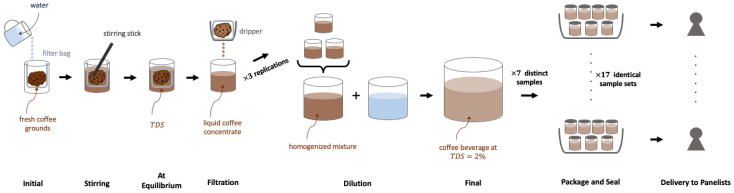
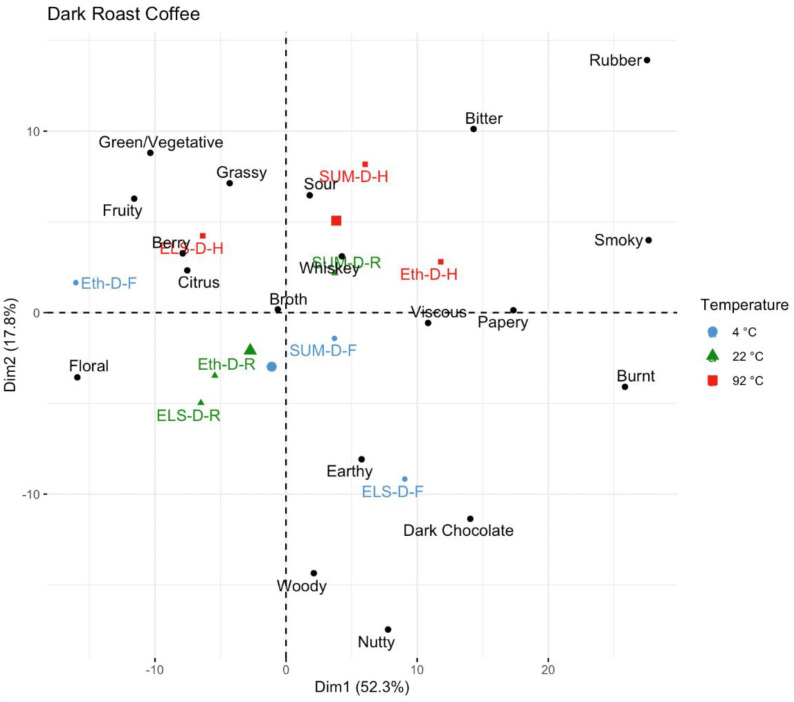
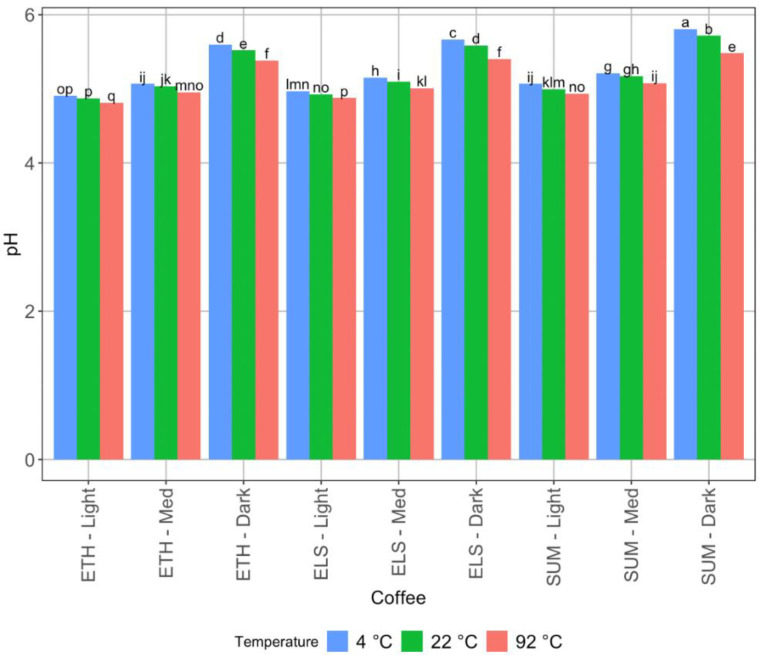
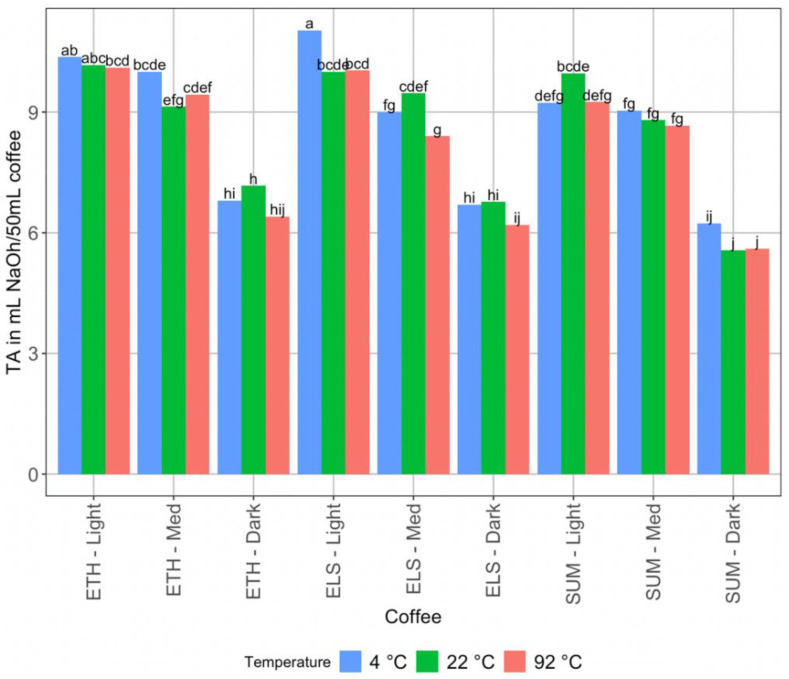
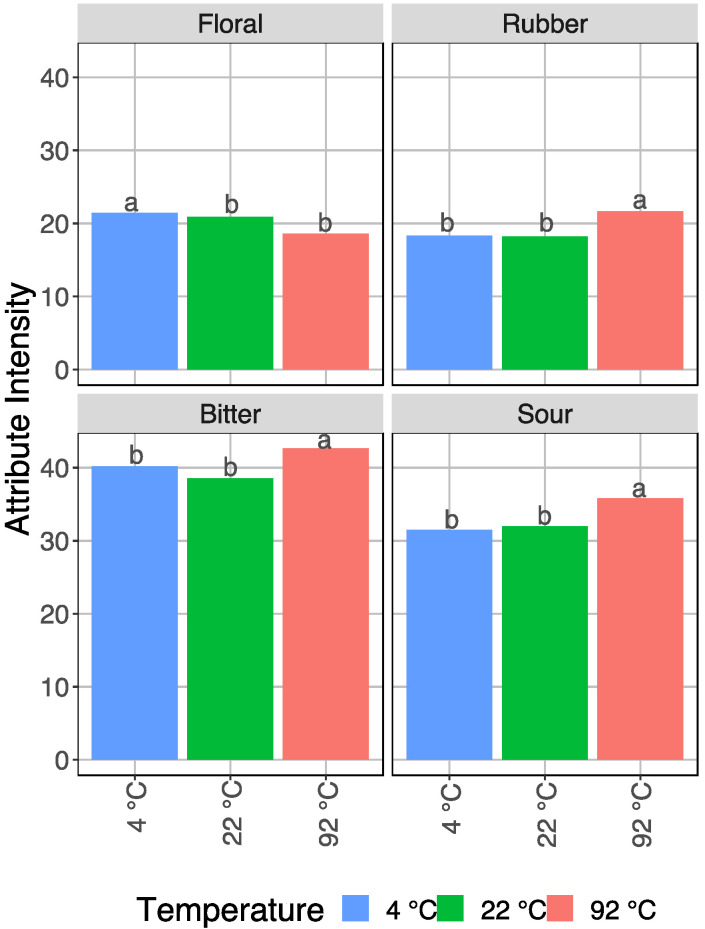
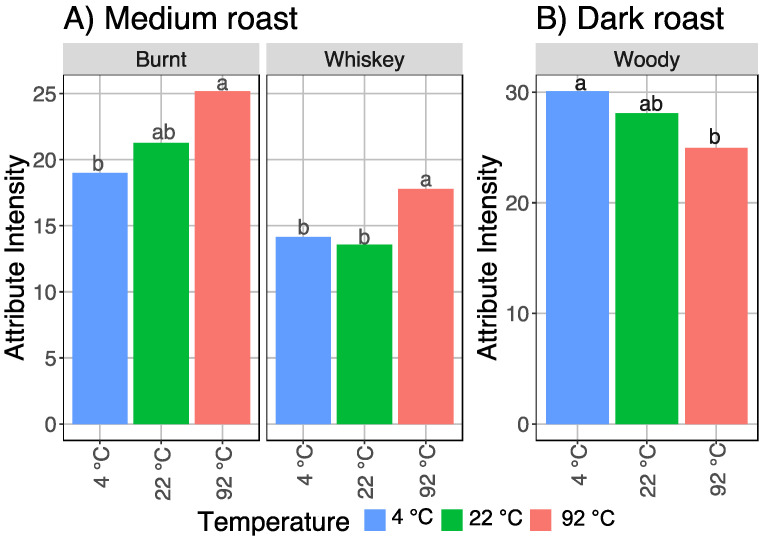
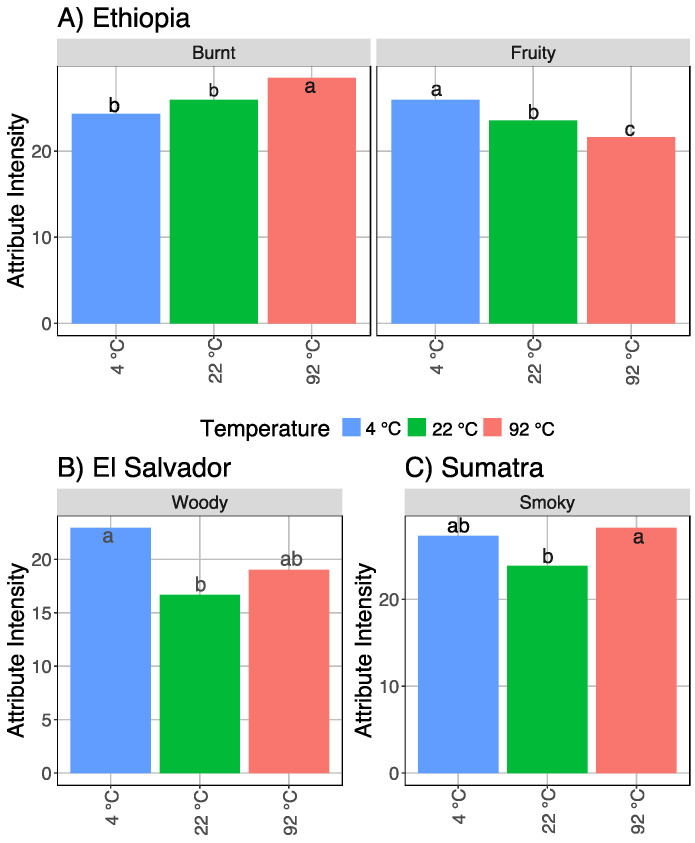
Cold brew coffee is often described as sweeter or less acidic than hot brew coffee. Such comparisons, however, are potentially confounded by two key effects: different brew temperatures necessarily change the extraction dynamics and potentially alter the resulting brew strength, and different consumption temperatures are well known to affect perceived flavor and taste. Here, we performed a systematic study of how extraction temperature affects the sensory qualities of full immersion coffee. The investigation used a 3 × 3 × 3 factorial design, with coffee from three different origins representing different post-harvest methods (washed, honey-processed, and wet-hulled), each roasted to three different levels (light, medium, and dark), and each brewed at three different temperatures (4 °C, 22 °C, and 92 °C). All coffees were brewed to equilibrium, then diluted to precisely 2% total dissolved solids (TDS) and served at the same cold temperature (4 °C). We find that four attributes exhibited statistically significant variations with brew temperature for all origins and roast levels tested, with bitter taste, sour taste, and rubber flavor all higher in hot brewed coffees, and floral flavor higher in cold brewed coffee. However, there were strong interactions with origin and roast, with several additional attributes significantly impacted by temperature for specific origins and roast levels. These results provide insight on how brew temperature can be used to modulate the flavor profile of full immersion coffee.
冷萃咖啡通常被描述为比热萃咖啡更甜或酸性更低。然而,这种比较可能会受到两个关键因素的混淆:不同的冲泡温度必然会改变萃取动态,并可能改变最终的冲泡浓度,而且众所周知,不同的饮用温度会影响感知到的风味和口感。在这里,我们对萃取温度如何影响全浸式咖啡的感官品质进行了系统研究。该调查采用了3×3×3析因设计,使用来自三种不同产地的咖啡,代表不同的收获后处理方法(水洗、蜜处理和湿刨),每种咖啡烘焙至三种不同程度(浅度、中度和深度),并在三种不同温度(4°C、22°C和92°C)下冲泡。所有咖啡都冲泡至平衡状态,然后稀释至总溶解固体(TDS)精确为2%,并在相同的低温(4°C)下饮用。我们发现,对于所有测试的产地和烘焙程度,有四个属性随冲泡温度呈现出统计学上的显著差异,热萃咖啡中的苦味、酸味和橡胶味更高,而冷萃咖啡中的花香味更高。然而,产地和烘焙之间存在强烈的相互作用,对于特定的产地和烘焙程度,还有几个其他属性受到温度的显著影响。这些结果为如何利用冲泡温度来调节全浸式咖啡的风味特征提供了见解。