Laboratory of Medicinal and Computational Chemistry (LQMC), Center for Research and Innovation in Biodiversity and Drug Discovery (CIBFar), Institute of Physics of São Carlos, University of São Paulo (USP), Av. João Dagnone, n° 1100, São Carlos 13563-120, SP, Brazil.
Laboratory of Synthesis of Natural Products and Drugs, Institute of Chemistry, University of Campinas, Campinas 13083-970, SP, Brazil.
Int J Mol Sci. 2022 Aug 10;23(16):8898. doi: 10.3390/ijms23168898.
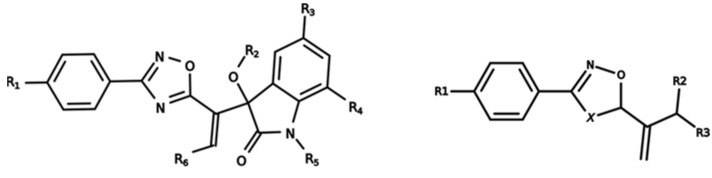
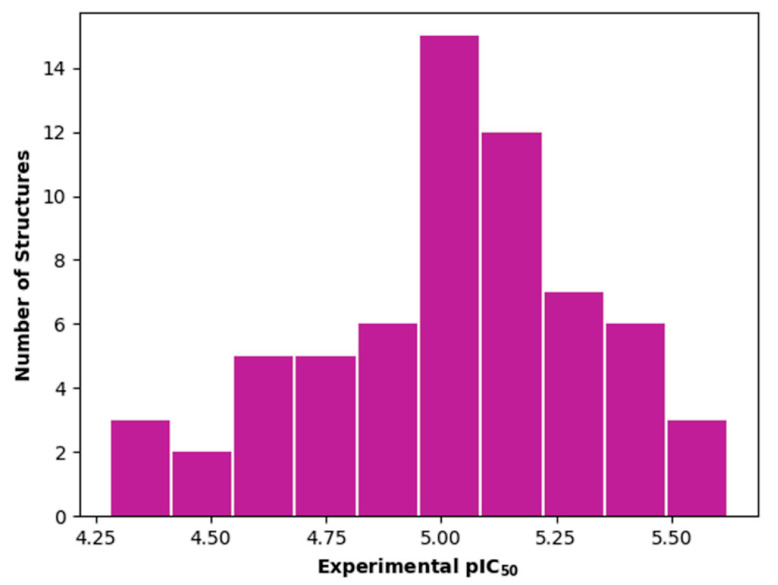
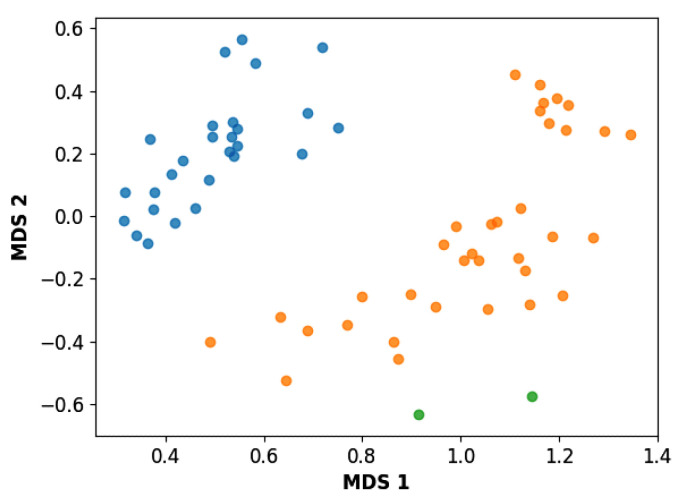
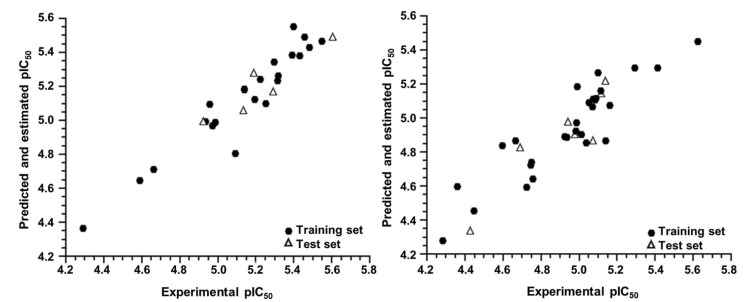
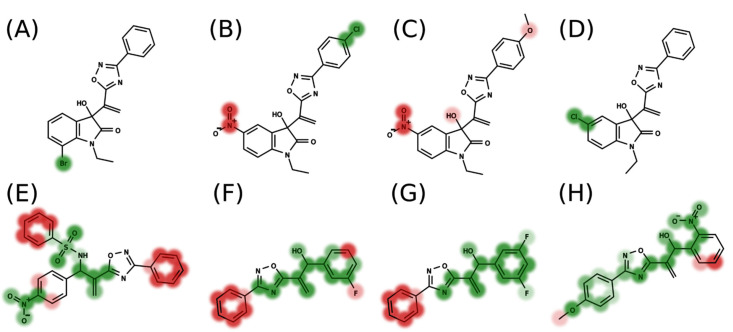
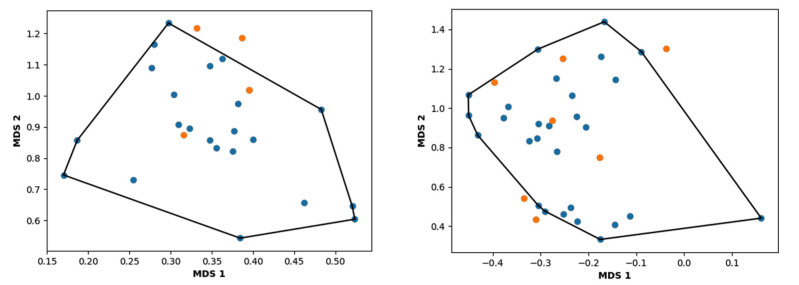
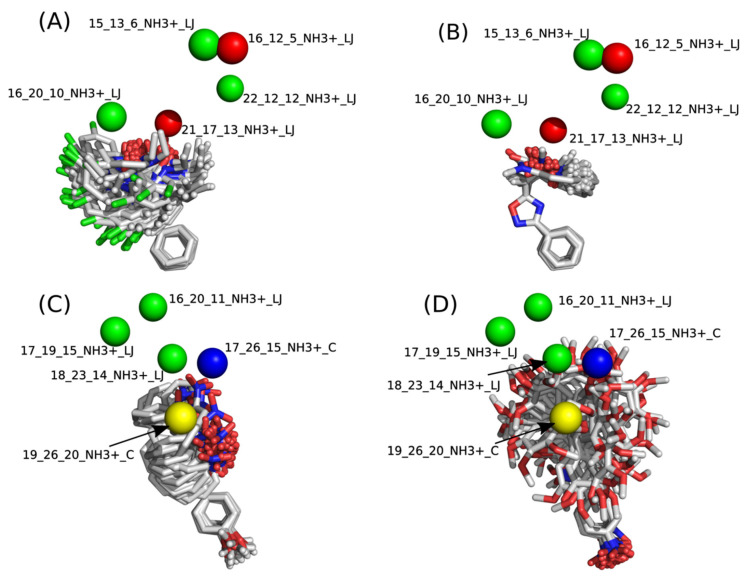
Leishmaniasis is a neglected tropical disease that kills more than 20,000 people each year. The chemotherapy available for the treatment of the disease is limited, and novel approaches to discover novel drugs are urgently needed. Herein, 2D- and 4D-quantitative structure-activity relationship (QSAR) models were developed for a series of oxazole and oxadiazole derivatives that are active against , the causative agent of visceral leishmaniasis. A clustering strategy based on structural similarity was applied with molecular fingerprints to divide the complete set of compounds into two groups. Hierarchical clustering was followed by the development of 2D- ( = 0.90, pred = 0.82) and 4D-QSAR models ( = 0.80, pred = 0.64), which showed improved statistical robustness and predictive ability.
利什曼病是一种被忽视的热带病,每年导致超过 20000 人死亡。现有的治疗这种疾病的化疗方法有限,因此迫切需要寻找新的方法来发现新的药物。在此,我们针对一系列具有抗内脏利什曼病活性的噁唑和噁二唑衍生物,建立了二维和四维定量构效关系(QSAR)模型。我们采用基于结构相似性的聚类策略,使用分子指纹将整个化合物集分为两组。然后进行层次聚类,建立二维( = 0.90,pred = 0.82)和四维 QSAR 模型( = 0.80,pred = 0.64),这些模型显示出了改进的统计稳健性和预测能力。