Carra Rafael Bernhart, Silva Guilherme Diogo, Paraguay Isabela Bruzzi Bezerra, Diniz de Lima Fabricio, Menezes Janaina Reis, Pineda Aruane Mello, Nunes Glaucia Aline, Simões Juliana da Silva, França Marcondes Cavalcante, Cury Rubens Gisbert
Department of Neurology, School of Medicine, University of São Paulo, São Paulo 05403-000, Brazil.
Department of Neurology, University of Campinas, Campinas 13083-888, Brazil.
J Clin Med. 2022 Aug 14;11(16):4748. doi: 10.3390/jcm11164748.
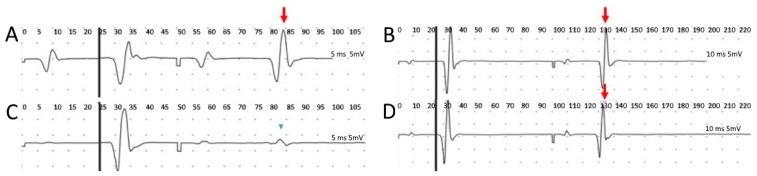
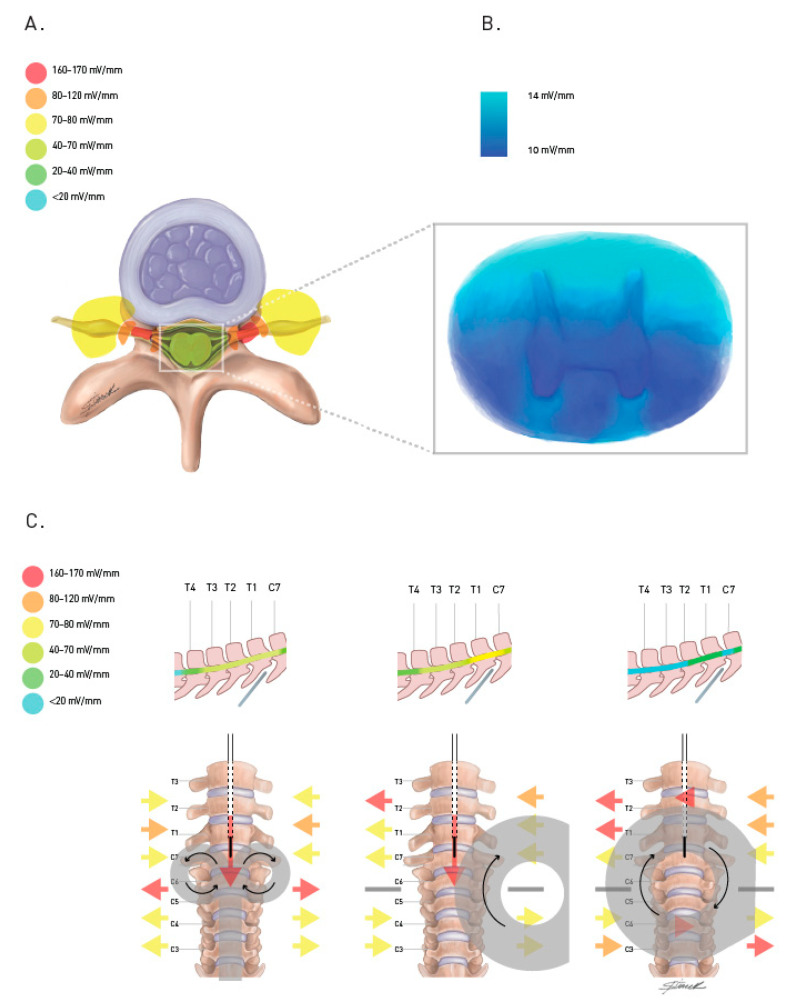
Magnetic stimulation is a safe, non-invasive diagnostic tool and promising treatment strategy for neurological and psychiatric disorders. Although most studies address transcranial magnetic stimulation, transspinal magnetic stimulation (TsMS) has received recent attention since trials involving invasive spinal cord stimulation showed encouraging results for pain, spasticity, and Parkinson's disease. While the effects of TsMS on spinal roots is well understood, its mechanism of action on the spinal cord is still controversial. Despite unclear mechanisms of action, clinical benefits of TsMS have been reported, including improvements in scales of spasticity, hyperreflexia, and bladder and bowel symptoms, and even supraspinal gait disorders such as freezing and camptocormia. In the present study, a critical review on the application of TsMS in neurology was conducted, along with an exploratory trial involving TsMS in three patients with hereditary spastic paraplegia. The goal was to understand the mechanism of action of TsMS through H-reflex measurement at the unstimulated lumbosacral level. Although limited by studies with a small sample size and a low to moderate effect size, TsMS is safe and tolerable and presents consistent clinical and neurophysiological benefits that support its use in clinical practice.
磁刺激是一种安全、无创的诊断工具,也是治疗神经和精神疾病的一种有前景的治疗策略。尽管大多数研究针对的是经颅磁刺激,但自从涉及侵入性脊髓刺激的试验对疼痛、痉挛和帕金森病显示出令人鼓舞的结果以来,经脊髓磁刺激(TsMS)最近受到了关注。虽然TsMS对脊神经根的作用已得到充分了解,但其对脊髓的作用机制仍存在争议。尽管作用机制尚不清楚,但已有报道称TsMS具有临床益处,包括痉挛程度、反射亢进以及膀胱和肠道症状的改善,甚至还有诸如冻结步态和脊柱前凸等脊髓上运动障碍的改善。在本研究中,对TsMS在神经病学中的应用进行了批判性综述,并对三名遗传性痉挛性截瘫患者进行了TsMS探索性试验。目的是通过在未受刺激的腰骶水平进行H反射测量来了解TsMS的作用机制。尽管受到样本量小和效应量低至中等的研究的限制,但TsMS是安全且可耐受的,并呈现出一致的临床和神经生理学益处,支持其在临床实践中的应用。