Department of Veterinary Medicine, College of Agriculture and Animal Husbandry, Qinghai University, Xining 810016, China.
Academy of Agriculture and Forestry Sciences, Qinghai University, Xining 810016, China.
Molecules. 2022 Aug 19;27(16):5292. doi: 10.3390/molecules27165292.
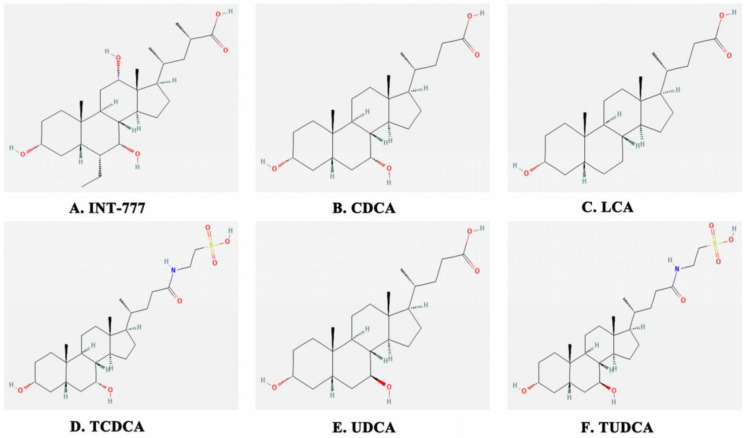
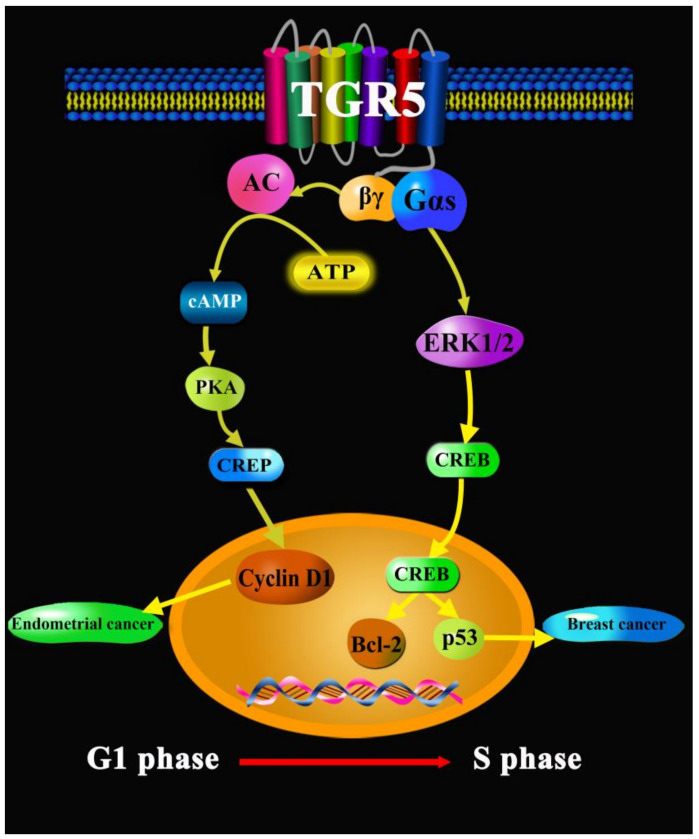
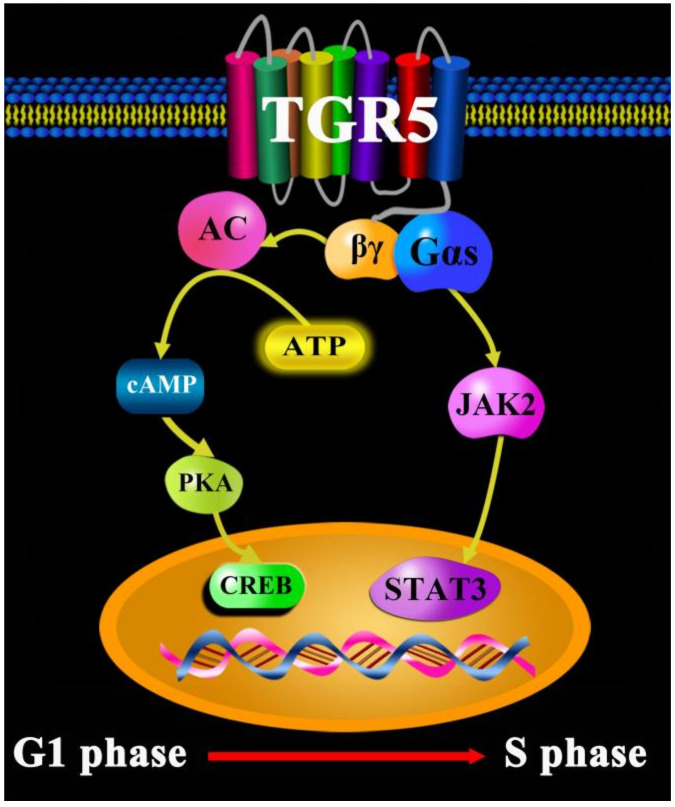
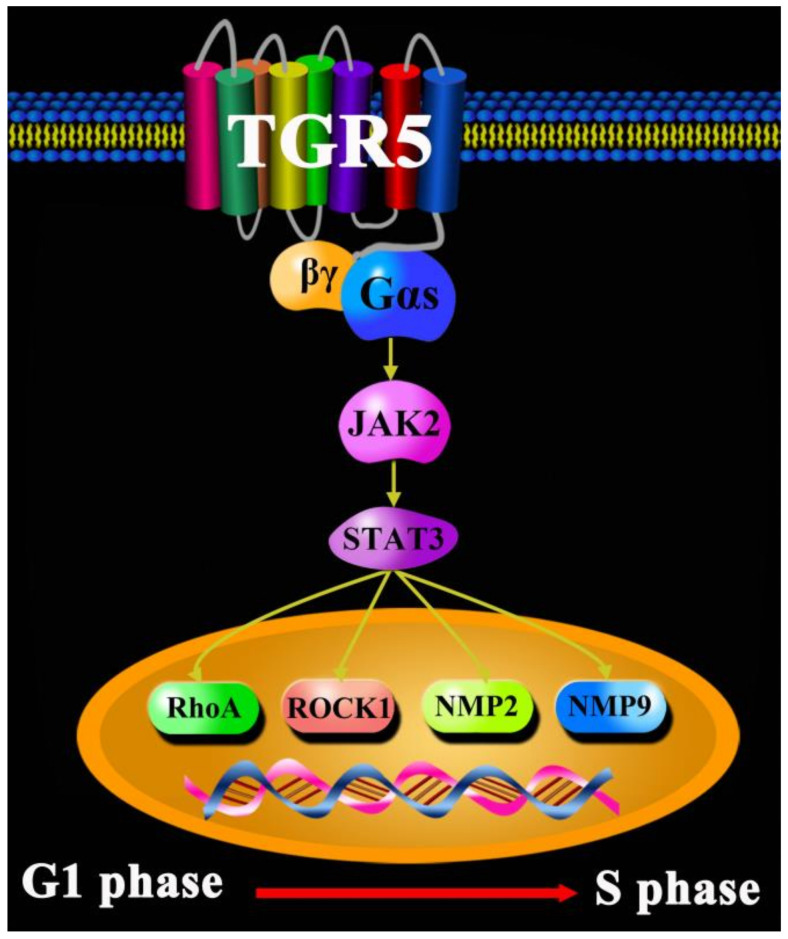
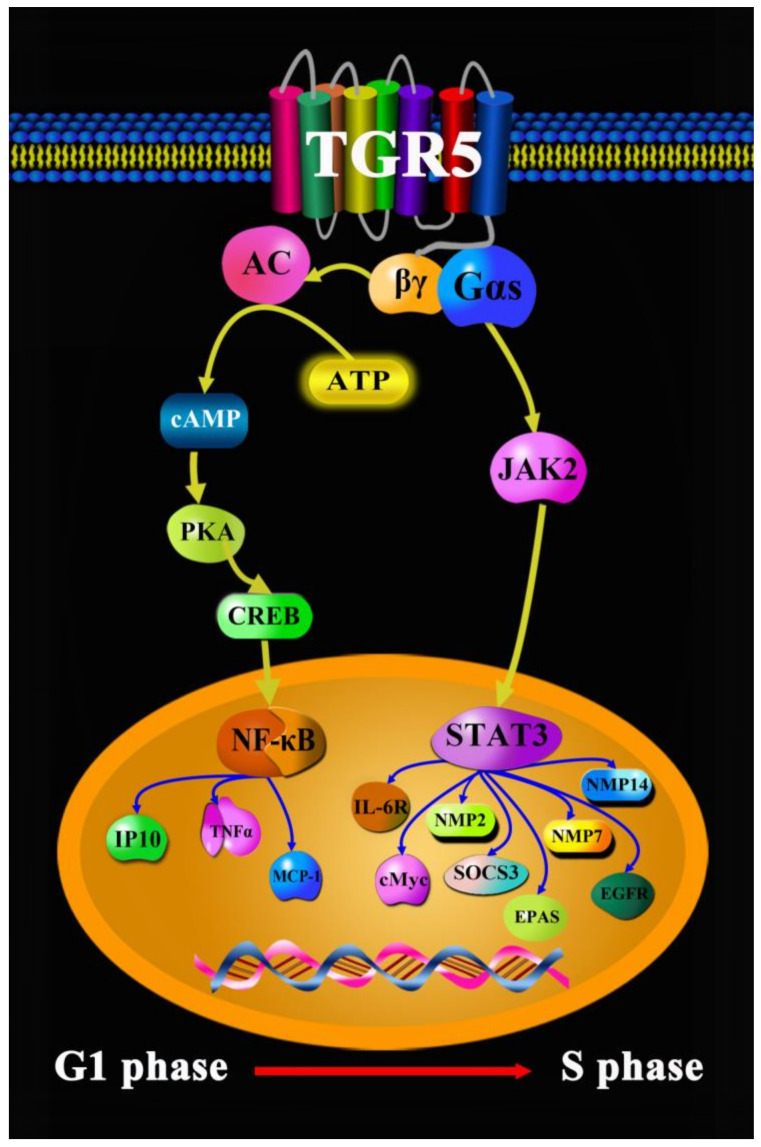
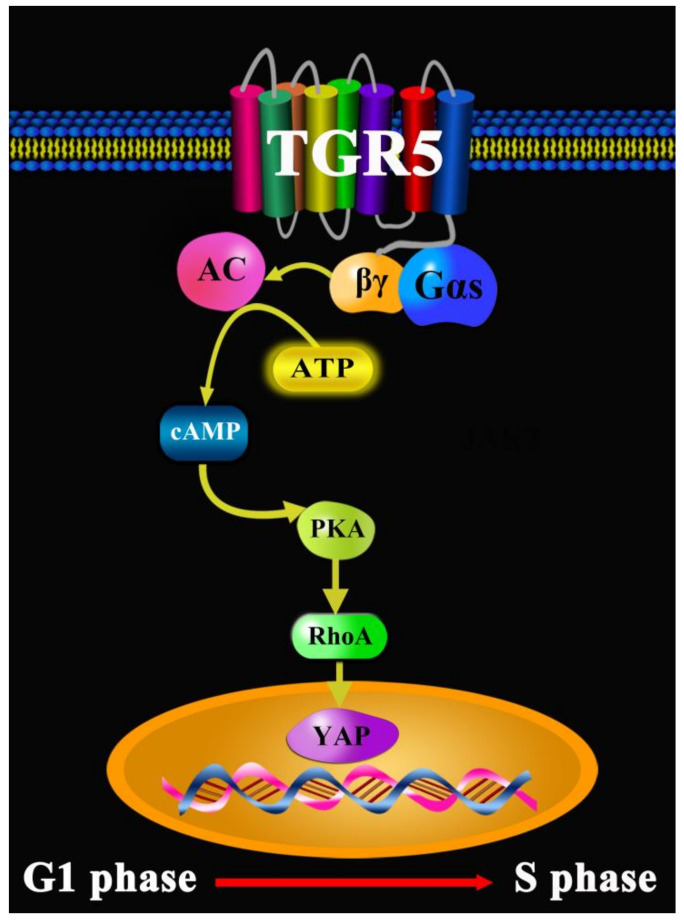
The G-protein-coupled bile acid receptor, Gpbar1 or TGR5, is characterized as a membrane receptor specifically activated by bile acids. A series of evidence shows that TGR5 induces protein kinase B (AKT), nuclear factor kappa-B (NF-κB), extracellular regulated protein kinases (ERK1/2), signal transducer and activator of transcription 3 (STAT3), cyclic adenosine monophosphate (cAMP), Ras homolog family member A (RhoA), exchange protein activated by cAMP (Epac), and transient receptor potential ankyrin subtype 1 protein (TRPA1) signaling pathways, thereby regulating proliferation, inflammation, adhesion, migration, insulin release, muscle relaxation, and cancer development. TGR5 is widely distributed in the brain, lung, heart, liver, spleen, pancreas, kidney, stomach, jejunum, ileum, colon, brown adipose tissue (BAT), white adipose tissue (WAT), and skeletal muscle. Several recent studies have demonstrated that TGR5 exerts inconsistent effects in different cancer cells upon activating via TGR5 agonists, such as INT-777, ursodeoxycholic acid (UDCA), and taurolithocholic acid (TLCA). In this review, we discuss both the 'friend' and 'foe' features of TGR5 by summarizing its tumor-suppressing and oncogenic functions and mechanisms.
G 蛋白偶联胆汁酸受体(Gpbar1 或 TGR5)是一种膜受体,其特征是被胆汁酸特异性激活。一系列证据表明,TGR5 可诱导蛋白激酶 B(AKT)、核因子 kappa-B(NF-κB)、细胞外调节蛋白激酶(ERK1/2)、信号转导和转录激活因子 3(STAT3)、环腺苷酸(cAMP)、Ras 同源家族成员 A(RhoA)、cAMP 激活的交换蛋白(Epac)和瞬时受体电位锚蛋白亚型 1 蛋白(TRPA1)信号通路,从而调节增殖、炎症、黏附、迁移、胰岛素释放、肌肉松弛和癌症发展。TGR5 广泛分布于脑、肺、心、肝、脾、胰腺、肾、胃、空肠、回肠、结肠、棕色脂肪组织(BAT)、白色脂肪组织(WAT)和骨骼肌。最近的几项研究表明,TGR5 通过激活 TGR5 激动剂(如 INT-777、熊脱氧胆酸(UDCA)和牛磺胆酸(TLCA))在不同的癌细胞中发挥不一致的作用。在这篇综述中,我们通过总结 TGR5 的抑癌和致癌功能和机制,讨论了 TGR5 的“朋友”和“敌人”特征。