Bhatti Muhammad Ali, Gilani Sadaf Jamal, Shah Aqeel Ahmed, Channa Iftikhar Ahmed, Almani Khalida Faryal, Chandio Ali Dad, Halepoto Imran Ali, Tahira Aneela, Bin Jumah May Nasser, Ibupoto Zafar Hussain
Institute of Environmental Sciences, University of Sindh Jamshoro, Jamshoro 76080, Sindh, Pakistan.
Department of Basic Health Sciences, Preparatory Year, Princess Nourah Bint Abdulrahman University, Riyadh 11671, Saudi Arabia.
Nanomaterials (Basel). 2022 Aug 12;12(16):2766. doi: 10.3390/nano12162766.
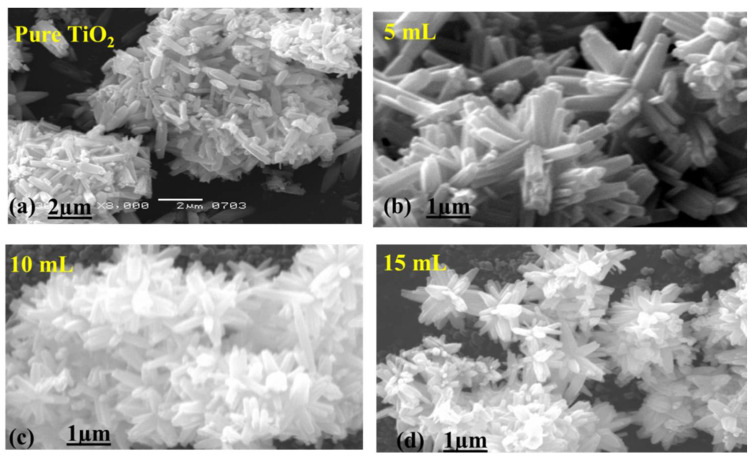
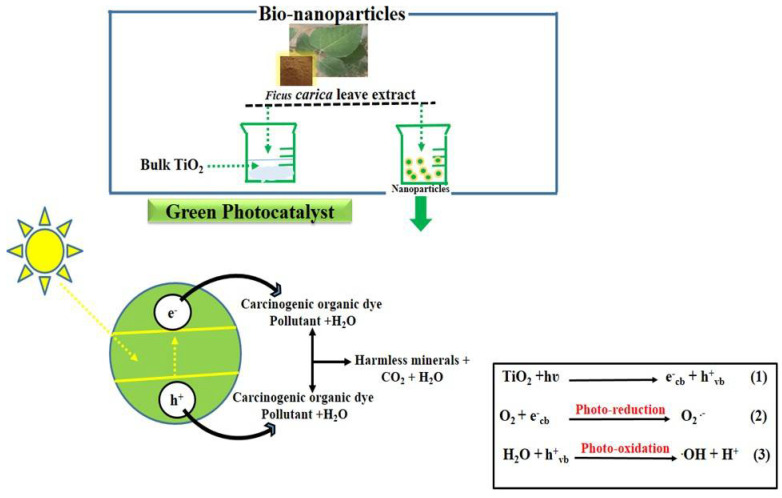
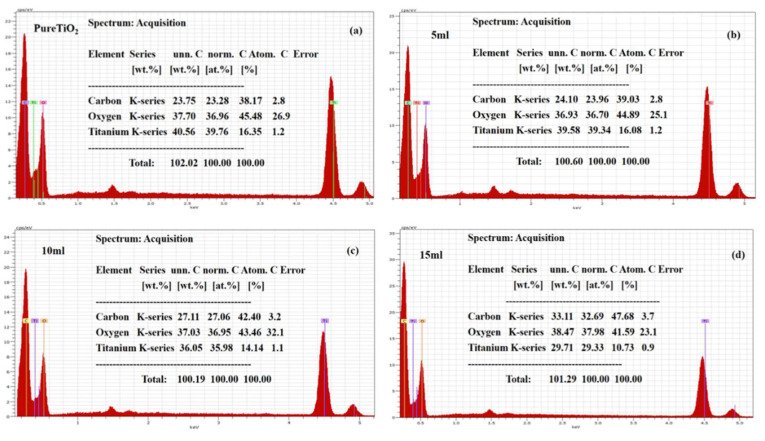
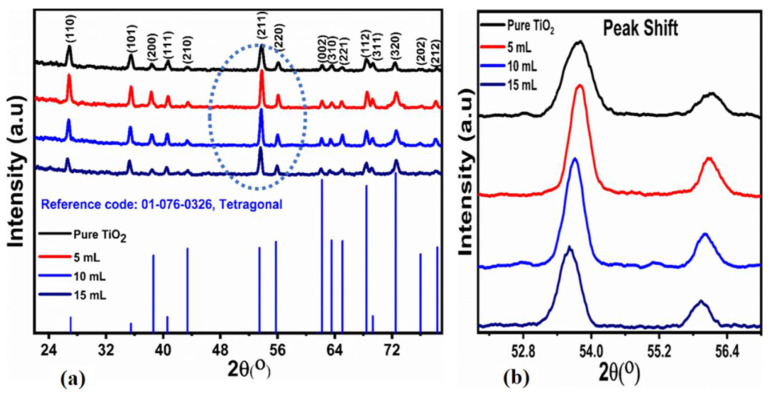
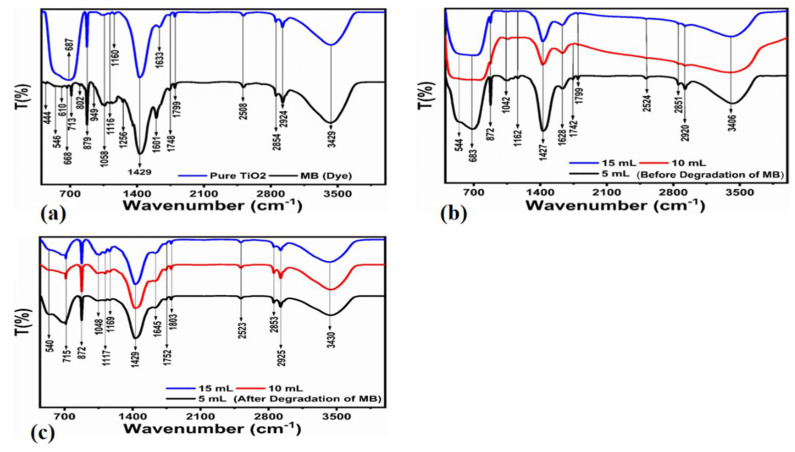
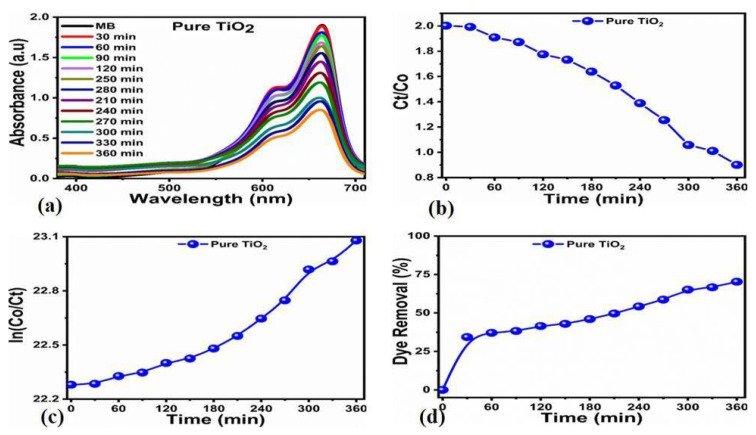
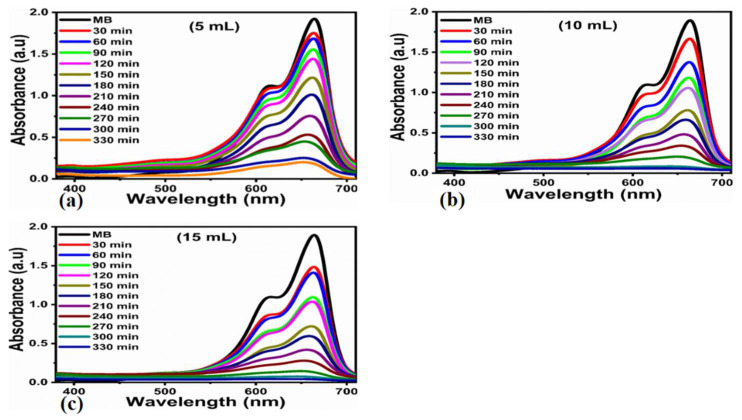
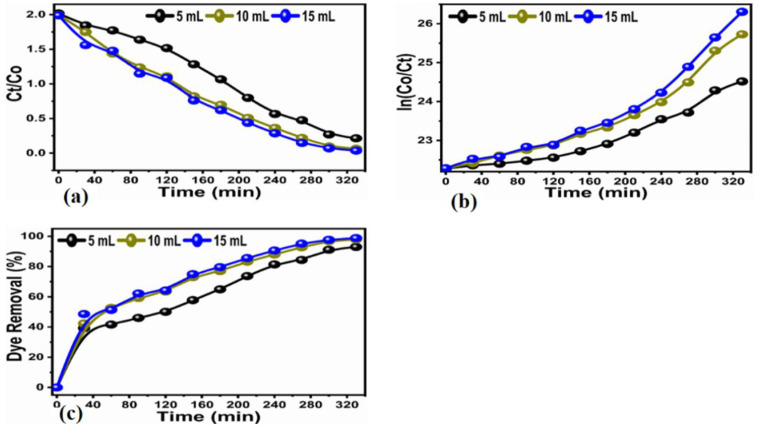
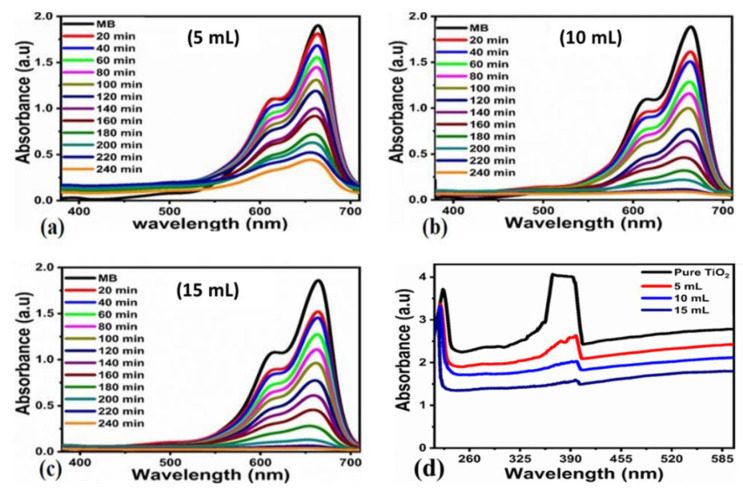
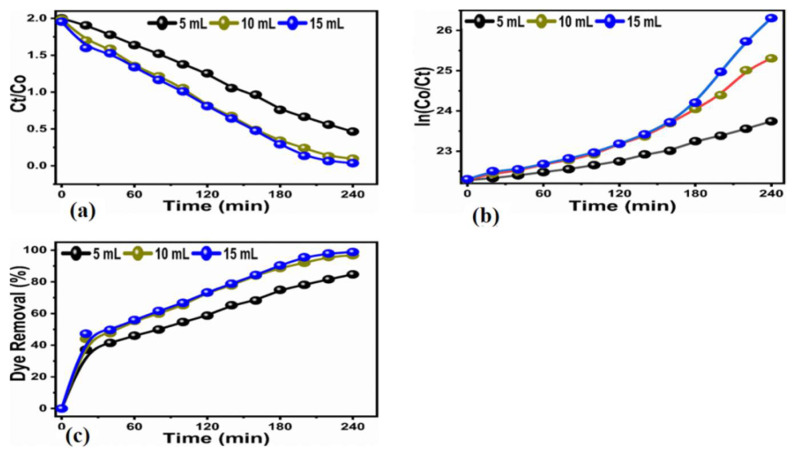
The present study describes the use of a leaf extract from as a source of natural antioxidants for the surface alteration of bulk titanium dioxide (TiO) in two steps. First, the hydro-thermal treatment of the bulk TiO material was carried out and followed by thermal annealing at 300 °C for 3 h in air. The role of the leaf extract of on the performance of the bulk TiO material for the removal of methylene blue (MB) was also studied. Various analytical techniques such as powder X-ray diffraction (XRD), scanning electron microscopy (SEM), and energy dispersive spectroscopy (EDS) were used to explore the crystalline structure, morphology, and composition. The bulk TiO material after the leaf-extract treatment exhibited mixed anatase and rutile phases, a flower-like morphology, and Ti, O, and C were its main elements. The average crystallite size was also calculated, and the obtained values for the bulk TiO material, 18.11 nm, and the treated bulk TiO material with various amounts, 5, 10, and 15 mL, of leaf extract were 16.4, 13.16, and 10.29 nm respectively. Moreover, Fourier-transform infrared spectroscopy validated the typical metal-oxygen bonds and strengthened the XRD results. The bulk TiO material chemically treated with has shown outstanding activity towards the degradation of MB under sunlight. The 15 mL of extract significantly enhanced the photocatalytic activity of the bulk TiO material towards the degradation of MB. The dye degradation efficiency was found to be 98.8%, which was experimentally proven by the Fourier Transform Infrared spectroscopoyy (FTIR) analysis. The obtained performance of the bulk TiO material with revealed excellent surface modifying properties for poorly-performing photocatalysts towards the degradation of synthetic dyes when used in their pristine form. The presented approach suggests that could be of great interest for tuning the surface properties of materials, either in the form of nano-size or bulk-phase in a particular application.
本研究描述了分两步使用来自[植物名称未给出]的叶提取物作为天然抗氧化剂来源,用于块状二氧化钛(TiO₂)的表面改性。首先,对块状TiO₂材料进行水热处理,然后在空气中300℃热退火3小时。还研究了[植物名称未给出]叶提取物对块状TiO₂材料去除亚甲基蓝(MB)性能的作用。使用了各种分析技术,如粉末X射线衍射(XRD)、扫描电子显微镜(SEM)和能量色散光谱(EDS)来探究晶体结构、形态和组成。经叶提取物处理后的块状TiO₂材料呈现出锐钛矿和金红石混合相、花状形态,且Ti、O和C是其主要元素。还计算了平均晶粒尺寸,块状TiO₂材料的平均晶粒尺寸为18.11nm,用5、10和15mL不同量叶提取物处理后的块状TiO₂材料的平均晶粒尺寸分别为16.4、13.16和10.29nm。此外,傅里叶变换红外光谱验证了典型的金属 - 氧键并强化了XRD结果。用[植物名称未给出]化学处理后的块状TiO₂材料在阳光下对MB的降解表现出优异的活性。15mL[植物名称未给出]提取物显著增强了块状TiO₂材料对MB降解的光催化活性。染料降解效率达到98.8%,这通过傅里叶变换红外光谱(FTIR)分析得到了实验验证。所获得的块状TiO₂材料的性能表明,当以原始形式使用时,它对于性能不佳的光催化剂降解合成染料具有优异的表面改性性能。所提出的方法表明,[植物名称未给出]对于在特定应用中调整纳米尺寸或块状相形式材料的表面性质可能具有很大的意义。