Chen Yanfei, Wang Chunyan, Chen Junyan, Wang Shuaishuai, Ju Jingge, Kang Weimin
State Key Laboratory of Separation Membranes and Membrane Processes, National Center for International Joint Research on Separation Membranes, School of Textile Science and Engineering, Tiangong University, No. 399 BinShuiXi Road, XiQing District, Tianjin 300387, China.
Shandong Provincial Key Laboratory of Olefin Catalysis and Polymerization, Shandong Chambroad Holding Group Co., Ltd., Economic Development Zone of Boxing County, Binzhou 256500, China.
Polymers (Basel). 2022 Apr 14;14(8):1593. doi: 10.3390/polym14081593.
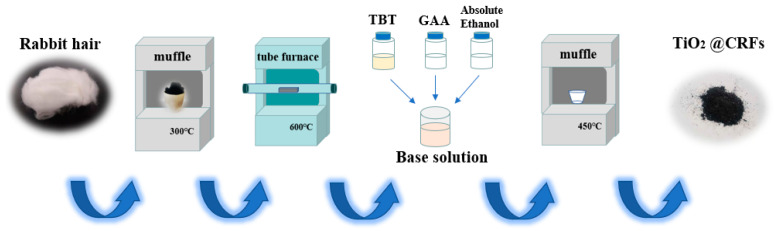
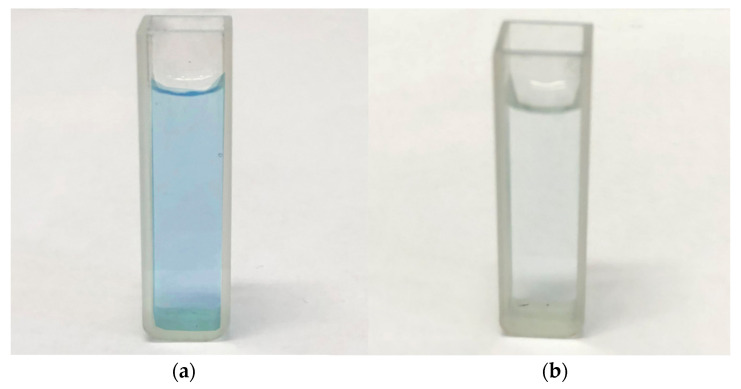
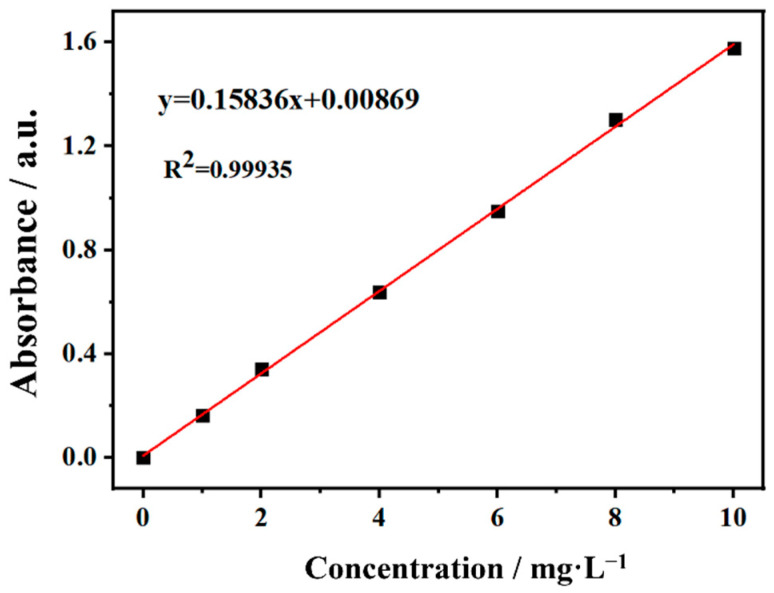
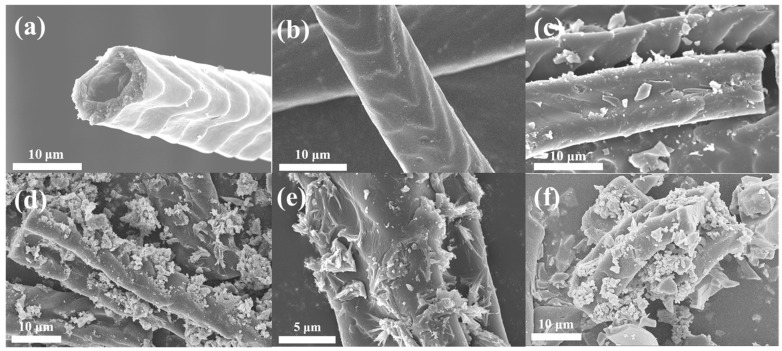
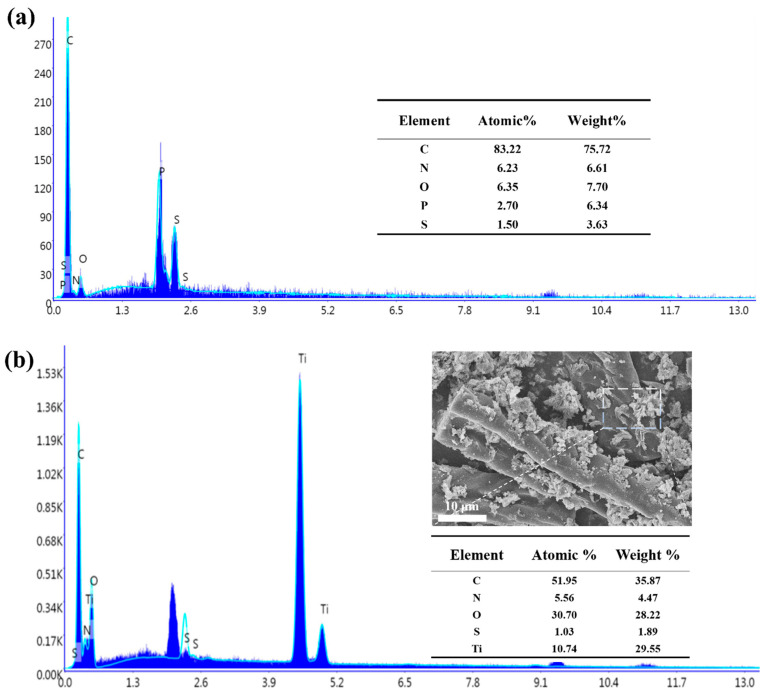
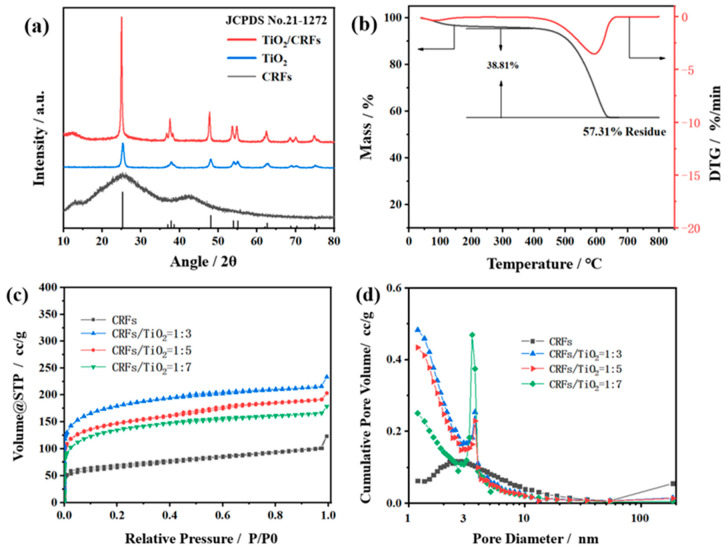
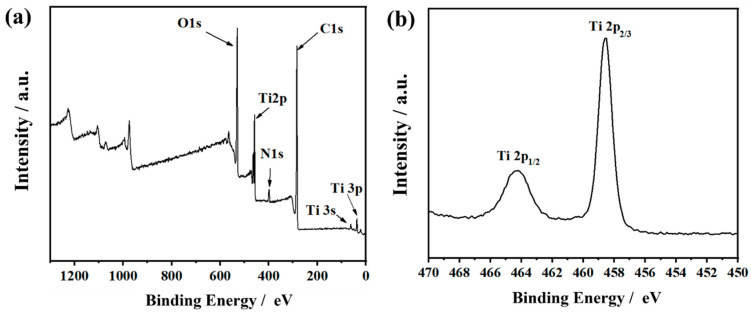
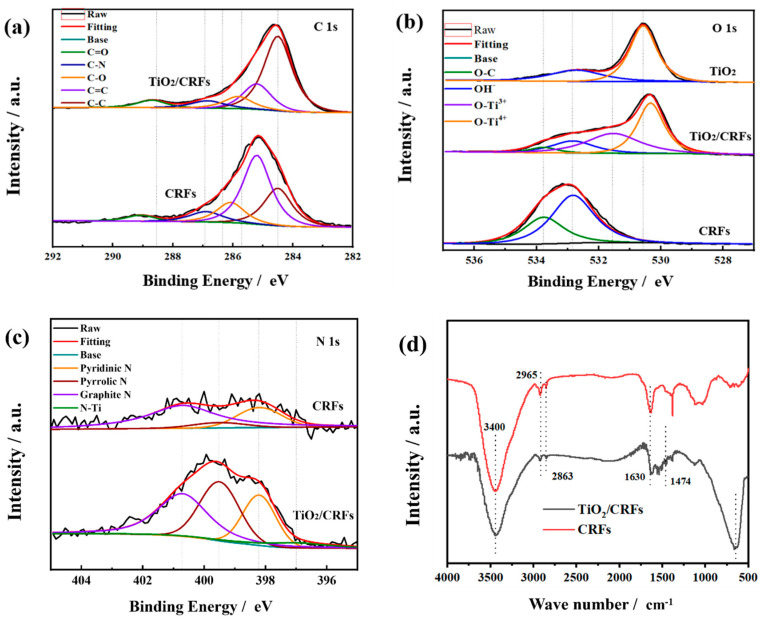
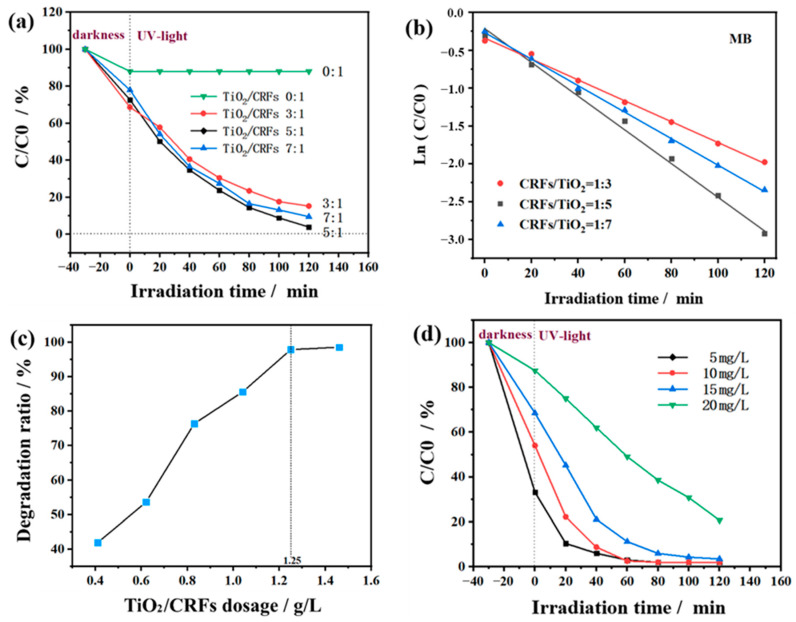
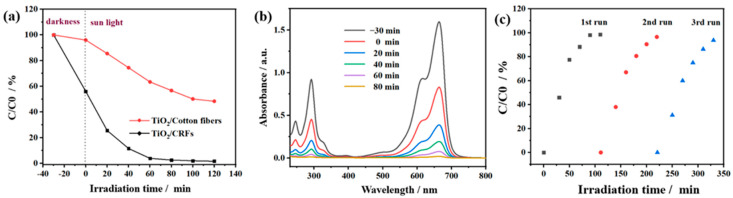
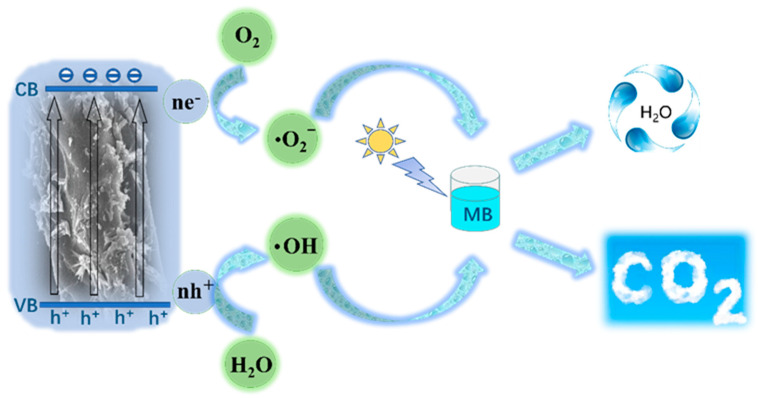
In the past few years, biomass carbon materials have gained wide attention from many scholars as TiO carrier materials to improve photocatalytic activity due to their renewable, green, low-cost, and high-efficiency advantages. In this study, TiO/carbonized waste rabbit fibers (TiO/CRFs) nanocomposites with the hierarchical microporous/mesoporous structure were fabricated by a combination of carbonization, immersion, and calcination methods using tetrabutyl titanate as the titanium source and waste rabbit hair as the carbon source. The properties and catalytic activity of TiO/CRFs composite were evaluated based on several characterization techniques and methylene blue (MB) photodegradation studies. The results showed that the degradation of MB by TiO/CRFs could reach 98.1% after 80 min of solar irradiation. Moreover, TiO/CRFs still maintained high photocatalytic activity after five cycles of degradation tests, exhibiting good stability and reusability. The improved photocatalytic performance of TiO/CRFs materials is attributed to the natural carbon and nitrogen element doping of TiO/CRFs and its morphology, which reduces the compounding of photogenerated electron-hole pairs and narrows the TiO band gap, while the multiple reflections of visible light in the pore channels enhance the visible light absorption of the materials. Furthermore, the large specific surface area provides abundant reaction sites for adsorbed reactants. This paper provides the experimental basis for the application of waste rabbit biomass carbon composites in photocatalytic degradation field.
在过去几年中,生物质碳材料作为二氧化钛(TiO)载体材料,因其可再生、绿色、低成本和高效的优点,提高光催化活性而受到众多学者的广泛关注。在本研究中,以钛酸四丁酯为钛源、废兔毛为碳源,通过碳化、浸渍和煅烧相结合的方法制备了具有分级微孔/介孔结构的TiO/碳化废兔纤维(TiO/CRFs)纳米复合材料。基于多种表征技术和亚甲基蓝(MB)光降解研究,对TiO/CRFs复合材料的性能和催化活性进行了评估。结果表明,在太阳光照80分钟后,TiO/CRFs对MB的降解率可达98.1%。此外,经过五次降解测试循环后,TiO/CRFs仍保持较高的光催化活性,表现出良好的稳定性和可重复使用性。TiO/CRFs材料光催化性能的提高归因于TiO/CRFs的天然碳和氮元素掺杂及其形貌,这减少了光生电子-空穴对的复合,缩小了TiO的带隙,同时孔道内可见光的多次反射增强了材料对可见光的吸收。此外,大比表面积为吸附的反应物提供了丰富的反应位点。本文为废兔生物质碳复合材料在光催化降解领域的应用提供了实验依据。