International School of Engineering (ISE), Intelligent Control Automation of Process Systems Research Unit, Chulalongkorn University, Bangkok 10330, Thailand.
Functional NanoMaterials Group, Department of Applied Physics, KTH Royal Institute of Technology, Hannes Alfvéns väg 12, 11419 Stockholm, Sweden.
Sensors (Basel). 2022 Aug 20;22(16):6273. doi: 10.3390/s22166273.
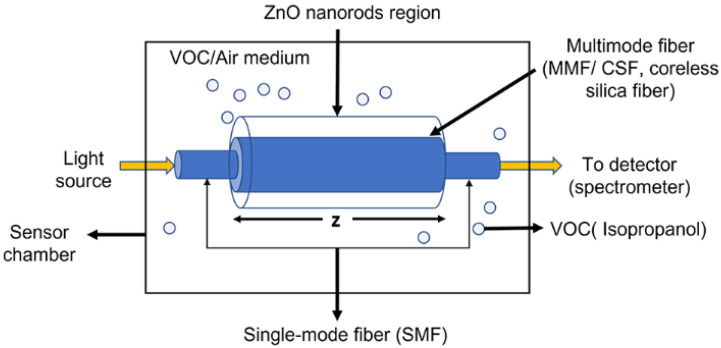
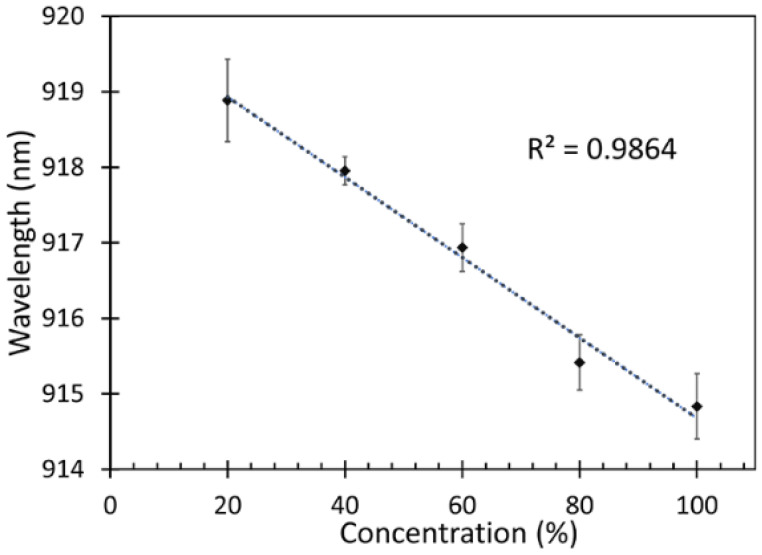
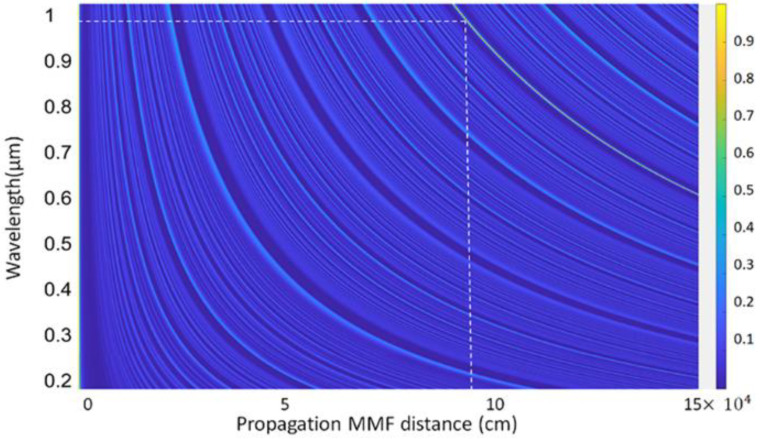
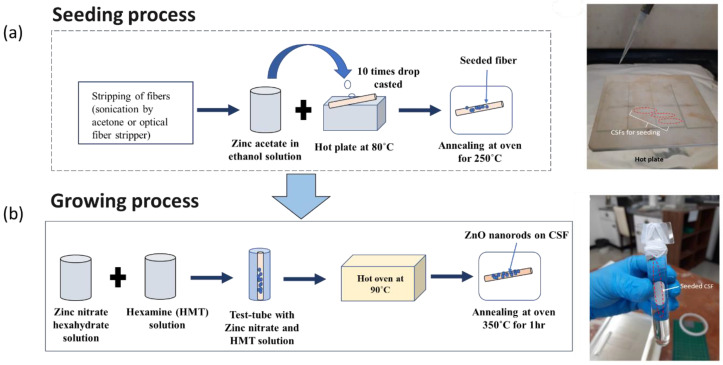
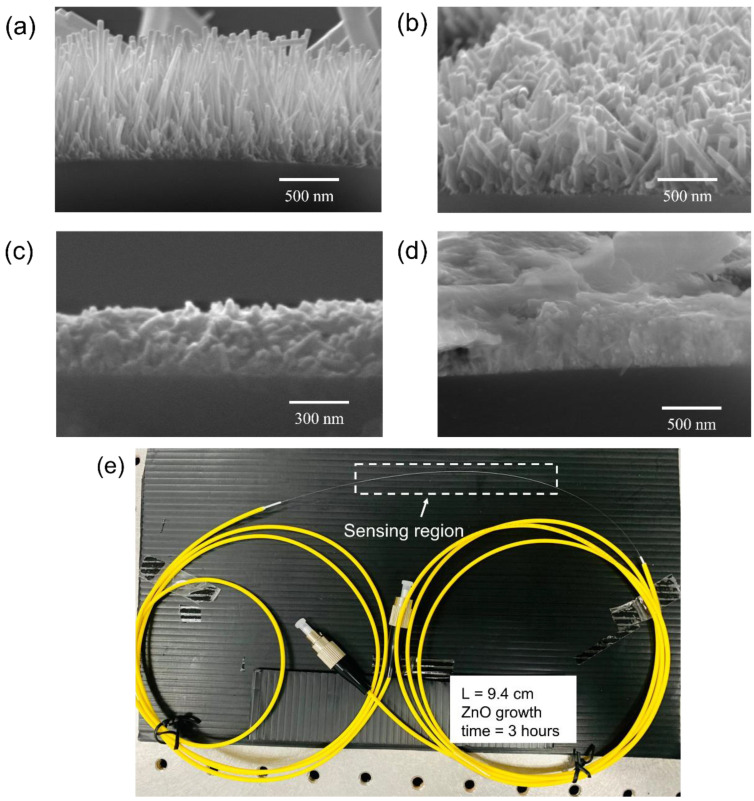
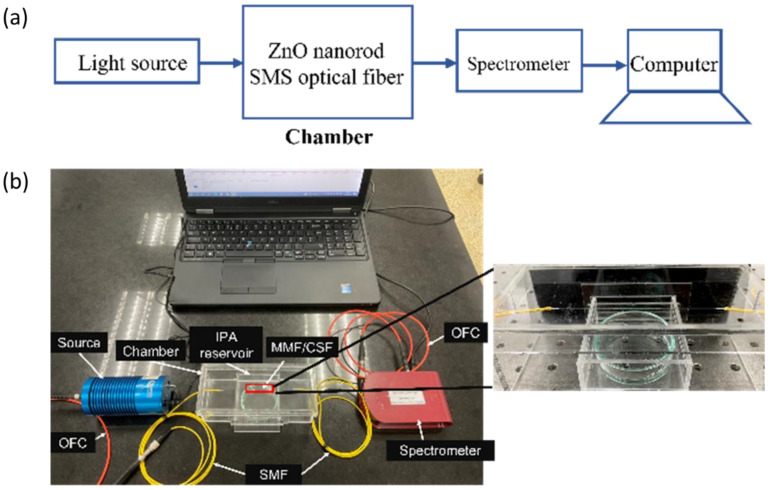
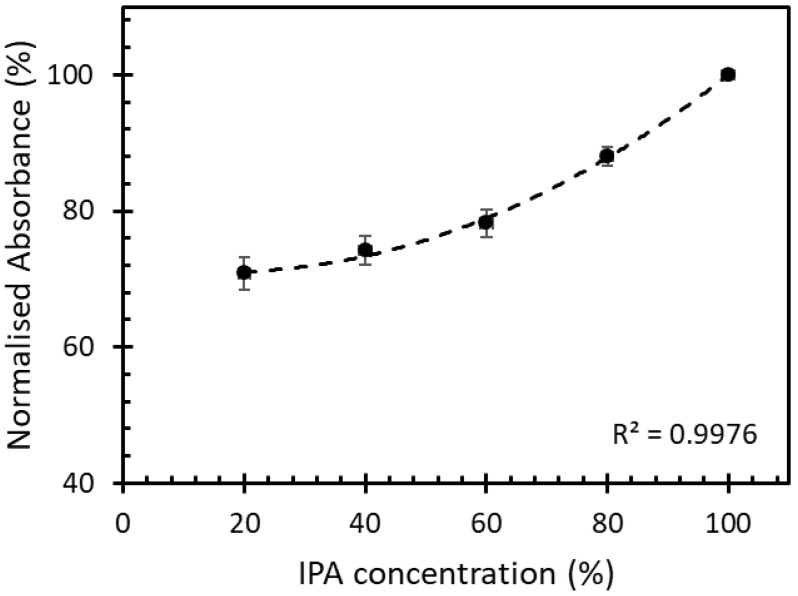
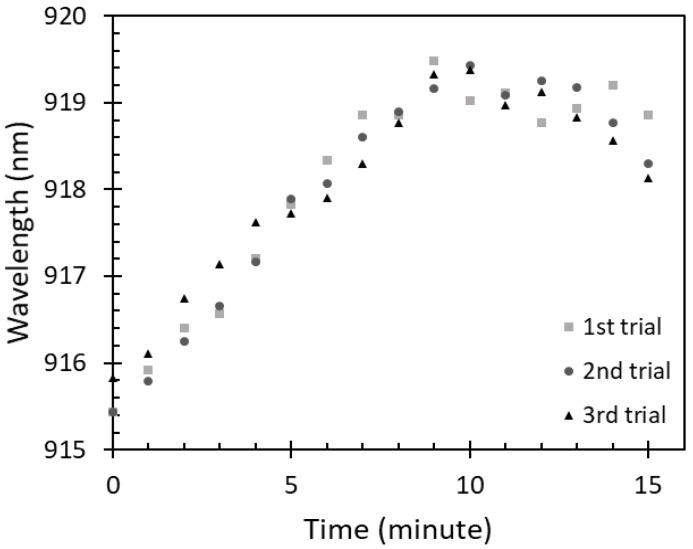
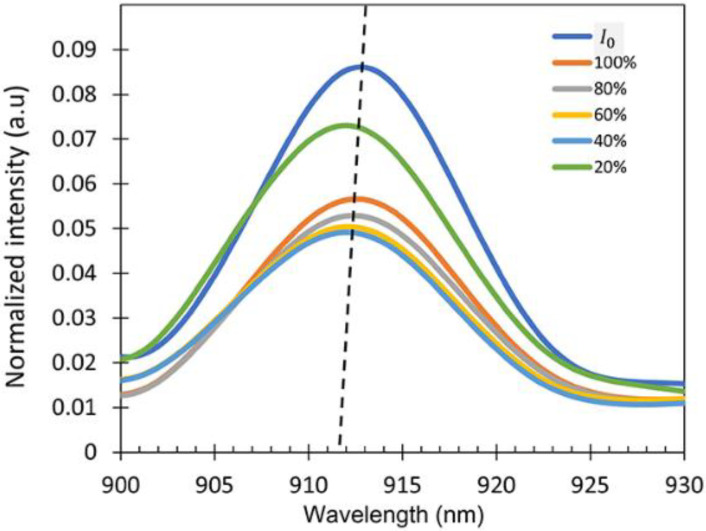
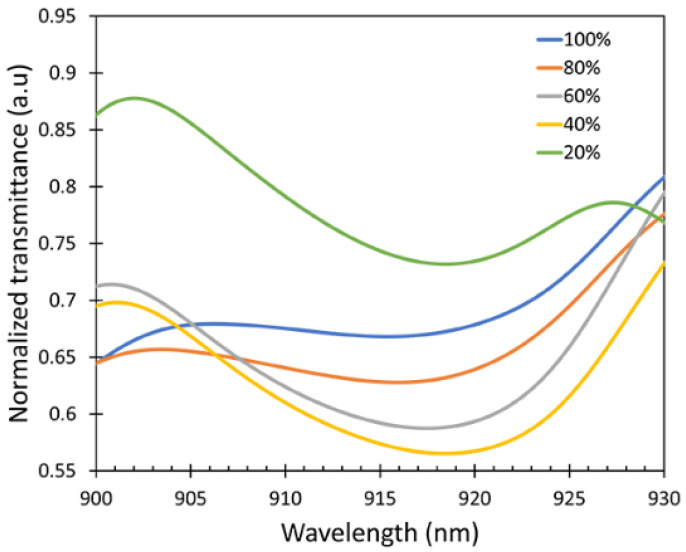
This work demonstrated a ZnO-coated optical fiber sensor for the detection of a volatile organic compound (VOC) biomarker for diabetes for detecting isopropanol (IPA) markers. A coreless silica fiber (CSF) was connected to a single-mode fiber (SMF) at both ends to achieve a SMF-CSF-SMF structure. CSF is the sensing region where multimode interference (MMI) generates higher light interaction at the interface between the fiber and sensing medium, leading to enhanced sensitivity. Optimization of the CSF length was conducted numerically to attain the highest possible coupling efficiency at the output. Surface functionalization was achieved via hydrothermal growth of ZnO nanorods directly onto the CSF at low temperatures. The optical fiber-based sensor was successfully fabricated and tested with 20%, 40%, 60%, 80%, and 100% of IPA. The sensor response was recorded using an optical spectrometer and analyzed for sensor sensitivity. The fabricated sensor shows the potential to detect isopropanol with the sensitivity of 0.053 nm/%IPA vapor. Further improvement of the sensor sensitivity and selectivity is also proposed for future work.
这项工作展示了一种用于检测糖尿病挥发性有机化合物(VOC)生物标志物的 ZnO 涂层光纤传感器,用于检测异丙醇(IPA)标志物。无芯石英光纤(CSF)的两端分别与单模光纤(SMF)相连,以实现 SMF-CSF-SMF 结构。CSF 是传感区域,其中多模干涉(MMI)在光纤和传感介质之间的界面处产生更高的光相互作用,从而提高灵敏度。通过数值优化 CSF 的长度,以在输出端获得尽可能高的耦合效率。通过在低温下将 ZnO 纳米棒直接生长在 CSF 上来实现表面功能化。成功地制造了基于光纤的传感器,并对 20%、40%、60%、80%和 100%的 IPA 进行了测试。使用光谱仪记录传感器的响应,并对传感器的灵敏度进行了分析。所制造的传感器显示出具有检测异丙醇的潜力,其灵敏度为 0.053nm/%IPA 蒸气。还提出了进一步提高传感器灵敏度和选择性的方法,以供未来的工作。