• 文献检索
  • 文档翻译
  • 深度研究
  • 学术资讯
  • Suppr Zotero 插件Zotero 插件
  • 邀请有礼
  • 套餐&价格
  • 历史记录
应用&插件
Suppr Zotero 插件Zotero 插件浏览器插件Mac 客户端Windows 客户端微信小程序
定价
高级版会员购买积分包购买API积分包
服务
文献检索文档翻译深度研究API 文档MCP 服务
关于我们
关于 Suppr公司介绍联系我们用户协议隐私条款
关注我们

Suppr 超能文献

核心技术专利:CN118964589B侵权必究
粤ICP备2023148730 号-1Suppr @ 2026

文献检索

告别复杂PubMed语法,用中文像聊天一样搜索,搜遍4000万医学文献。AI智能推荐,让科研检索更轻松。

立即免费搜索

文件翻译

保留排版,准确专业,支持PDF/Word/PPT等文件格式,支持 12+语言互译。

免费翻译文档

深度研究

AI帮你快速写综述,25分钟生成高质量综述,智能提取关键信息,辅助科研写作。

立即免费体验

心率变异性生物反馈疗法治疗自闭症谱系障碍青少年的焦虑症:一项居家试点研究的结果

Heart Rate Variability Biofeedback to Treat Anxiety in Young People With Autism Spectrum Disorder: Findings From a Home-Based Pilot Study.

作者信息

Coulter Helen, Donnelly Mark, Mallett John, Kernohan W George

机构信息

South Eastern Health and Social Care Trust, County Down, United Kingdom.

Ulster University, Newtownabbey, United Kingdom.

出版信息

JMIR Form Res. 2022 Aug 26;6(8):e37994. doi: 10.2196/37994.

DOI:10.2196/37994
PMID:36018712
原文链接:https://pmc.ncbi.nlm.nih.gov/articles/PMC9463620/
Abstract

BACKGROUND

People with autism spectrum disorder (ASD) frequently experience high levels of anxiety. Despite this, many clinical settings do not provide specialist ASD mental health services, and demand for professional support frequently outstrips supply. Across many sectors of health, investigators have explored digital health solutions to mitigate demand and extend the reach of professional practice beyond traditional clinical settings.

OBJECTIVE

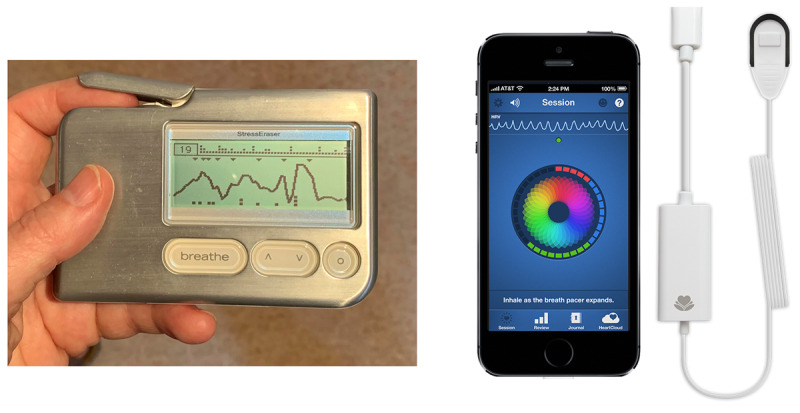
This critical appraisal and pilot feasibility study examines heart rate variability (HRV) biofeedback as an approach to help young people with ASD to manage anxiety symptoms outside of formal settings. The aim is to explore the use of portable biofeedback devices to manage anxiety, while also highlighting the risks and benefits of this approach with this population.

METHODS

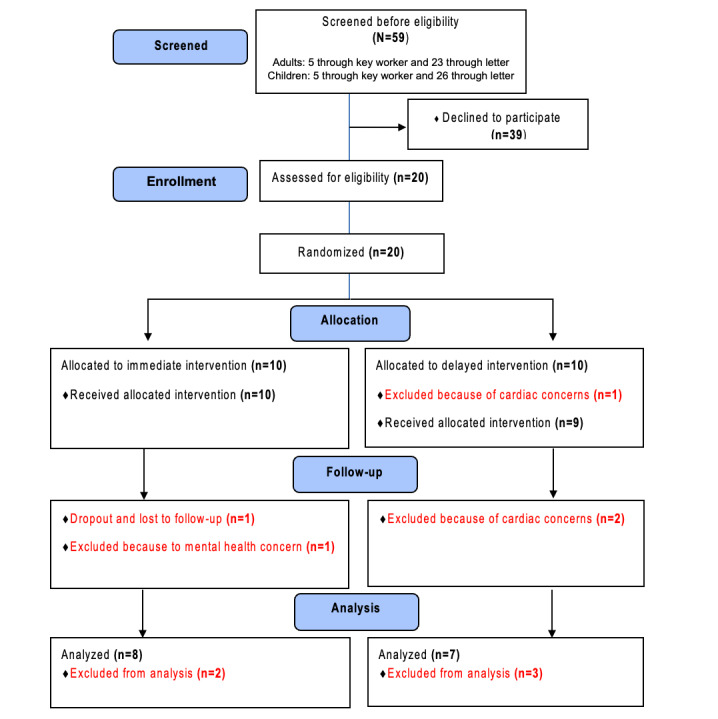
We assessed the feasibility of using home-based HRV biofeedback for self-management of anxiety in young people with ASD. We adopted coproduction, involving people with ASD, to facilitate development of the study design. Next, a separate pilot with 20 participants with ASD (n=16, 80% male participants and n=4, 20% female participants, aged 13-24 years; IQ>70) assessed adoption and acceptability of HRV biofeedback devices for home use over a 12-week period. Data were collected from both carers and participants through questionnaires and interviews; participants also provided single-lead electrocardiogram recordings as well as daily reports through smartphone on adoption and use of their device.

RESULTS

Pre-post participant questionnaires indicated a significant reduction in anxiety in children (t=2.55; P=.04; Cohen d=0.99) as well as adults (t=3.95; P=.006; Cohen d=0.54). Participant age was significantly negatively correlated with all HRV variables at baseline, namely high-frequency heart rate variability (HF-HRV: P=.02), the root mean square of successive differences in normal heartbeat contractions (RMSSD: P=.02) and the variability of normal-to-normal interbeat intervals (SDNN: P=.04). At follow-up, only SDNN was significantly negatively correlated with age (P=.05). Levels of ASD symptoms were positively correlated with heart rate both before (P=.04) and after the intervention (P=.01). The majority (311/474, 65.6%) of reports from participants indicated that the devices helped when used. Difficulties with the use of some devices and problems with home testing of HRV were noted. These initial findings are discussed within the context of the strengths and challenges of remotely delivering a biofeedback intervention for people with ASD.

CONCLUSIONS

HRV biofeedback devices have shown promise in this pilot study. There is now a need for larger evaluation of biofeedback to determine which delivery methods achieve the greatest effect for people with ASD.

TRIAL REGISTRATION

ClinicalTrials.gov NCT04955093; https://clinicaltrials.gov/ct2/show/NCT04955093.
https://cdn.ncbi.nlm.nih.gov/pmc/blobs/c2d7/9463620/5273080afac5/formative_v6i8e37994_fig2.jpg
https://cdn.ncbi.nlm.nih.gov/pmc/blobs/c2d7/9463620/430dc32ee9a6/formative_v6i8e37994_fig1.jpg
https://cdn.ncbi.nlm.nih.gov/pmc/blobs/c2d7/9463620/5273080afac5/formative_v6i8e37994_fig2.jpg
https://cdn.ncbi.nlm.nih.gov/pmc/blobs/c2d7/9463620/430dc32ee9a6/formative_v6i8e37994_fig1.jpg
https://cdn.ncbi.nlm.nih.gov/pmc/blobs/c2d7/9463620/5273080afac5/formative_v6i8e37994_fig2.jpg
摘要

背景

自闭症谱系障碍(ASD)患者经常经历高度焦虑。尽管如此,许多临床机构并未提供专门的ASD心理健康服务,对专业支持的需求往往超过供给。在许多卫生领域,研究人员探索了数字健康解决方案,以缓解需求并将专业实践的范围扩展到传统临床机构之外。

目的

本批判性评价和试点可行性研究考察心率变异性(HRV)生物反馈作为一种帮助ASD青少年在非正规环境中管理焦虑症状的方法。目的是探索使用便携式生物反馈设备来管理焦虑,同时突出这种方法对该人群的风险和益处。

方法

我们评估了使用家庭式HRV生物反馈进行ASD青少年焦虑自我管理的可行性。我们采用了共同生产的方式,让ASD患者参与其中,以促进研究设计的制定。接下来,对20名ASD参与者(n = 16,80%为男性参与者,n = 4,20%为女性参与者,年龄在13 - 24岁;智商>70)进行了一项单独的试点研究,评估HRV生物反馈设备在12周内用于家庭使用的采用情况和可接受性。通过问卷和访谈从照顾者和参与者那里收集数据;参与者还通过智能手机提供单导联心电图记录以及关于设备采用和使用情况的每日报告。

结果

参与者前后问卷显示,儿童(t = 2.55;P = 0.04;Cohen d = 0.99)和成人(t = 3.95;P = 0.006;Cohen d = 0.54)的焦虑均有显著降低。参与者年龄在基线时与所有HRV变量均呈显著负相关,即高频心率变异性(HF - HRV:P = 0.02)、正常心跳收缩连续差值的均方根(RMSSD:P = 0.02)以及正常到正常心跳间期的变异性(SDNN:P = 0.04)。在随访时,只有SDNN与年龄呈显著负相关(P = 0.05)。ASD症状水平在干预前(P = 0.04)和干预后(P = 0.01)均与心率呈正相关。参与者的大多数报告(311/474,65.6%)表明设备在使用时有所帮助。注意到了一些设备使用方面的困难以及HRV家庭测试的问题。这些初步发现是在为ASD患者远程提供生物反馈干预的优势和挑战的背景下进行讨论的。

结论

HRV生物反馈设备在这项试点研究中显示出了前景。现在需要对生物反馈进行更大规模的评估,以确定哪种交付方式对ASD患者能产生最大效果。

试验注册

ClinicalTrials.gov NCT04955093;https://clinicaltrials.gov/ct2/show/NCT04955093

相似文献

1
Heart Rate Variability Biofeedback to Treat Anxiety in Young People With Autism Spectrum Disorder: Findings From a Home-Based Pilot Study.心率变异性生物反馈疗法治疗自闭症谱系障碍青少年的焦虑症:一项居家试点研究的结果
JMIR Form Res. 2022 Aug 26;6(8):e37994. doi: 10.2196/37994.
2
Remote Short Sessions of Heart Rate Variability Biofeedback Monitored With Wearable Technology: Open-Label Prospective Feasibility Study.采用可穿戴技术监测的心率变异性生物反馈远程短疗程:开放标签前瞻性可行性研究。
JMIR Ment Health. 2024 Apr 25;11:e55552. doi: 10.2196/55552.
3
Effects of Heart Rate Variability (HRV) Biofeedback for Women Undergoing First-time In Vitro Fertilization and Embryo Transfer.心率变异性(HRV)生物反馈对首次接受体外受精和胚胎移植的女性的影响。
Altern Ther Health Med. 2023 Mar;29(2):162-167.
4
Reduced heart rate variability in adults with autism spectrum disorder.自闭症谱系障碍成人的心率变异性降低。
Autism Res. 2019 Jun;12(6):922-930. doi: 10.1002/aur.2104. Epub 2019 Apr 10.
5
Accuracy Assessment of Oura Ring Nocturnal Heart Rate and Heart Rate Variability in Comparison With Electrocardiography in Time and Frequency Domains: Comprehensive Analysis.Oura 戒指夜间心率和心率变异性与心电图在时域和频域的准确性评估:综合分析。
J Med Internet Res. 2022 Jan 18;24(1):e27487. doi: 10.2196/27487.
6
Randomized Sham-Controlled Pilot Study of Neurocardiac Function in Patients With Acute Ischaemic Stroke Undergoing Heart Rate Variability Biofeedback.急性缺血性卒中患者接受心率变异性生物反馈时神经心脏功能的随机假对照试验研究
Front Neurol. 2021 May 26;12:669843. doi: 10.3389/fneur.2021.669843. eCollection 2021.
7
Pilot Study on Reducing Symptoms of Anxiety with a Heart Rate Variability Biofeedback Wearable and Remote Stress Management Coach.心率变异性生物反馈可穿戴设备和远程压力管理教练减轻焦虑症状的初步研究。
Appl Psychophysiol Biofeedback. 2021 Dec;46(4):347-358. doi: 10.1007/s10484-021-09519-x.
8
Acceptability and caregiver-reported outcomes for young children with autism spectrum disorder whose parents attended a preventative population-based intervention for anxiety: A pilot study.接受度和自闭症谱系障碍幼儿的照顾者报告结果,其父母参加了预防性基于人群的焦虑干预:一项试点研究。
Autism Res. 2018 Aug;11(8):1166-1174. doi: 10.1002/aur.1963. Epub 2018 May 15.
9
A Contemplative Biofeedback Intervention for Adults with Autism Spectrum Disorder: Feasibility of a Community-Based Treatment.一项针对自闭症谱系障碍成年人的冥想生物反馈干预:基于社区治疗的可行性
Appl Psychophysiol Biofeedback. 2021 Jun;46(2):141-149. doi: 10.1007/s10484-021-09503-5. Epub 2021 Jan 28.
10
Heart Rate Variability Biofeedback Training Reduces Early Maternal Stress, Anxiety, and Depression in Women Undergoing Cesarean Delivery: A Randomized Controlled Trial.心率变异性生物反馈训练可降低行剖宫产术产妇的早期应激、焦虑和抑郁:一项随机对照试验。
Appl Psychophysiol Biofeedback. 2024 Dec;49(4):637-650. doi: 10.1007/s10484-024-09656-z. Epub 2024 Jul 31.

引用本文的文献

1
Cardiac Autonomic Measures Predict Clinician-Rated Anxiety and Behavioral Response to Propranolol in Autistic Children and Young Adults.心脏自主神经指标可预测自闭症儿童和青少年的临床医生评定焦虑及对普萘洛尔的行为反应。
J Pers Med. 2025 Jul 3;15(7):286. doi: 10.3390/jpm15070286.
2
Wearable Solutions Using Physiological Signals for Stress Monitoring on Individuals with Autism Spectrum Disorder (ASD): A Systematic Literature Review.使用生理信号的可穿戴解决方案对自闭症谱系障碍(ASD)个体进行压力监测:一项系统文献综述
Sensors (Basel). 2024 Dec 20;24(24):8137. doi: 10.3390/s24248137.
3
Quality-of-life measurement in randomised controlled trials of mental health interventions for autistic adults: A systematic review.

本文引用的文献

1
Autism Spectrum Disorder in Children Is Not Associated With Abnormal Autonomic Nervous System Function: Hypothesis and Theory.儿童自闭症谱系障碍与自主神经系统功能异常无关:假说与理论。
Front Psychiatry. 2022 Mar 15;13:830234. doi: 10.3389/fpsyt.2022.830234. eCollection 2022.
2
Is heart rate variability biofeedback useful in children and adolescents? A systematic review.心率变异性生物反馈对儿童和青少年是否有用?系统评价。
J Child Psychol Psychiatry. 2021 Dec;62(12):1379-1390. doi: 10.1111/jcpp.13463. Epub 2021 Jun 21.
3
Heart rate variability in individuals with autism spectrum disorders: A meta-analysis.
针对成年自闭症患者心理健康干预措施的随机对照试验中的生活质量测量:一项系统综述。
Autism. 2025 Mar;29(3):579-595. doi: 10.1177/13623613241287586. Epub 2024 Oct 22.
4
Heart rate variability biofeedback to reduce anxiety in autism spectrum disorder - a mini review.心率变异性生物反馈疗法降低自闭症谱系障碍患者焦虑水平——一项小型综述
Front Psychiatry. 2024 Jun 13;15:1409173. doi: 10.3389/fpsyt.2024.1409173. eCollection 2024.
5
The Physiological and Clinical-Behavioral Effects of Heart Rate Variability Biofeedback in Adolescents with Autism: A Pilot Randomized Controlled Trial.心率变异性生物反馈对自闭症青少年的生理和临床行为影响:一项初步随机对照试验。
Appl Psychophysiol Biofeedback. 2024 Sep;49(3):419-438. doi: 10.1007/s10484-024-09638-1. Epub 2024 Mar 15.
自闭症谱系障碍个体的心率变异性:一项荟萃分析。
Neurosci Biobehav Rev. 2020 Nov;118:463-471. doi: 10.1016/j.neubiorev.2020.08.007. Epub 2020 Aug 17.
4
The Need for a Mental Health Technology Revolution in the COVID-19 Pandemic.新冠疫情下心理健康技术革命的必要性
Front Psychiatry. 2020 Jun 3;11:523. doi: 10.3389/fpsyt.2020.00523. eCollection 2020.
5
Heart Rate Variability Biofeedback Improves Emotional and Physical Health and Performance: A Systematic Review and Meta Analysis.心率变异性生物反馈可改善情绪、身体健康和表现:系统评价和荟萃分析。
Appl Psychophysiol Biofeedback. 2020 Sep;45(3):109-129. doi: 10.1007/s10484-020-09466-z.
6
Autism spectrum disorder.自闭症谱系障碍。
Nat Rev Dis Primers. 2020 Jan 16;6(1):5. doi: 10.1038/s41572-019-0138-4.
7
The Impact of Technology on People with Autism Spectrum Disorder: A Systematic Literature Review.技术对自闭症谱系障碍患者的影响:系统文献综述。
Sensors (Basel). 2019 Oct 16;19(20):4485. doi: 10.3390/s19204485.
8
Detecting Moments of Stress from Measurements of Wearable Physiological Sensors.从可穿戴生理传感器的测量中检测压力时刻。
Sensors (Basel). 2019 Sep 3;19(17):3805. doi: 10.3390/s19173805.
9
Exploratory study examining the at-home feasibility of a wearable tool for social-affective learning in children with autism.探索性研究:考察一款可穿戴工具用于自闭症儿童社交情感学习的家庭可行性。
NPJ Digit Med. 2018 Aug 2;1:32. doi: 10.1038/s41746-018-0035-3. eCollection 2018.
10
Effects of Cognitive Behavioral Therapy for Reducing Anxiety in Children with High Functioning ASD: A Systematic Review and Meta-Analysis.认知行为疗法对高功能 ASD 儿童焦虑的影响:系统评价和荟萃分析。
J Autism Dev Disord. 2020 Jun;50(6):1958-1972. doi: 10.1007/s10803-019-03949-7.