Medical Clinic III, Gastroenterology, Metabolic Diseases and Intensive Care, University Hospital RWTH Aachen, Pauwelsstr. 30, 52074, Aachen, Germany.
The Institute for Translational Medicine and Therapeutics, The Perelman School of Medicine, University of Pennsylvania, Philadelphia, PA, 19104, USA.
Sci Rep. 2022 Aug 26;12(1):14572. doi: 10.1038/s41598-022-18593-y.
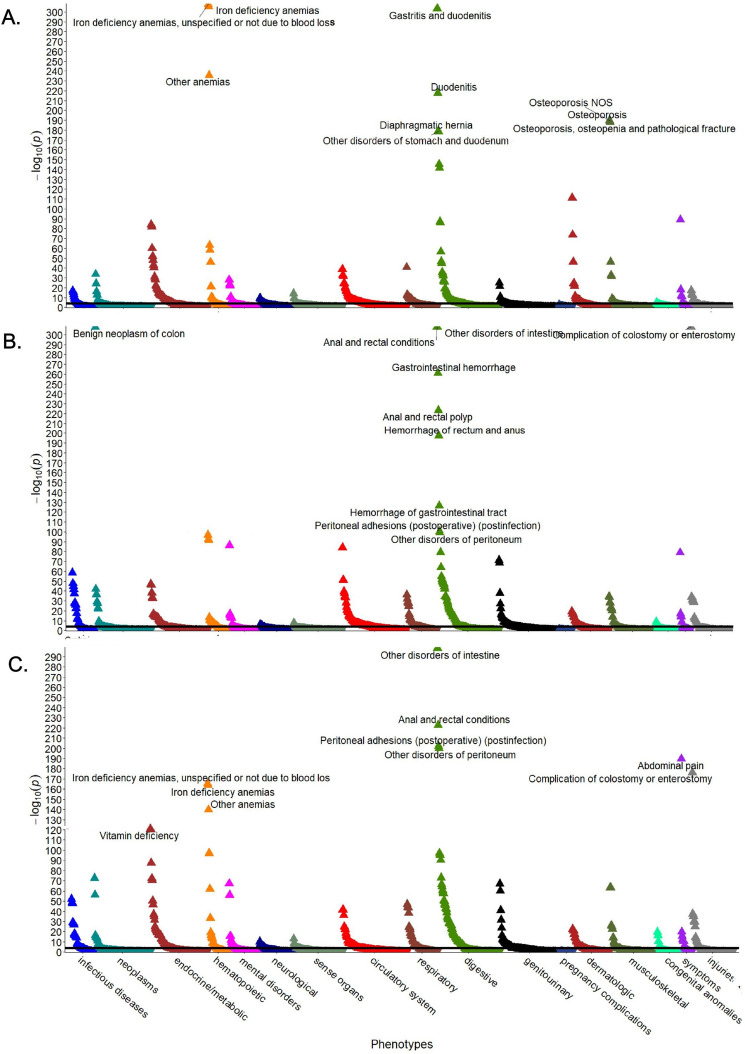
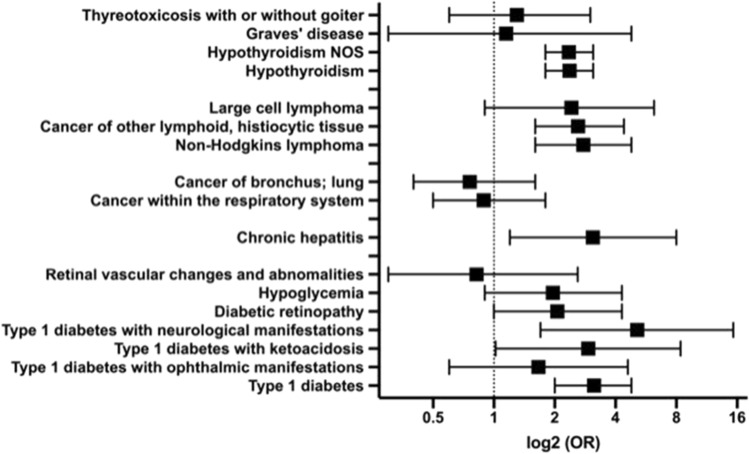
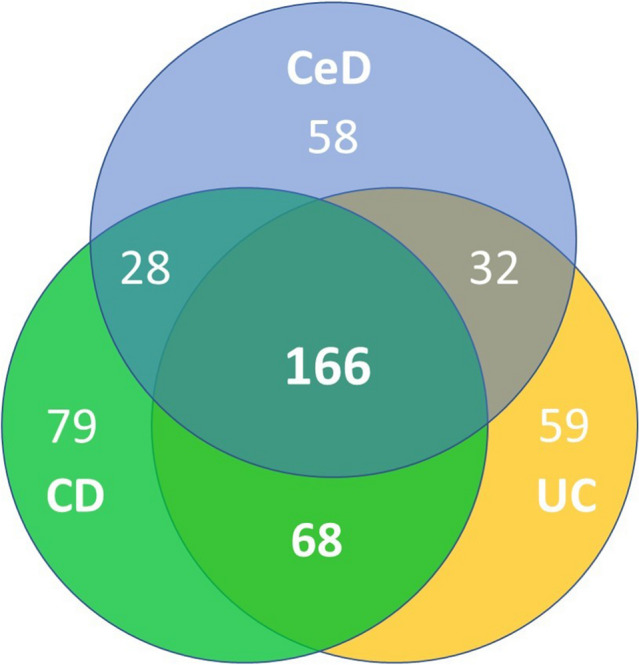
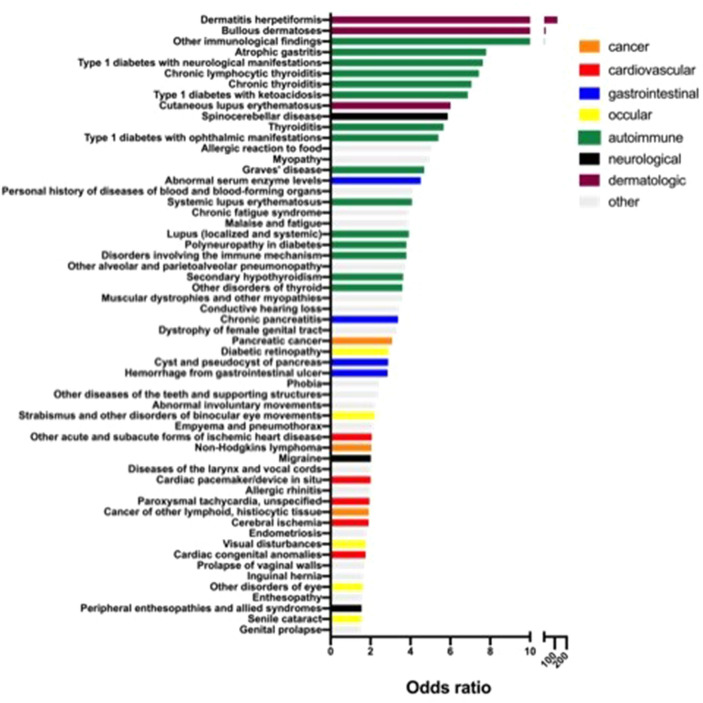
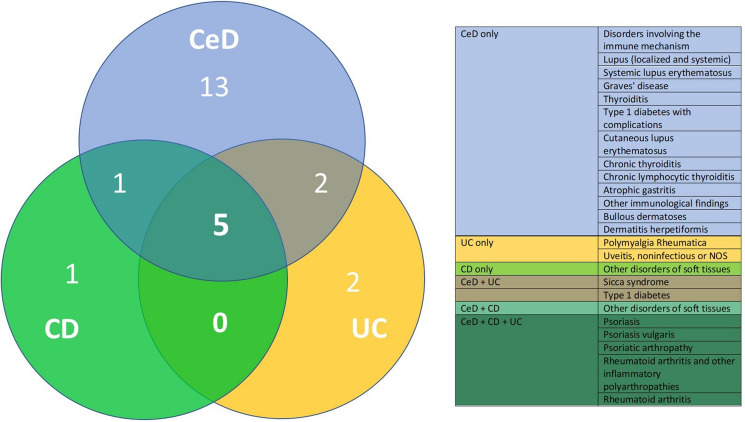
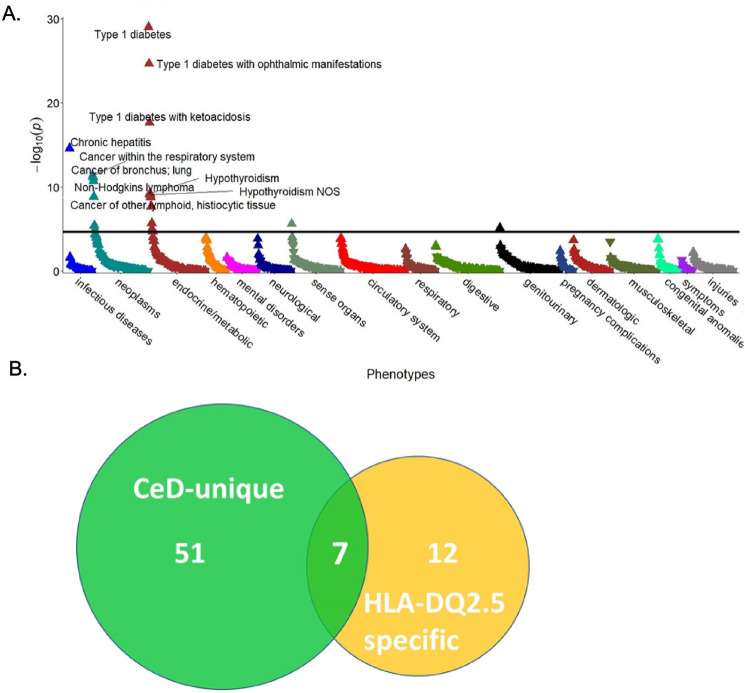
Coeliac disease (CeD) is characterized by gliadin-induced intestinal inflammation appearing in genetically susceptible individuals, such as HLA-DQ2.5 carriers. CeD, as well as other chronic intestinal disorders, such as Crohn's disease (CD) and ulcerative colitis, has been associated with increased morbidity and mortality, but the causes are unknown. We systematically analysed CeD-associated diagnoses and compared them to conditions enriched in subjects with CD/UC as well as in HLA-DQ2.5 carriers without CeD. We compared the overall and cause-specific mortality and morbidity of 3,001 patients with CeD, 2,020 with CD, 4,399 with UC and 492,200 controls in the community-based UK Biobank. Disease-specific phenotypes were assessed with the multivariable Phenome Wide Association Study (PheWAS) method. Associations were adjusted for age, sex and body mass index. All disease groups displayed higher overall mortality than controls (CD: aHR = 1.91[1.70-2.17]; UC: aHR = 1.32 [1.20-1.46]; CeD: aHR = 1.38 [1.22-1.55]). Cardiovascular and cancer-related deaths were responsible for the majority of fatalities. PheWAS analysis revealed 166 Phecodes overrepresented in all three disorders, whereas only ~ 20% of enriched Phecodes were disease specific. Seven of the 58 identified CeD-specific Phecodes were enriched in individuals homozygous for HLA-DQ2.5 without diagnosed CeD. Four out of these seven Phecodes and eight out of 19 HLA-DQ2.5 specific Phecodes were more common in homozygous HLA-DQ2.5 subjects with vs. without CeD, highlighting the interplay between genetics and diagnosis-related factors. Our study illustrates that the morbidity and mortality in CeD share similarities with CD/UC, while the CeD-restricted conditions might be driven by both inherited and acquired factors.
乳糜泻(CeD)的特征是在遗传易感个体(如 HLA-DQ2.5 携带者)中出现麦胶诱导的肠道炎症。CeD 以及其他慢性肠道疾病,如克罗恩病(CD)和溃疡性结肠炎,与发病率和死亡率增加有关,但病因尚不清楚。我们系统地分析了与 CeD 相关的诊断,并将其与 CD/UC 患者中丰富的疾病以及无 CeD 的 HLA-DQ2.5 携带者中丰富的疾病进行了比较。我们比较了英国生物库中 3001 例 CeD 患者、2020 例 CD 患者、4399 例 UC 患者和 492200 例对照者的总体和特定病因死亡率和发病率。使用多变量表型广泛关联研究(PheWAS)方法评估疾病特异性表型。调整年龄、性别和体重指数后进行关联调整。所有疾病组的总体死亡率均高于对照组(CD:aHR=1.91[1.70-2.17];UC:aHR=1.32[1.20-1.46];CeD:aHR=1.38[1.22-1.55])。心血管疾病和癌症相关死亡是导致大多数死亡的主要原因。PheWAS 分析显示,在所有三种疾病中,有 166 个 Phecodes 过度表达,而仅有约 20%的富集 Phecodes 是疾病特异性的。在 CeD 特异性 Phecodes 中,有 7 个在纯合 HLA-DQ2.5 个体中过度表达,而没有诊断为 CeD。这 7 个 Phecodes 中有 4 个和 19 个 HLA-DQ2.5 特异性 Phecodes 中有 8 个在纯合 HLA-DQ2.5 个体中更常见,这些个体有 vs. 无 CeD,突出了遗传和诊断相关因素之间的相互作用。我们的研究表明,CeD 的发病率和死亡率与 CD/UC 相似,而 CeD 特有的疾病可能由遗传和后天因素共同驱动。