Julius Wolff Institute of Biomechanics and Musculoskeletal Regeneration, Charité - Universitätsmedizin Berlin, corporate member of Freie Universität Berlin and Humboldt-Universität zu Berlin, Berlin, Augustenburger Platz 1, 13353, Germany.
BIH Center for Regenerative Therapies, Berlin Institute of Health at Charité - Universitätsmedizin Berlin, Charitéplatz 1, 10117, Berlin, Germany.
Exp Mol Med. 2022 Aug;54(8):1262-1276. doi: 10.1038/s12276-022-00834-9. Epub 2022 Aug 26.
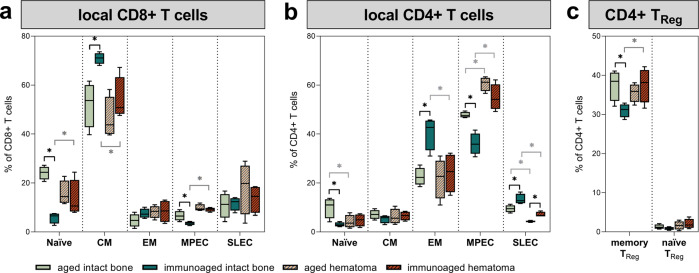
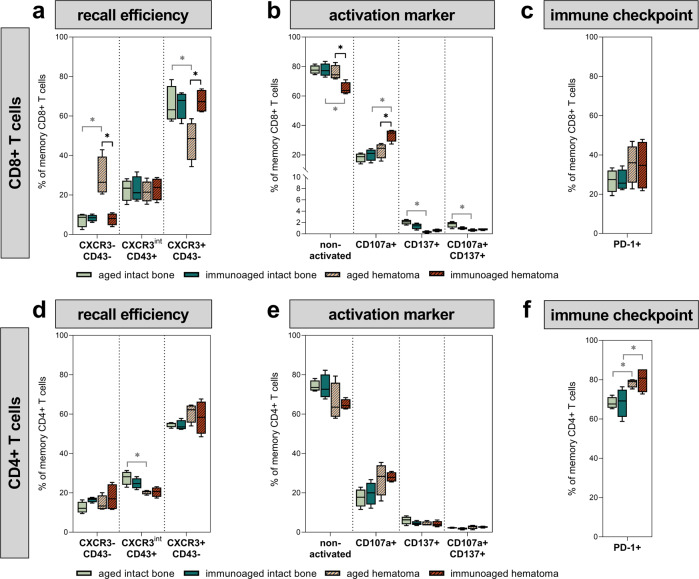
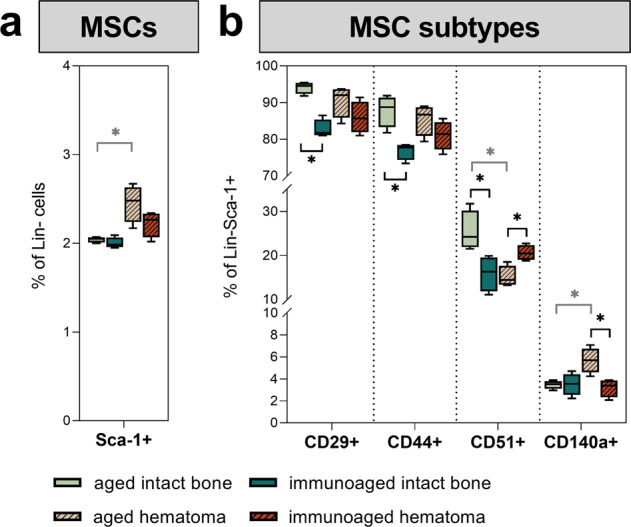
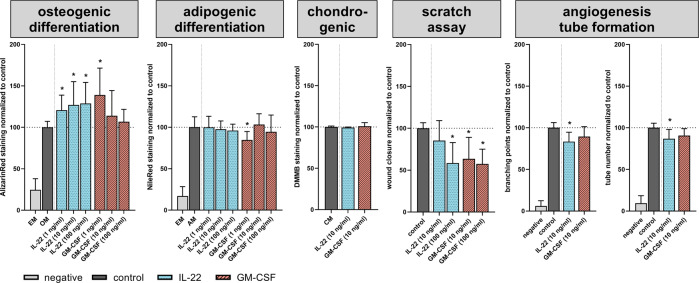
With increasing age, the risk of bone fractures increases while regenerative capacity decreases. This variation in healing potential appears to be linked to adaptive immunity, but the underlying mechanism is still unknown. This study sheds light on immunoaging/inflammaging, which impacts regenerative processes in aging individuals. In an aged preclinical model system, different levels of immunoaging were analyzed to identify key factors that connect immunoaged/inflammaged conditions with bone formation after long bone fracture. Immunological facets, progenitor cells, the microbiome, and confounders were monitored locally at the injury site and systemically in relation to healing outcomes in 12-month-old mice with distinct individual levels of immunoaging. Bone tissue formation during healing was delayed in the immunoaged group and could be associated with significant changes in cytokine levels. A prolonged and amplified pro-inflammatory reaction was caused by upregulated immune cell activation markers, increased chemokine receptor availability and a lack of inhibitory signaling. In immunoaged mice, interleukin-22 was identified as a core cell signaling protein that played a central role in delayed healing. Therapeutic neutralization of IL-22 reversed this specific immunoaging-related disturbed healing. Immunoaging was found to be an influencing factor of decreased regenerative capacity in aged individuals. Furthermore, a novel therapeutic strategy of neutralizing IL-22 may successfully rejuvenate healing in individuals with advanced immune experiences.
随着年龄的增长,骨折的风险增加,而再生能力下降。这种愈合潜力的变化似乎与适应性免疫有关,但潜在的机制尚不清楚。本研究揭示了免疫衰老/炎症衰老,它影响衰老个体的再生过程。在一个衰老的临床前模型系统中,分析了不同程度的免疫衰老,以确定将免疫衰老/炎症衰老状态与长骨骨折后骨形成联系起来的关键因素。在具有不同个体免疫衰老水平的 12 个月大的小鼠中,局部监测免疫方面、祖细胞、微生物组和混杂因素在损伤部位,并与愈合结果进行系统监测。在免疫衰老组中,愈合过程中的骨组织形成延迟,并且可能与细胞因子水平的显著变化有关。上调的免疫细胞激活标志物、趋化因子受体可用性增加和抑制信号缺失导致促炎反应延长和放大。在免疫衰老的小鼠中,白细胞介素 22 被鉴定为核心细胞信号蛋白,在延迟愈合中发挥核心作用。IL-22 的治疗性中和逆转了这种特定的与免疫衰老相关的受损愈合。免疫衰老被发现是导致老年人再生能力下降的一个影响因素。此外,中和 IL-22 的新治疗策略可能成功地使具有先进免疫经验的个体的愈合恢复活力。