Cardiology Unit, AOU Careggi and University of Florence, Florence, Italy.
Diabetes, Endocrine and Metabolic Diseases Unit, Centro Cardiologico Monzino IRCCS, Milan, Italy.
Cardiovasc Diabetol. 2022 Aug 27;21(1):164. doi: 10.1186/s12933-022-01598-2.
Continuous glucose monitoring (CGM) shows in more detail the glycaemic pattern of diabetic subjects and provides several new parameters ("glucometrics") to assess patients' glycaemia and consensually guide treatment. A better control of glucose levels might result in improvement of clinical outcome and reduce disease complications. This study aimed to gather an expert consensus on the clinical and prognostic use of CGM in diabetic patients at high cardiovascular risk or with heart disease.
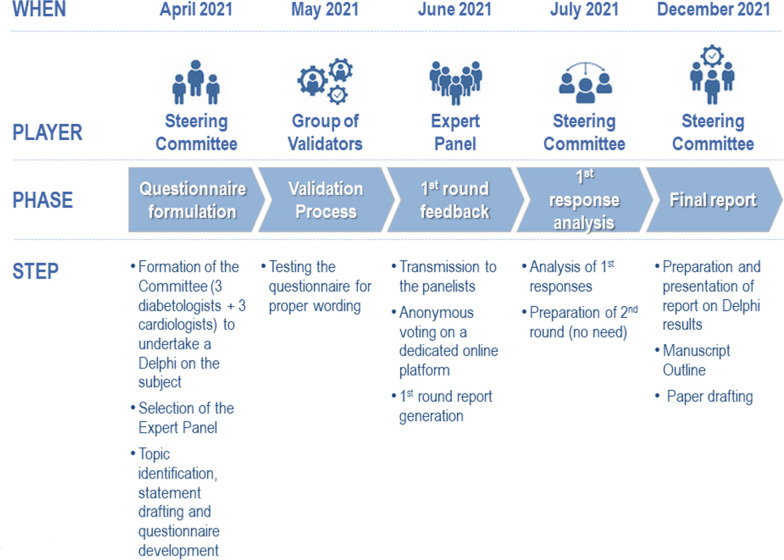
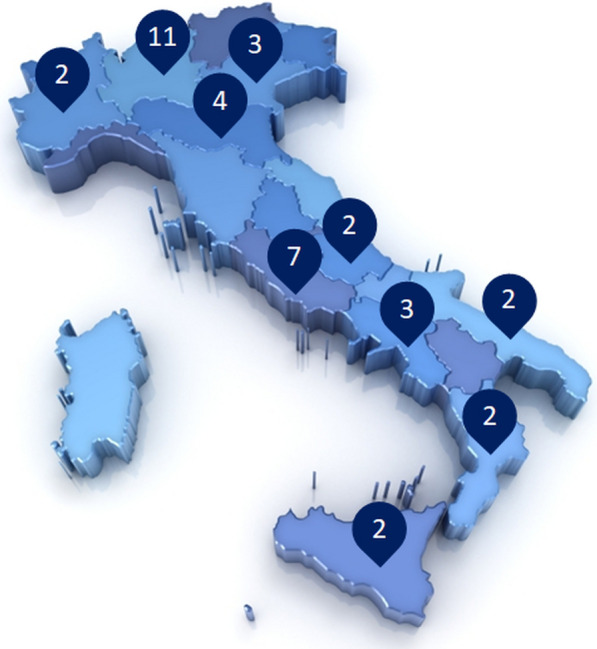
A list of 22 statements concerning type of patients who can benefit from CGM, prognostic impact of CGM in diabetic patients with heart disease, CGM use during acute cardiovascular events and educational issues of CGM were developed. Using a two-round Delphi methodology, the survey was distributed online to 42 Italian experts (21 diabetologists and 21 cardiologists) who rated their level of agreement with each statement on a 5-point Likert scale. Consensus was predefined as more than 66% of the panel agreeing/disagreeing with any given statement.
Forty experts (95%) answered the survey. Every statement achieved a positive consensus. In particular, the panel expressed the feeling that CGM can be prognostically relevant for every diabetic patient (70%) and that is clinically useful also in the management of those with type 2 diabetes not treated with insulin (87.5%). The assessment of time in range (TIR), glycaemic variability (GV) and hypoglycaemic/hyperglycaemic episodes were considered relevant in the management of diabetic patients with heart disease (92.5% for TIR, 95% for GV, 97.5% for time spent in hypoglycaemia) and can improve the prognosis of those with ischaemic heart disease (100% for hypoglycaemia, 90% for hyperglycaemia) or with heart failure (87.5% for hypoglycaemia, 85% for TIR, 87.5% for GV). The experts retained that CGM can be used and can impact the short- and long-term prognosis during an acute cardiovascular event. Lastly, CGM has a recognized educational role for diabetic subjects.
According to this Delphi consensus, the clinical and prognostic use of CGM in diabetic patients at high cardiovascular risk is promising and deserves dedicated studies to confirm the experts' feelings.
连续血糖监测(CGM)更详细地显示了糖尿病患者的血糖模式,并提供了几个新的参数(“血糖计量学”)来评估患者的血糖水平,并一致指导治疗。更好地控制血糖水平可能会改善临床结果并减少疾病并发症。本研究旨在就 CGM 在心血管风险高或患有心脏病的糖尿病患者中的临床和预后用途达成专家共识。
制定了一份关于可以从 CGM 中受益的患者类型、CGM 对患有心脏病的糖尿病患者预后的影响、急性心血管事件期间 CGM 的使用以及 CGM 的教育问题的 22 条陈述清单。使用两轮 Delphi 方法,该调查在线分发给 42 位意大利专家(21 位糖尿病专家和 21 位心脏病专家),他们对每个陈述的同意/不同意程度进行了 5 分李克特量表评分。共识定义为超过 66%的专家组同意/不同意任何给定的陈述。
40 位专家(95%)回答了调查。每个陈述都达成了积极的共识。特别是,专家组表示,CGM 可以对每个糖尿病患者具有预后相关性(70%),并且在管理未接受胰岛素治疗的 2 型糖尿病患者时也具有临床实用性(87.5%)。时间在目标范围内(TIR)、血糖变异性(GV)和低血糖/高血糖发作的评估被认为与心脏病患者的管理相关(TIR 为 92.5%,GV 为 95%,低血糖时间为 97.5%),并可以改善缺血性心脏病患者的预后(低血糖为 100%,高血糖为 90%)或心力衰竭患者(低血糖为 87.5%,TIR 为 85%,GV 为 87.5%)。专家们认为,CGM 可以在急性心血管事件期间使用并影响短期和长期预后。最后,CGM 对糖尿病患者具有公认的教育作用。
根据这项 Delphi 共识,高心血管风险的糖尿病患者中 CGM 的临床和预后应用很有前景,值得进行专门的研究来证实专家们的感受。