Department of Rheumatology and Immunology, Peking University People's Hospital, Beijing, 100044, China.
Beijing Key Laboratory for Rheumatism Mechanism and Immune Diagnosis (BZ0135), Beijing, 100044, China.
Adv Sci (Weinh). 2022 Oct;9(30):e2202706. doi: 10.1002/advs.202202706. Epub 2022 Aug 28.
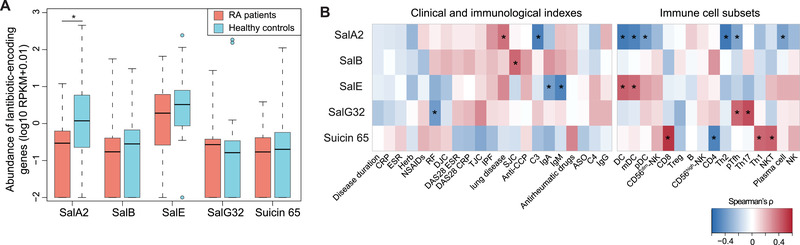
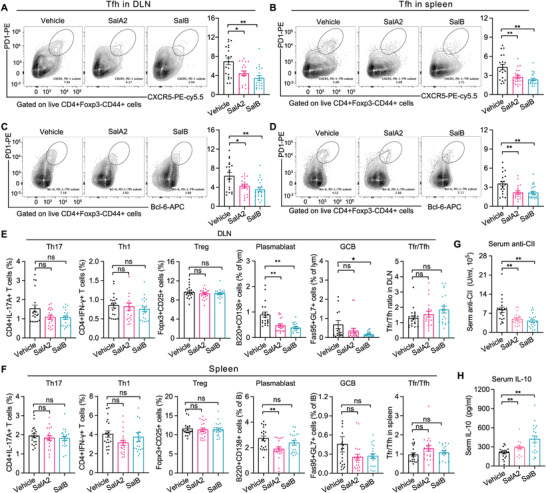
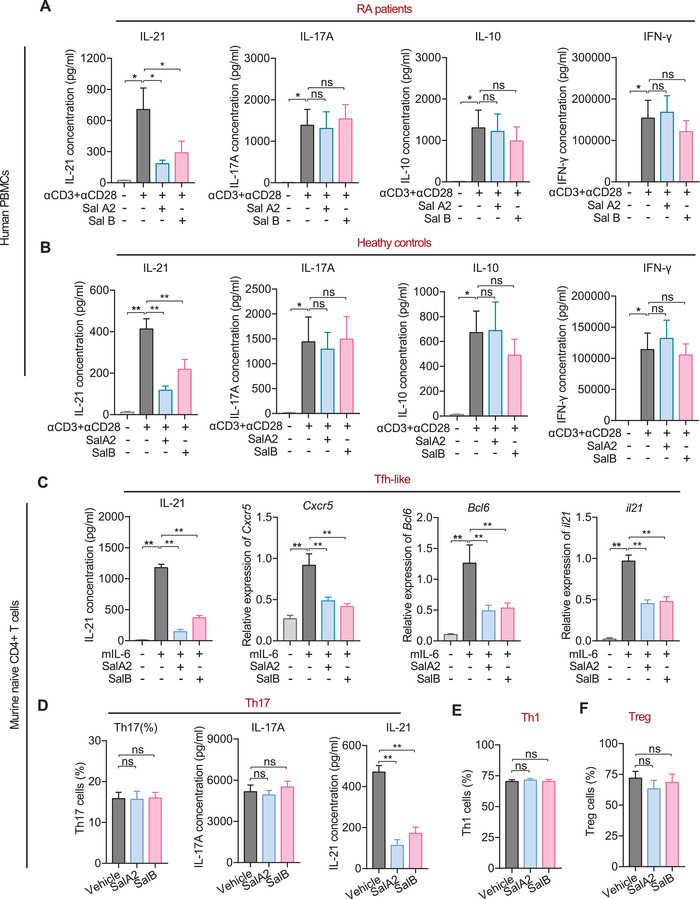
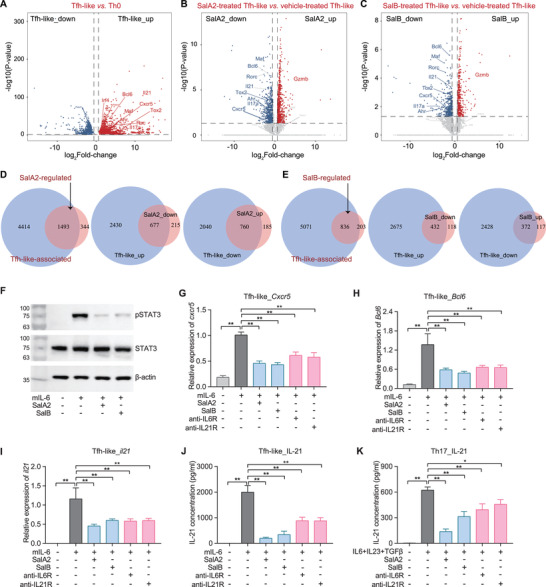
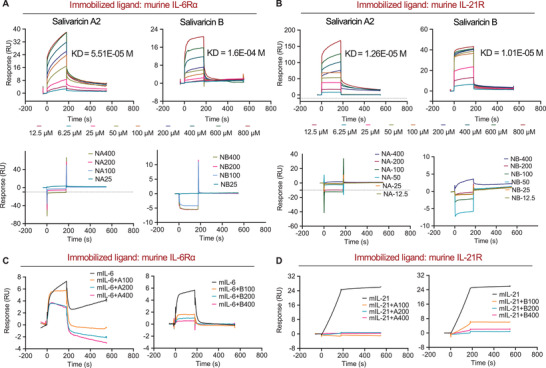
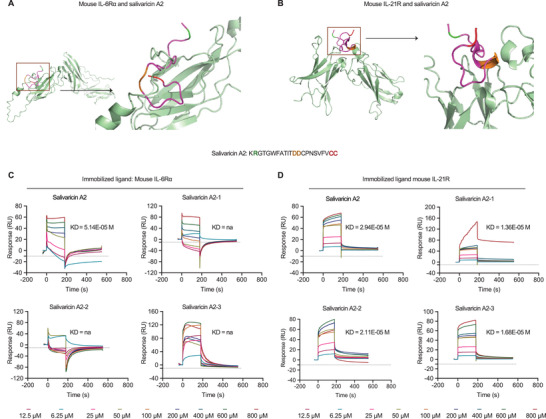
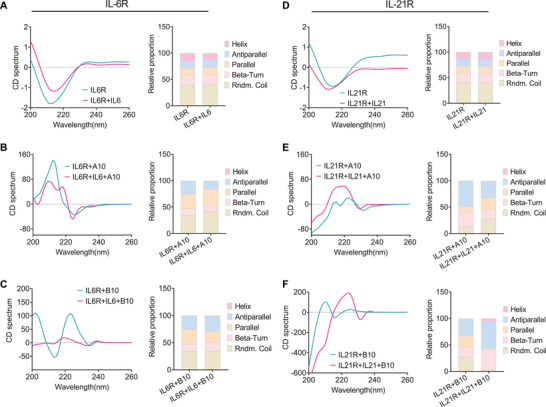
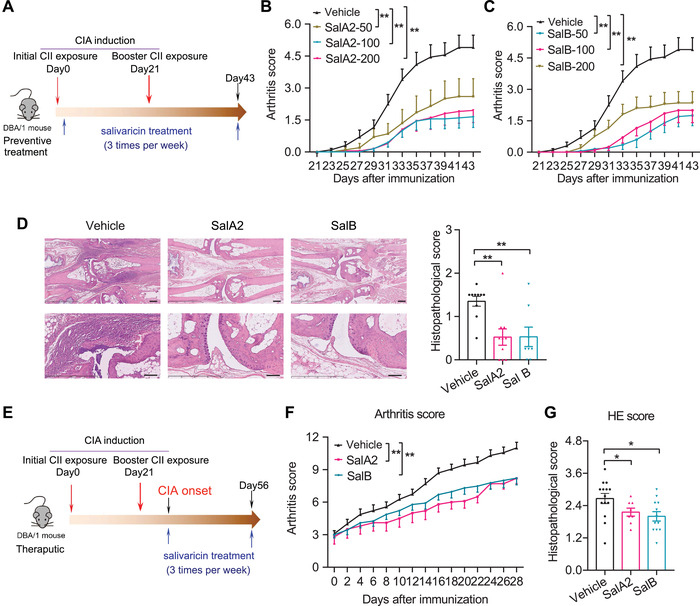
Emerging evidence emphasizes the functional impacts of host microbiome on the etiopathogenesis of autoimmune diseases, including rheumatoid arthritis (RA). However, there are limited mechanistic insights into the contribution of microbial biomolecules especially microbial peptides toward modulating immune homeostasis. Here, by mining the metagenomics data of tonsillar microbiome, a deficiency of the encoding genes of lantibiotic peptides salivaricins in RA patients is identified, which shows strong correlation with circulating immune cells. Evidence is provided that the salivaricins exert immunomodulatory effects in inhibiting T follicular helper (Tfh) cell differentiation and interleukin-21 (IL-21) production. Mechanically, salivaricins directly bind to and induce conformational changes of IL-6 and IL-21 receptors, thereby inhibiting the bindings of IL-6 and IL-21 to their receptors and suppressing the downstream signaling pathway. Finally, salivaricin administration exerts both prophylactic and therapeutic effects against experimental arthritis in a murine model of RA. Together, these results provide a mechanism link of microbial peptides-mediated immunomodulation.
新出现的证据强调了宿主微生物组对自身免疫性疾病(包括类风湿关节炎)发病机制的功能影响。然而,对于微生物生物分子(特别是微生物肽)在调节免疫稳态方面的作用,我们的理解还很有限。在这里,通过对扁桃体微生物组的宏基因组学数据进行挖掘,鉴定出类风湿关节炎患者编码林可酰胺肽唾液菌素的基因缺失,这与循环免疫细胞有很强的相关性。有证据表明,唾液菌素通过抑制滤泡辅助性 T 细胞(Tfh)细胞分化和白细胞介素-21(IL-21)的产生发挥免疫调节作用。从机制上讲,唾液菌素直接结合并诱导白细胞介素-6(IL-6)和白细胞介素-21(IL-21)受体的构象变化,从而抑制 IL-6 和 IL-21 与其受体的结合,并抑制下游信号通路。最后,唾液菌素给药在类风湿关节炎的小鼠模型中对实验性关节炎具有预防和治疗作用。总之,这些结果提供了微生物肽介导的免疫调节的机制联系。