
ERCC4和ERCC5基因多态性与癌症风险:系统研究综述、荟萃分析及流行病学证据
Polymorphisms in ERCC4 and ERCC5 and risk of cancers: Systematic research synopsis, meta-analysis, and epidemiological evidence.
作者信息
Zuo Chunjian, Lv Xiaolong, Liu Tianyu, Yang Lei, Yang Zelin, Yu Cao, Chen Huanwen
机构信息
Department of Thoracic Surgery, Army Medical Center of PLA, Chongqing, China.
Department of Cardiothoracic Surgery, The First Affiliated Hospital of Chongqing Medical University, Chongqing, China.
出版信息
Front Oncol. 2022 Aug 11;12:951193. doi: 10.3389/fonc.2022.951193. eCollection 2022.
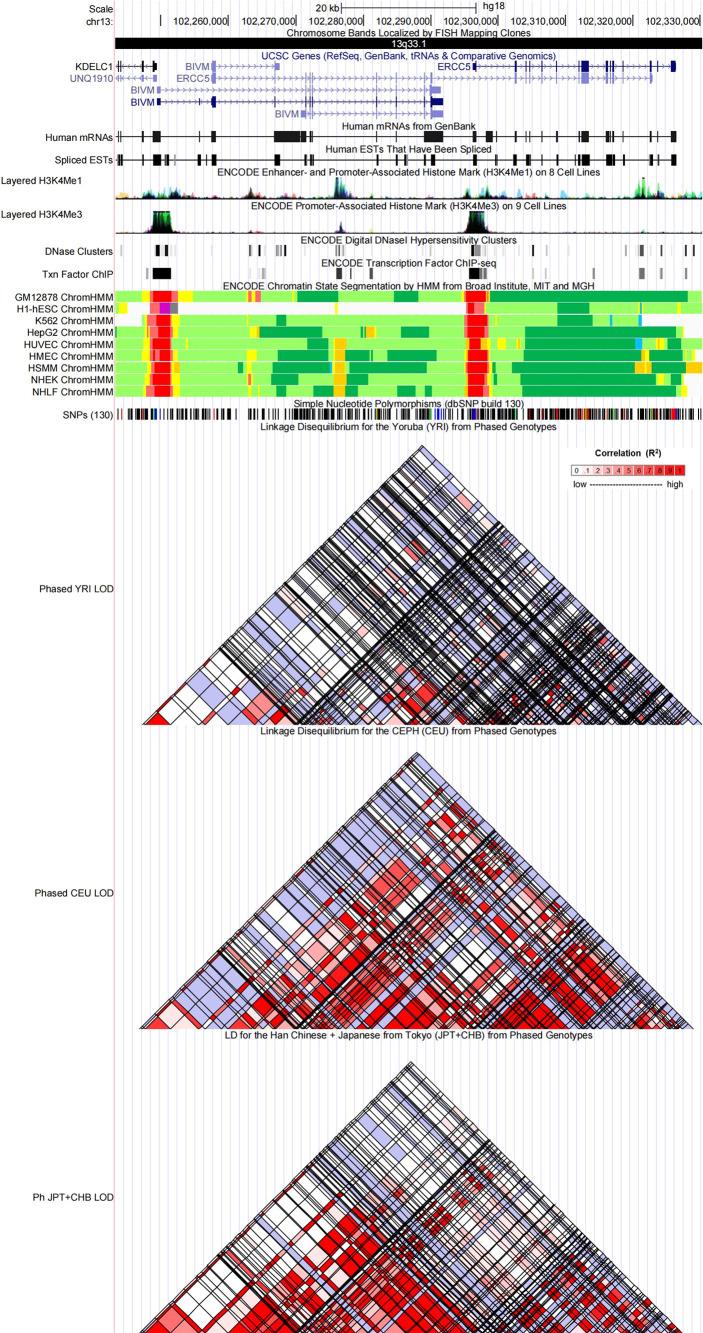
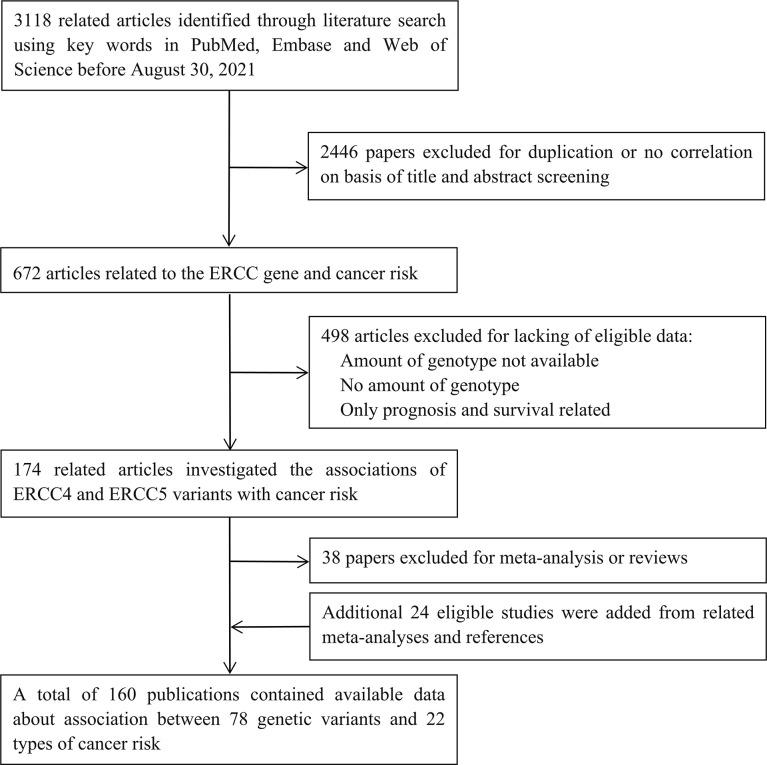
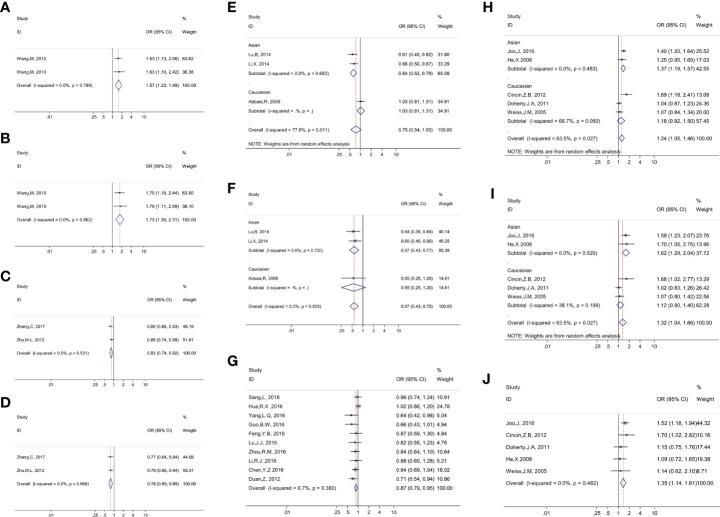
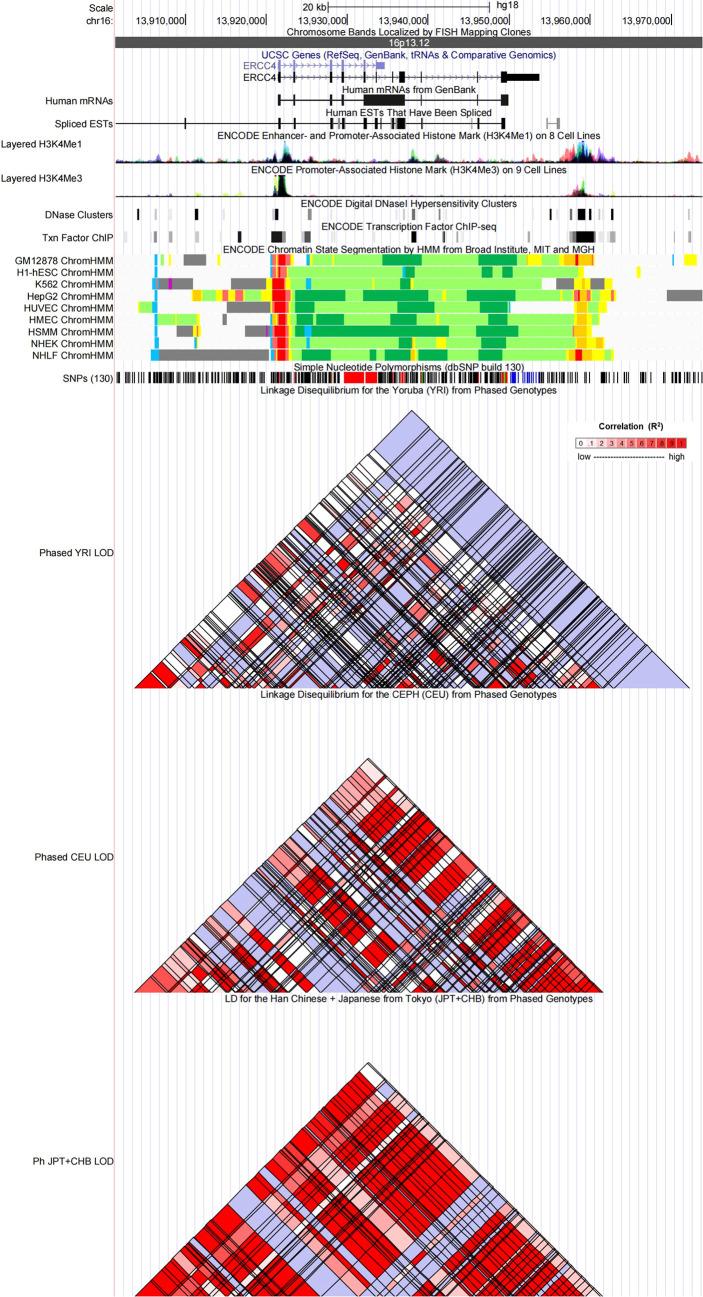
The variants of DNA repair genes have been widely reported to be associated with cancer risk in the past decades. As were two crucial members of nucleotide excision repair pathway, and polymorphisms are linked with susceptibility to multiple cancers, but the conclusions were controversial. In this updated meta-analysis concerned with and single-nucleotide polymorphisms (SNPs), 160 eligible publications were identified, and we exerted the meta-analysis of correlations between 24 variants and 19 types of cancer. Venice criteria and the false-positive report probability were used to evaluate a cumulative evidence of significant associations. We conducted functional annotations for those strong associations using data from the Encyclopedia of DNA Elements (ENCODE) Project. We obtained 11 polymorphisms significantly related to changed susceptibility to 11 cancers ( < 0.05). Strong evidence was assigned to four variant-related cancer risks in Asians ( rs744154 with bladder cancer, rs2296147 with esophageal cancer, rs17655 with laryngeal cancer and uterine cancer, and rs751402 with gastric cancer), moderate to six SNPs with a risk of eight cancers, and weak to nine SNPs with nine cancers. Data from ENCODE and other public databases showed that the loci of these SNPs with strong evidence might fall in putative functional regions. In conclusion, this paper summarizes comprehensive evidence that common variants of and genes are strongly associated with the risk of bladder cancer, esophageal cancer, laryngeal cancer, uterine cancer, and gastric cancer and elucidates the crucial role of the DNA repair genes in the genetic predisposition to human cancers.
在过去几十年中,DNA修复基因的变异与癌症风险的关联已被广泛报道。作为核苷酸切除修复途径的两个关键成员,[基因名称1]和[基因名称2]的多态性与多种癌症的易感性相关,但结论存在争议。在这项关于[基因名称1]和[基因名称2]单核苷酸多态性(SNP)的更新荟萃分析中,确定了160篇符合条件的出版物,我们对24个变异与19种癌症类型之间的相关性进行了荟萃分析。采用威尼斯标准和假阳性报告概率来评估显著关联的累积证据。我们使用DNA元件百科全书(ENCODE)项目的数据对这些强关联进行了功能注释。我们获得了11个与11种癌症易感性改变显著相关的多态性(P<0.05)。在亚洲人中,四个变异相关的癌症风险获得了有力证据([基因名称1]的rs744154与膀胱癌、[基因名称2]的rs2296147与食管癌、[基因名称1]的rs17655与喉癌和子宫癌、[基因名称2]的rs751402与胃癌),六个SNP与八种癌症风险的关联为中等,九个SNP与九种癌症风险的关联为弱。来自ENCODE和其他公共数据库的数据表明,这些有有力证据的SNP位点可能位于假定的功能区域。总之,本文总结了全面的证据,表明[基因名称1]和[基因名称2]基因的常见变异与膀胱癌、食管癌、喉癌、子宫癌和胃癌风险密切相关,并阐明了DNA修复基因在人类癌症遗传易感性中的关键作用。
 Zotero 插件