Laughlin Zane T, Conn Graeme L
Department of Biochemistry, Emory University School of Medicine, Atlanta, GA, United States.
Graduate Program in Biochemistry, Cell and Developmental Biology (BCDB), Graduate Division of Biological and Biomedical Sciences, Emory University, Atlanta, GA, United States.
Front Microbiol. 2022 Aug 11;13:961921. doi: 10.3389/fmicb.2022.961921. eCollection 2022.
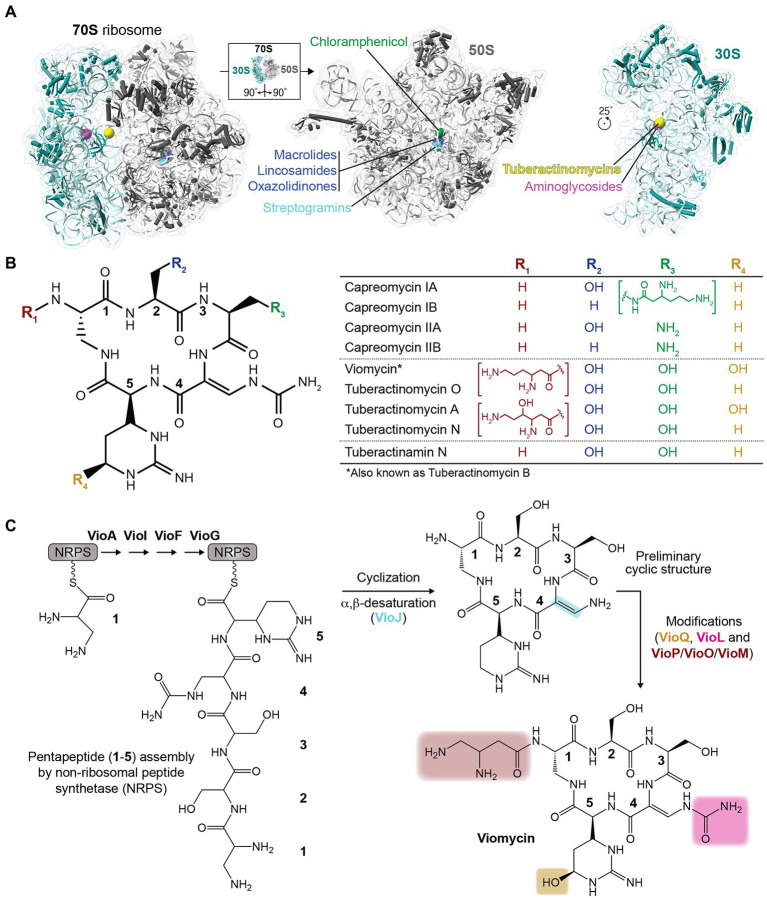
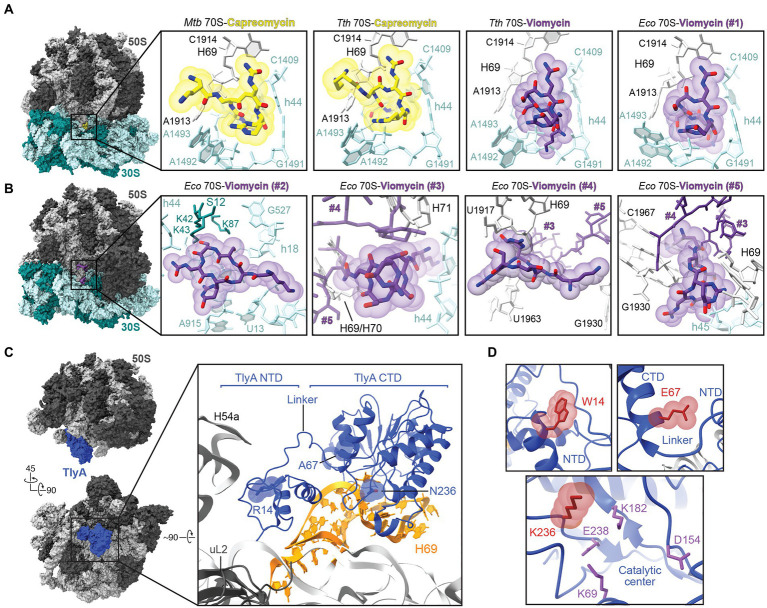
The tuberactinomycins are a family of cyclic peptide ribosome-targeting antibiotics with a long history of use as essential second-line treatments for drug-resistant tuberculosis. Beginning with the identification of viomycin in the early 1950s, this mini-review briefly describes tuberactinomycin structures and biosynthesis, as well as their past and present application in the treatment of tuberculosis caused by infection with . More recent studies are also discussed that have revealed details of tuberactinomycin action on the ribosome as well as resistance mechanisms that have emerged since their introduction into the clinic. Finally, future applications of these drugs are considered in the context of their recent removal from the World Health Organization's List of Essential Medicines.
结核放线菌素是一类靶向核糖体的环肽抗生素,作为耐药结核病的重要二线治疗药物已有很长的使用历史。从20世纪50年代初紫霉素的鉴定开始,本综述简要描述了结核放线菌素的结构和生物合成,以及它们过去和现在在治疗由感染引起的结核病中的应用。还讨论了最近的研究,这些研究揭示了结核放线菌素对核糖体的作用细节以及自引入临床以来出现的耐药机制。最后,鉴于这些药物最近被从世界卫生组织基本药物清单中删除,对其未来应用进行了探讨。