van Lutterveld Remko, Varkevisser Tim, Kouwer Karlijn, van Rooij Sanne J H, Kennis Mitzy, Hueting Martine, van Montfort Simone, van Dellen Edwin, Geuze Elbert
Brain Research and Innovation Centre, Ministry of Defence, Utrecht, Netherlands.
Department of Psychiatry, University Medical Centre, Utrecht, Netherlands.
Front Hum Neurosci. 2022 Aug 12;16:730745. doi: 10.3389/fnhum.2022.730745. eCollection 2022.
Trauma-focused psychotherapy for post-traumatic stress disorder (PTSD) is effective in about half of all patients. Investigating biological systems related to prospective treatment response is important to gain insight in mechanisms predisposing patients for successful intervention. We studied if spontaneous brain activity, brain network characteristics and head motion during the resting state are associated with future treatment success.
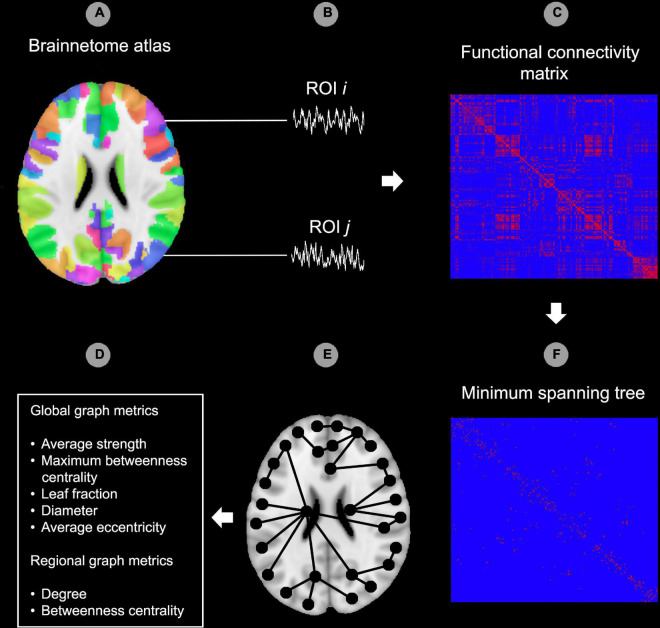
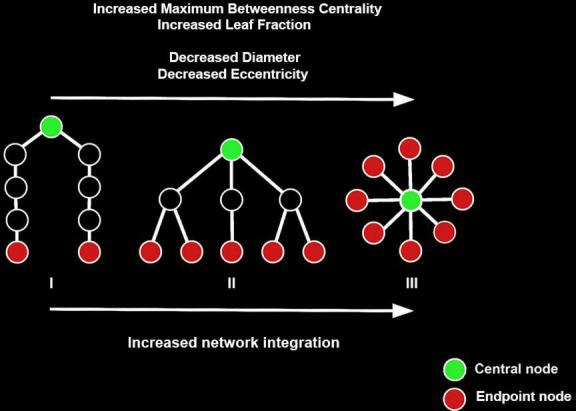
Functional magnetic resonance imaging scans were acquired from 46 veterans with PTSD around the start of treatment. Psychotherapy consisted of trauma-focused cognitive behavioral therapy (tf-CBT), eye movement desensitization and reprocessing (EMDR), or a combination thereof. After intervention, 24 patients were classified as treatment responders and 22 as treatment resistant. Differences between groups in spontaneous brain activity were evaluated using amplitude of low-frequency fluctuations (ALFF), while global and regional brain network characteristics were assessed using a minimum spanning tree (MST) approach. In addition, in-scanner head motion was assessed.
No differences in spontaneous brain activity and global network characteristics were observed between the responder and non-responder group. The right inferior parietal lobule, right putamen and left superior parietal lobule had a more central position in the network in the responder group compared to the non-responder group, while the right dorsolateral prefrontal cortex (DLPFC), right inferior frontal gyrus and left inferior temporal gyrus had a less central position. In addition, responders showed less head motion.
These results show that areas involved in executive functioning, attentional and action processes, learning, and visual-object processing, are related to prospective PTSD treatment response in veterans. In addition, these findings suggest that involuntary micromovements may be related to future treatment success.
创伤聚焦心理治疗对创伤后应激障碍(PTSD)患者的有效率约为半数。研究与预期治疗反应相关的生物系统,对于深入了解使患者易于成功干预的机制很重要。我们研究了静息状态下的自发脑活动、脑网络特征和头部运动是否与未来治疗成功相关。
在治疗开始时,对46名患有创伤后应激障碍的退伍军人进行了功能磁共振成像扫描。心理治疗包括创伤聚焦认知行为疗法(tf-CBT)、眼动脱敏再处理疗法(EMDR)或两者结合。干预后,24名患者被归类为治疗反应者,22名患者被归类为治疗抵抗者。使用低频波动幅度(ALFF)评估两组之间自发脑活动的差异,同时使用最小生成树(MST)方法评估全局和局部脑网络特征。此外,还评估了扫描过程中的头部运动。
反应者组和无反应者组之间在自发脑活动和全局网络特征方面未观察到差异。与无反应者组相比,反应者组中右侧顶下小叶、右侧壳核和左侧顶上小叶在网络中的位置更中心,而右侧背外侧前额叶皮质(DLPFC)、右侧额下回和左侧颞下回的位置则不那么中心。此外,反应者的头部运动较少。
这些结果表明,涉及执行功能、注意力和行动过程、学习以及视觉对象处理的区域与退伍军人创伤后应激障碍的预期治疗反应有关。此外,这些发现表明,非自愿微运动可能与未来治疗成功有关。