Raevens Sarah, Boret Maxine, Fallon Michael B
Department of Gastroenterology and Hepatology, Ghent University - Ghent University Hospital, Ghent, Belgium.
Department of Internal Medicine, University of Arizona College of Medicine, Phoenix, AZ, USA.
JHEP Rep. 2022 Jul 4;4(9):100527. doi: 10.1016/j.jhepr.2022.100527. eCollection 2022 Sep.
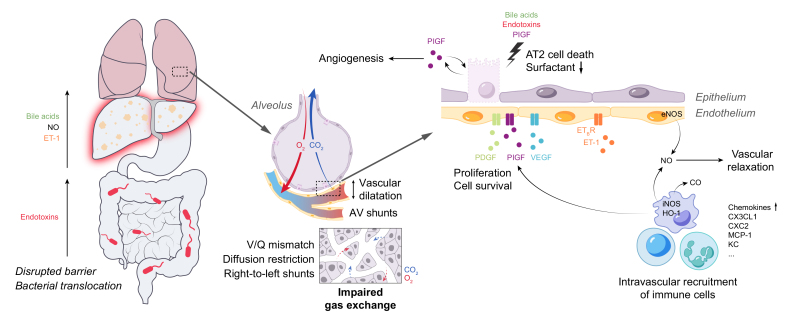
Hepatopulmonary syndrome (HPS) is a pulmonary vascular complication of liver disease, which adversely affects prognosis. The disease is characterised by intrapulmonary vascular dilatations and shunts, resulting in impaired gas exchange. A complex interaction between the liver, the gut and the lungs, predominately impacting pulmonary endothelial cells, immune cells and respiratory epithelial cells, is responsible for the development of typical pulmonary alterations seen in HPS. Liver transplantation is the only therapeutic option and generally reverses HPS. Since the implementation of the model for end-stage liver disease (MELD) standard exception policy, outcomes in patients with HPS have been significantly better than they were in the pre-MELD era. This review summarises current knowledge and highlights what's new regarding the diagnosis and management of HPS, and our understanding of pathogenesis based on experimental models and translational studies.
肝肺综合征(HPS)是一种肝脏疾病的肺血管并发症,会对预后产生不利影响。该疾病的特征是肺内血管扩张和分流,导致气体交换受损。肝脏、肠道和肺之间的复杂相互作用,主要影响肺内皮细胞、免疫细胞和呼吸道上皮细胞,是HPS中典型肺部改变发生的原因。肝移植是唯一的治疗选择,通常可使HPS逆转。自实施终末期肝病模型(MELD)标准例外政策以来,HPS患者的预后明显优于MELD时代之前。本综述总结了当前的知识,并重点介绍了HPS诊断和管理方面的新进展,以及我们基于实验模型和转化研究对发病机制的理解。