Tefera Zenebe, Assefaw Mandefro, Ayalew Sindu, Gashaw Wondimnew, Abate Mengistu, Temesgen Kibir, Abebaw Nigusie, Yalew Melaku
Department of Midwifery, College of Medicine and Health Science, Wollo University, Dessie, Ethiopia.
Department of Epidemiology and Biostatistics, College of Medicine and Health Science, Wollo University, Dessie, Ethiopia.
Int J Reprod Med. 2022 Aug 18;2022:9576080. doi: 10.1155/2022/9576080. eCollection 2022.
Implanon is a long-acting contraceptive method that is extremely effective in preventing pregnancy with a clinical failure rate of less than 1%. Despite these, the rate of Implanon discontinuation is a common problem in various societies and exposes women to unwanted conception and its consequences.
The current study sought to find and consolidate relevant literature on Implanon discontinuation and associated factors in Ethiopia.
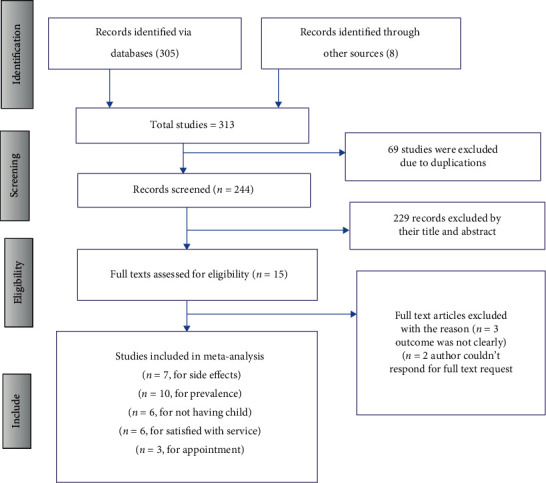
Medline, PubMed, Cochrane Library, EMBASE, and Google Scholar databases were systematically searched for studies published in English before December 2021. The included studies were critically appraised using the JBI instrument for observational studies. STATA version 16 was used for analysis. The presence of statistical heterogeneity was checked using Cochran's test, and its level was quantified using statistics. A pooled estimate of the proportion of outcome variables was calculated. To measure the effect size, pooled odds ratios with 95% CI were computed.
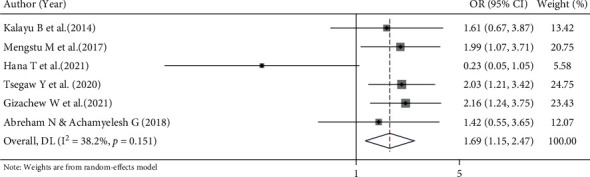
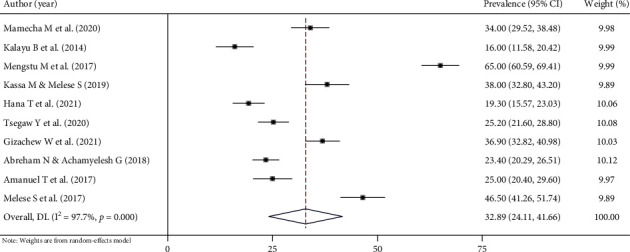
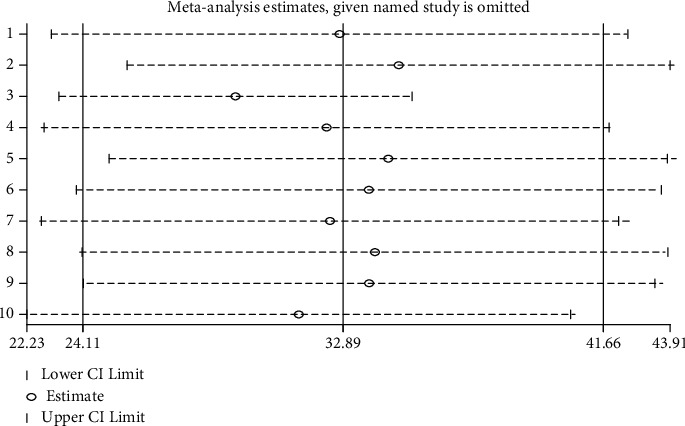
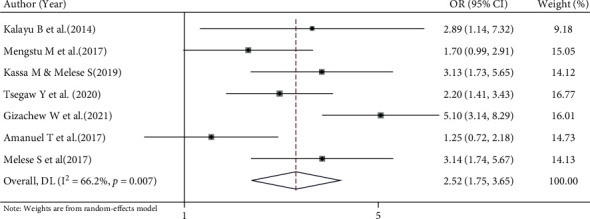
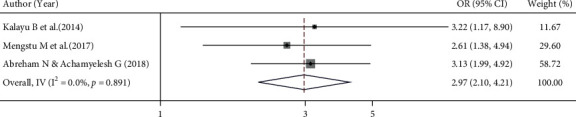
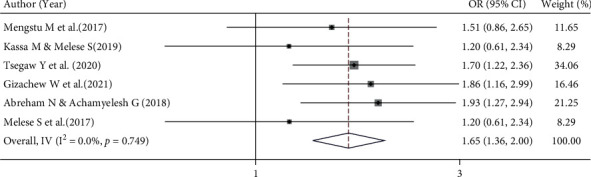
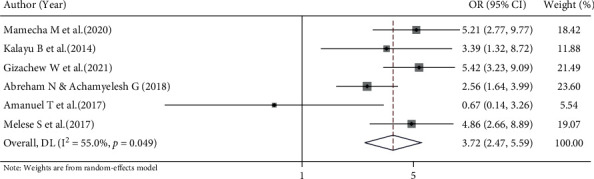
The pooled prevalence of Implanon discontinuation in Ethiopia was 32.89%, 95% CI: 24.11%, 41.66%. Experiencing side effects (OR = 2.52, 95% CI 1.75, 3.65), having no children (OR = 1.69, 95% CI 1.15, 2.47), not having received preinsertion counselling (OR = 1.65, 95% CI 1.36, 2.00), having no postinsertion appointment (OR = 2.97, 95% CI 2.10, 4.21), and not satisfied with the service (OR = 2.72, 95% CI 2.47, 5.59) were significantly associated with Implanon discontinuation.
The pooled prevalence of Implanon discontinuation in Ethiopia was high. Experiencing side effects, having no child, not receiving preinsertion counselling, having no follow-up appointment, and not being satisfied with the service were significantly associated with Implanon discontinuation. Therefore, healthcare providers should offer preinsertion counselling in accordance with national family planning guidelines, emphasizing the method's advantages and side effects.
依伴侬是一种长效避孕方法,在预防妊娠方面极其有效,临床失败率低于1%。尽管如此,依伴侬停用率在各个社会中都是一个常见问题,会使女性面临意外怀孕及其后果。
本研究旨在查找并整合埃塞俄比亚关于依伴侬停用及其相关因素的相关文献。
对Medline、PubMed、Cochrane图书馆、EMBASE和谷歌学术数据库进行系统检索,查找2021年12月之前发表的英文研究。使用JBI观察性研究工具对纳入研究进行严格评估。使用STATA 16版进行分析。使用 Cochr an检验检查统计异质性的存在,并使用统计量对其水平进行量化。计算结果变量比例的合并估计值。为测量效应大小,计算了具有95%置信区间的合并比值比。
埃塞俄比亚依伴侬停用的合并患病率为32.89%,95%置信区间:24.11%,41.66%。出现副作用(比值比=2.52,95%置信区间1.75,3.65)、没有孩子(比值比=1.69,95%置信区间1.15,2.47)、未接受植入前咨询(比值比=1.65,95%置信区间1.36,2.00)、没有植入后预约(比值比=2.97,95%置信区间2.10,4.21)以及对服务不满意(比值比=2.72,95%置信区间2.47,5.59)与依伴侬停用显著相关。
埃塞俄比亚依伴侬停用的合并患病率较高。出现副作用、没有孩子、未接受植入前咨询、没有随访预约以及对服务不满意与依伴侬停用显著相关。因此,医疗服务提供者应按照国家计划生育指南提供植入前咨询,强调该方法的优点和副作用。