Dong Meiyuan, Wen Song, Zhou Ligang
Department of Endocrinology, Shanghai Pudong Hospital, Fudan University Pudong Medical Center, Shanghai, 201399, People's Republic of China.
Shanghai Key Laboratory of Vascular Lesions Regulation and Remodeling, Shanghai Pudong Hospital, Shanghai, People's Republic of China.
Diabetes Metab Syndr Obes. 2022 Aug 22;15:2583-2597. doi: 10.2147/DMSO.S375559. eCollection 2022.
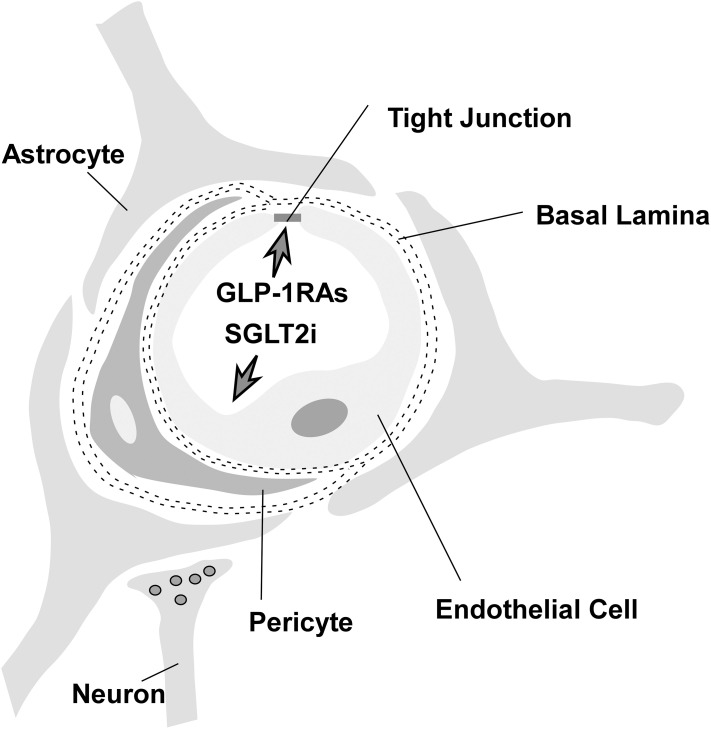
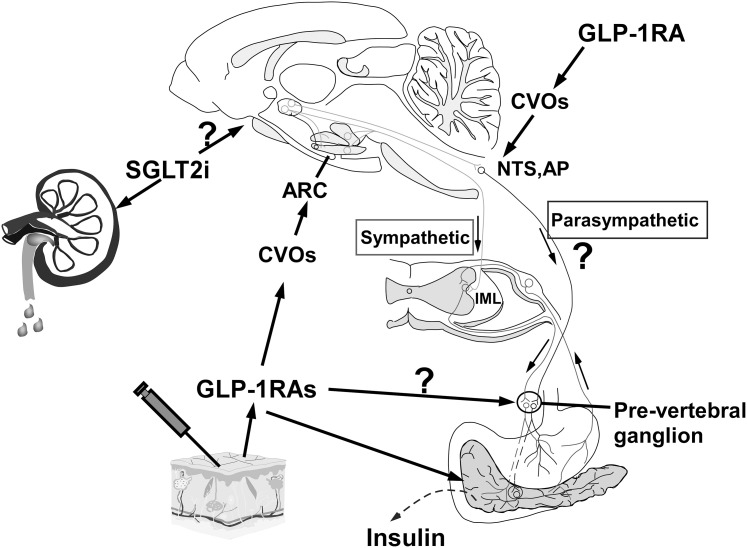
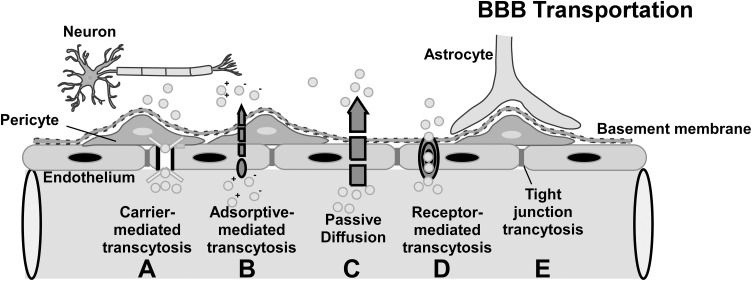
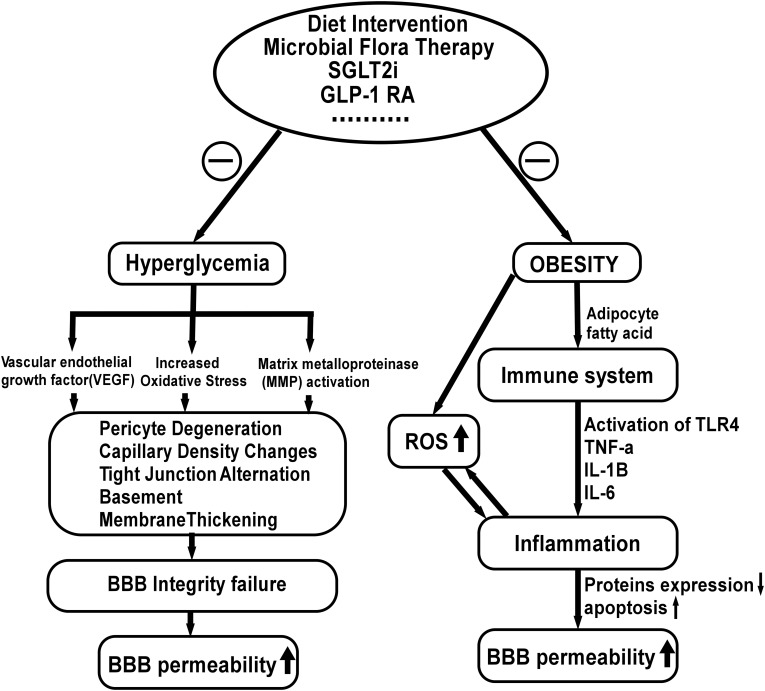
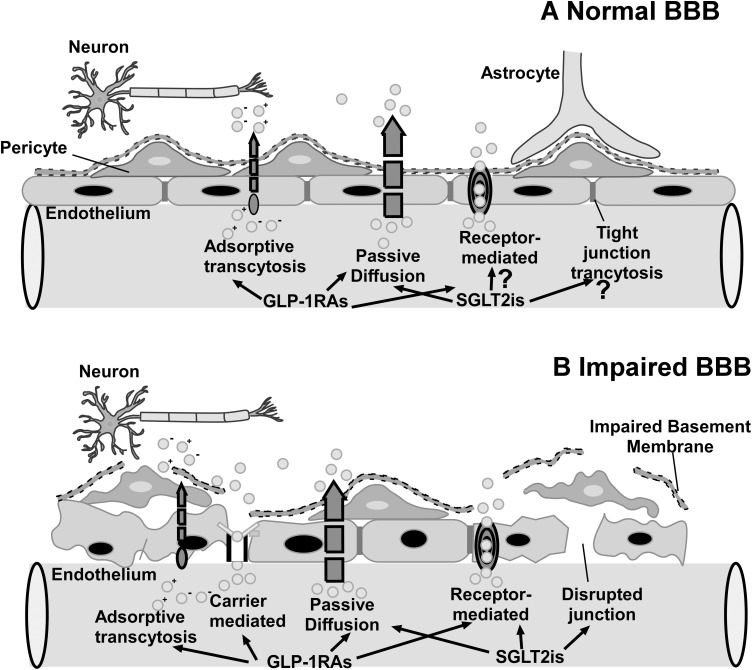
Diabetes and obesity are growing problems worldwide and are associated with a range of acute and chronic complications, including acute myocardial infarction (AMI) and stroke. Novel anti-diabetic medications designed to treat T2DM, such as glucagon-like peptide-1 receptor agonists (GLP-1RAs) and sodium-glucose cotransporter-2 inhibitors (SGLT-2is), exert beneficial effects on metabolism and the cardiovascular system. However, the underlying mechanisms are poorly understood. GLP-1RAs induce anorexic effects by inhibiting the central regulation of food intake to reduce body weight. Central/peripheral administration of GLP-1RAs inhibits food intake, accompanied by an increase in c-Fos expression in neurons within the paraventricular nucleus (PVN), amygdala, the nucleus of the solitary tract (NTS), area postrema (AP), lateral parabrachial nucleus (LPB) and arcuate nucleus (ARC), induced by the activation of GLP-1 receptors in the central nervous system (CNS). Therefore, GLP-1RAs need to pass through the blood-brain barrier to exert their pharmacological effects. In addition, studies revealed that SGLT-2is could reduce the risk of chronic heart failure in people with type 2 diabetes. SGLT-2 is extensively expressed throughout the CNS, and c-Fos expression was also observed within 2 hours of administration of SGLT-2is in mice. Recent clinical studies reported that SGLT-2is improved hypertension and atrial fibrillation by modulating the "overstimulated" renin-angiotensin-aldosterone system (RAAS) and suppressing the sympathetic nervous system (SNS) by directly/indirectly acting on the rostral ventrolateral medulla. Despite extensive research into the central mechanism of GLP-1RAs and SGLT-2is, the penetration of the blood-brain barrier (BBB) remains controversial. This review discusses the interaction between GLP-1RAs and SGLT-2is and the BBB to induce pharmacological effects via the CNS.
糖尿病和肥胖在全球范围内日益严重,并且与一系列急慢性并发症相关,包括急性心肌梗死(AMI)和中风。旨在治疗2型糖尿病(T2DM)的新型抗糖尿病药物,如胰高血糖素样肽-1受体激动剂(GLP-1RAs)和钠-葡萄糖协同转运蛋白-2抑制剂(SGLT-2is),对代谢和心血管系统具有有益作用。然而,其潜在机制尚不清楚。GLP-1RAs通过抑制食物摄入的中枢调节来诱导厌食效应,从而减轻体重。中枢/外周给予GLP-1RAs可抑制食物摄入,同时室旁核(PVN)、杏仁核、孤束核(NTS)、最后区(AP)、外侧臂旁核(LPB)和弓状核(ARC)内神经元的c-Fos表达增加,这是由中枢神经系统(CNS)中GLP-1受体的激活所诱导的。因此,GLP-1RAs需要穿过血脑屏障才能发挥其药理作用。此外,研究表明SGLT-2is可以降低2型糖尿病患者慢性心力衰竭的风险。SGLT-2在整个中枢神经系统中广泛表达,在给小鼠施用SGLT-2is后2小时内也观察到了c-Fos表达。最近的临床研究报告称,SGLT-2is通过调节“过度激活”的肾素-血管紧张素-醛固酮系统(RAAS)以及直接/间接作用于延髓头端腹外侧,抑制交感神经系统(SNS),从而改善高血压和心房颤动。尽管对GLP-1RAs和SGLT-2is的中枢机制进行了广泛研究,但血脑屏障(BBB)的穿透性仍存在争议。本综述讨论了GLP-1RAs和SGLT-2is与血脑屏障之间的相互作用,以及它们如何通过中枢神经系统诱导药理作用。