• 文献检索
  • 文档翻译
  • 深度研究
  • 学术资讯
  • Suppr Zotero 插件Zotero 插件
  • 邀请有礼
  • 套餐&价格
  • 历史记录
应用&插件
Suppr Zotero 插件Zotero 插件浏览器插件Mac 客户端Windows 客户端微信小程序
定价
高级版会员购买积分包购买API积分包
服务
文献检索文档翻译深度研究API 文档MCP 服务
关于我们
关于 Suppr公司介绍联系我们用户协议隐私条款
关注我们

Suppr 超能文献

核心技术专利:CN118964589B侵权必究
粤ICP备2023148730 号-1Suppr @ 2026

文献检索

告别复杂PubMed语法,用中文像聊天一样搜索,搜遍4000万医学文献。AI智能推荐,让科研检索更轻松。

立即免费搜索

文件翻译

保留排版,准确专业,支持PDF/Word/PPT等文件格式,支持 12+语言互译。

免费翻译文档

深度研究

AI帮你快速写综述,25分钟生成高质量综述,智能提取关键信息,辅助科研写作。

立即免费体验

基于多目标的聚类算法,从高通量 B 细胞受体测序数据中推断 BCR 克隆谱系。

A multi-objective based clustering for inferring BCR clonal lineages from high-throughput B cell repertoire data.

机构信息

Sorbonne Université, CNRS, UMR 7238, Laboratoire de Biologie Computationnelle et Quantitative, Paris, France.

Sorbonne Université, AP-HP, Hôpital Pitié-Salpêtrière, UMR_S 1138 Department of Hematology, Paris, France.

出版信息

PLoS Comput Biol. 2022 Aug 29;18(8):e1010411. doi: 10.1371/journal.pcbi.1010411. eCollection 2022 Aug.

DOI:10.1371/journal.pcbi.1010411
PMID:36037250
原文链接:https://pmc.ncbi.nlm.nih.gov/articles/PMC9462827/
Abstract

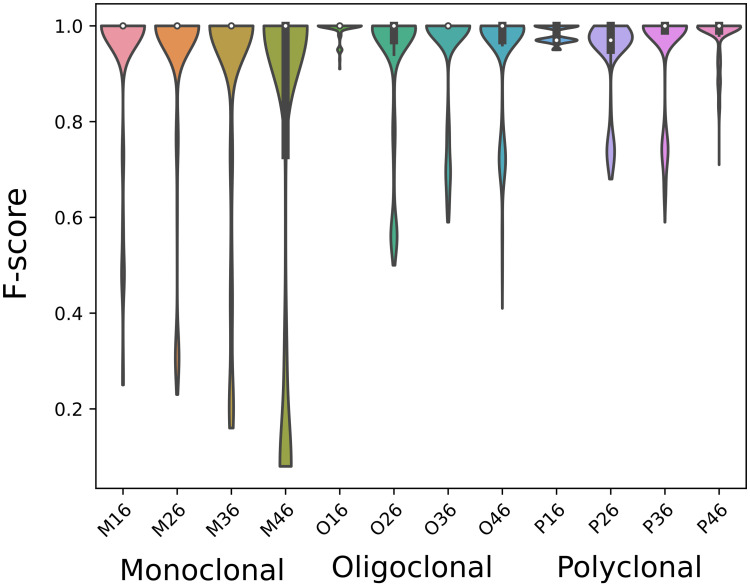
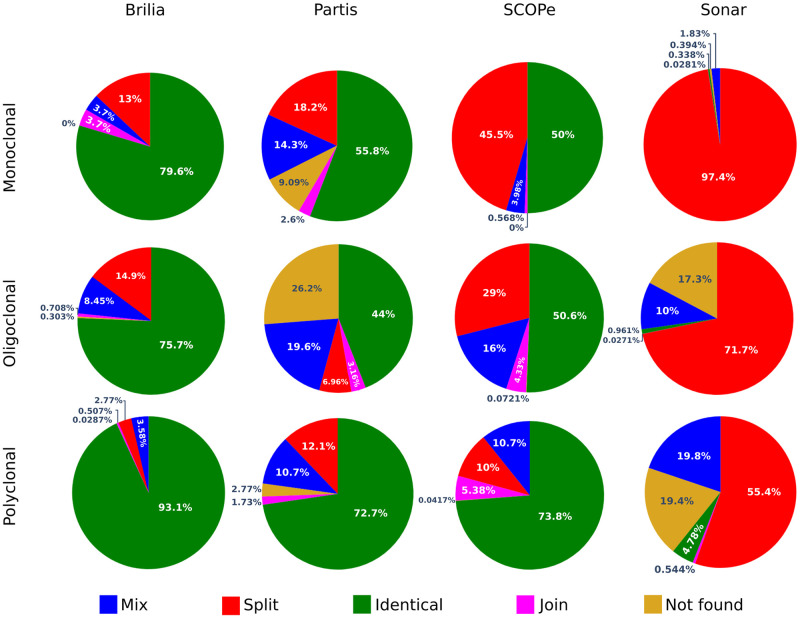
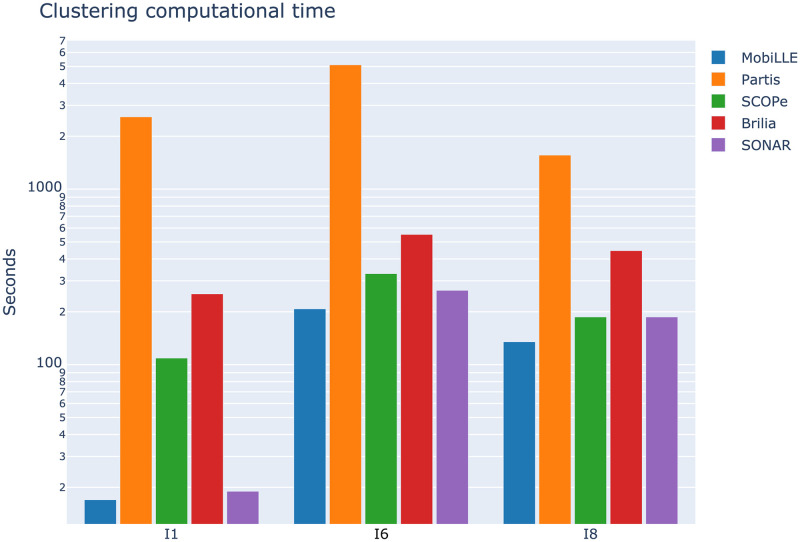
The adaptive B cell response is driven by the expansion, somatic hypermutation, and selection of B cell clonal lineages. A high number of clonal lineages in a B cell population indicates a highly diverse repertoire, while clonal size distribution and sequence diversity reflect antigen selective pressure. Identifying clonal lineages is fundamental to many repertoire studies, including repertoire comparisons, clonal tracking, and statistical analysis. Several methods have been developed to group sequences from high-throughput B cell repertoire data. Current methods use clustering algorithms to group clonally-related sequences based on their similarities or distances. Such approaches create groups by optimizing a single objective that typically minimizes intra-clonal distances. However, optimizing several objective functions can be advantageous and boost the algorithm convergence rate. Here we propose MobiLLe, a new method based on multi-objective clustering. Our approach requires V(D)J annotations to obtain the initial groups and iteratively applies two objective functions that optimize cohesion and separation within clonal lineages simultaneously. We show that our method greatly improves clonal lineage grouping on simulated benchmarks with varied mutation rates compared to other tools. When applied to experimental repertoires generated from high-throughput sequencing, its clustering results are comparable to the most performing tools and can reproduce the results of previous publications. The method based on multi-objective clustering can accurately identify clonally-related antibody sequences and presents the lowest running time among state-of-art tools. All these features constitute an attractive option for repertoire analysis, particularly in the clinical context. MobiLLe can potentially help unravel the mechanisms involved in developing and evolving B cell malignancies.

摘要

适应性 B 细胞反应是由 B 细胞克隆谱系的扩增、体细胞超突变和选择驱动的。B 细胞群体中大量的克隆谱系表明其多样性较高,而克隆大小分布和序列多样性反映了抗原的选择压力。鉴定克隆谱系是许多免疫库研究的基础,包括免疫库比较、克隆追踪和统计分析。已经开发了几种方法来对高通量 B 细胞免疫库数据中的序列进行分组。目前的方法使用聚类算法根据序列之间的相似性或距离将克隆相关的序列分组。这些方法通过优化单个目标(通常是最小化克隆内的距离)来创建组。然而,优化多个目标函数可能会更有利,并且可以提高算法的收敛速度。在这里,我们提出了 MobiLLe,这是一种基于多目标聚类的新方法。我们的方法需要 V(D)J 注释来获得初始组,然后迭代地应用两个目标函数,同时优化克隆谱系内的凝聚和分离。我们表明,与其他工具相比,我们的方法在具有不同突变率的模拟基准上大大提高了克隆谱系分组的性能。当应用于高通量测序产生的实验免疫库时,其聚类结果与性能最好的工具相当,并可以重现以前出版物的结果。基于多目标聚类的方法可以准确识别克隆相关的抗体序列,并且在最先进的工具中运行时间最短。所有这些功能构成了分析免疫库的一个有吸引力的选择,特别是在临床环境中。MobiLLe 有可能帮助揭示 B 细胞恶性肿瘤发展和演变的机制。

https://cdn.ncbi.nlm.nih.gov/pmc/blobs/ba40/9462827/cb837cf4cb87/pcbi.1010411.g013.jpg
https://cdn.ncbi.nlm.nih.gov/pmc/blobs/ba40/9462827/a9130d7a994b/pcbi.1010411.g001.jpg
https://cdn.ncbi.nlm.nih.gov/pmc/blobs/ba40/9462827/9fda09f83e8b/pcbi.1010411.g002.jpg
https://cdn.ncbi.nlm.nih.gov/pmc/blobs/ba40/9462827/f7d871370483/pcbi.1010411.g003.jpg
https://cdn.ncbi.nlm.nih.gov/pmc/blobs/ba40/9462827/55e6f9157de0/pcbi.1010411.g004.jpg
https://cdn.ncbi.nlm.nih.gov/pmc/blobs/ba40/9462827/d04d611d6a75/pcbi.1010411.g005.jpg
https://cdn.ncbi.nlm.nih.gov/pmc/blobs/ba40/9462827/3f21aa8a788c/pcbi.1010411.g006.jpg
https://cdn.ncbi.nlm.nih.gov/pmc/blobs/ba40/9462827/bc405fe4c65f/pcbi.1010411.g007.jpg
https://cdn.ncbi.nlm.nih.gov/pmc/blobs/ba40/9462827/0e77cd185fc0/pcbi.1010411.g008.jpg
https://cdn.ncbi.nlm.nih.gov/pmc/blobs/ba40/9462827/e0a7a121057f/pcbi.1010411.g009.jpg
https://cdn.ncbi.nlm.nih.gov/pmc/blobs/ba40/9462827/a2e3eeb4ffc1/pcbi.1010411.g010.jpg
https://cdn.ncbi.nlm.nih.gov/pmc/blobs/ba40/9462827/cd47b68fe4da/pcbi.1010411.g011.jpg
https://cdn.ncbi.nlm.nih.gov/pmc/blobs/ba40/9462827/4165560650d1/pcbi.1010411.g012.jpg
https://cdn.ncbi.nlm.nih.gov/pmc/blobs/ba40/9462827/cb837cf4cb87/pcbi.1010411.g013.jpg
https://cdn.ncbi.nlm.nih.gov/pmc/blobs/ba40/9462827/a9130d7a994b/pcbi.1010411.g001.jpg
https://cdn.ncbi.nlm.nih.gov/pmc/blobs/ba40/9462827/9fda09f83e8b/pcbi.1010411.g002.jpg
https://cdn.ncbi.nlm.nih.gov/pmc/blobs/ba40/9462827/f7d871370483/pcbi.1010411.g003.jpg
https://cdn.ncbi.nlm.nih.gov/pmc/blobs/ba40/9462827/55e6f9157de0/pcbi.1010411.g004.jpg
https://cdn.ncbi.nlm.nih.gov/pmc/blobs/ba40/9462827/d04d611d6a75/pcbi.1010411.g005.jpg
https://cdn.ncbi.nlm.nih.gov/pmc/blobs/ba40/9462827/3f21aa8a788c/pcbi.1010411.g006.jpg
https://cdn.ncbi.nlm.nih.gov/pmc/blobs/ba40/9462827/bc405fe4c65f/pcbi.1010411.g007.jpg
https://cdn.ncbi.nlm.nih.gov/pmc/blobs/ba40/9462827/0e77cd185fc0/pcbi.1010411.g008.jpg
https://cdn.ncbi.nlm.nih.gov/pmc/blobs/ba40/9462827/e0a7a121057f/pcbi.1010411.g009.jpg
https://cdn.ncbi.nlm.nih.gov/pmc/blobs/ba40/9462827/a2e3eeb4ffc1/pcbi.1010411.g010.jpg
https://cdn.ncbi.nlm.nih.gov/pmc/blobs/ba40/9462827/cd47b68fe4da/pcbi.1010411.g011.jpg
https://cdn.ncbi.nlm.nih.gov/pmc/blobs/ba40/9462827/4165560650d1/pcbi.1010411.g012.jpg
https://cdn.ncbi.nlm.nih.gov/pmc/blobs/ba40/9462827/cb837cf4cb87/pcbi.1010411.g013.jpg

相似文献

1
A multi-objective based clustering for inferring BCR clonal lineages from high-throughput B cell repertoire data.基于多目标的聚类算法,从高通量 B 细胞受体测序数据中推断 BCR 克隆谱系。
PLoS Comput Biol. 2022 Aug 29;18(8):e1010411. doi: 10.1371/journal.pcbi.1010411. eCollection 2022 Aug.
2
Fast clonal family inference from large-scale B cell repertoire sequencing data.从大规模 B 细胞受体测序数据中快速推断克隆家族。
Cell Rep Methods. 2023 Oct 23;3(10):100601. doi: 10.1016/j.crmeth.2023.100601. Epub 2023 Oct 2.
3
Somatic hypermutation analysis for improved identification of B cell clonal families from next-generation sequencing data.从下一代测序数据中进行体细胞超突变分析,以提高 B 细胞克隆家族的鉴定。
PLoS Comput Biol. 2020 Jun 23;16(6):e1007977. doi: 10.1371/journal.pcbi.1007977. eCollection 2020 Jun.
4
A spectral clustering-based method for identifying clones from high-throughput B cell repertoire sequencing data.基于谱聚类的方法从高通量 B 细胞受体测序数据中识别克隆。
Bioinformatics. 2018 Jul 1;34(13):i341-i349. doi: 10.1093/bioinformatics/bty235.
5
Exploring the impact of clonal definition on B-cell diversity: implications for the analysis of immune repertoires.探讨克隆定义对 B 细胞多样性的影响:对免疫受体库分析的启示。
Front Immunol. 2023 Apr 17;14:1123968. doi: 10.3389/fimmu.2023.1123968. eCollection 2023.
6
Hierarchical Clustering Can Identify B Cell Clones with High Confidence in Ig Repertoire Sequencing Data.层次聚类可在Ig重排测序数据中高可信度地识别B细胞克隆。
J Immunol. 2017 Mar 15;198(6):2489-2499. doi: 10.4049/jimmunol.1601850. Epub 2017 Feb 8.
7
Systematic evaluation of B-cell clonal family inference approaches.B 细胞克隆家族推断方法的系统评估。
BMC Immunol. 2024 Feb 8;25(1):13. doi: 10.1186/s12865-024-00600-8.
8
BRILIA: Integrated Tool for High-Throughput Annotation and Lineage Tree Assembly of B-Cell Repertoires.BRILIA:用于B细胞受体库高通量注释和谱系树组装的集成工具。
Front Immunol. 2017 Jan 17;7:681. doi: 10.3389/fimmu.2016.00681. eCollection 2016.
9
Optimized Threshold Inference for Partitioning of Clones From High-Throughput B Cell Repertoire Sequencing Data.优化阈值推断在高通量 B 细胞受体测序数据中对克隆进行分区。
Front Immunol. 2018 Jul 26;9:1687. doi: 10.3389/fimmu.2018.01687. eCollection 2018.
10
Inferring processes underlying B-cell repertoire diversity.推断B细胞受体库多样性背后的机制。
Philos Trans R Soc Lond B Biol Sci. 2015 Sep 5;370(1676). doi: 10.1098/rstb.2014.0243.

引用本文的文献

1
Protocol for fast clonal family inference and analysis from large-scale B cell receptor repertoire sequencing data.从大规模 B 细胞受体库测序数据中快速推断和分析克隆家族的方案。
STAR Protoc. 2024 Jun 21;5(2):102969. doi: 10.1016/j.xpro.2024.102969. Epub 2024 Mar 18.
2
Systematic evaluation of B-cell clonal family inference approaches.B 细胞克隆家族推断方法的系统评估。
BMC Immunol. 2024 Feb 8;25(1):13. doi: 10.1186/s12865-024-00600-8.
3
Fast clonal family inference from large-scale B cell repertoire sequencing data.从大规模 B 细胞受体测序数据中快速推断克隆家族。

本文引用的文献

1
High-Throughput immunogenetics for precision medicine in cancer.高通量免疫遗传学在癌症精准医学中的应用。
Semin Cancer Biol. 2022 Sep;84:80-88. doi: 10.1016/j.semcancer.2021.10.009. Epub 2021 Oct 30.
2
GIANA allows computationally-efficient TCR clustering and multi-disease repertoire classification by isometric transformation.GIANA 通过等距变换实现计算高效的 TCR 聚类和多疾病库分类。
Nat Commun. 2021 Aug 4;12(1):4699. doi: 10.1038/s41467-021-25006-7.
3
DeepTCR is a deep learning framework for revealing sequence concepts within T-cell repertoires.
Cell Rep Methods. 2023 Oct 23;3(10):100601. doi: 10.1016/j.crmeth.2023.100601. Epub 2023 Oct 2.
4
ViCloD, an interactive web tool for visualizing B cell repertoires and analyzing intraclonal diversities: application to human B-cell tumors.ViCloD,一种用于可视化B细胞库和分析克隆内多样性的交互式网络工具:应用于人类B细胞肿瘤
NAR Genom Bioinform. 2023 Jun 28;5(2):lqad064. doi: 10.1093/nargab/lqad064. eCollection 2023 Jun.
5
Inference of B cell clonal families using heavy/light chain pairing information.基于重链/轻链配对信息推断 B 细胞克隆家族。
PLoS Comput Biol. 2022 Nov 28;18(11):e1010723. doi: 10.1371/journal.pcbi.1010723. eCollection 2022 Nov.
DeepTCR 是一个深度学习框架,用于揭示 T 细胞受体库中的序列概念。
Nat Commun. 2021 Mar 11;12(1):1605. doi: 10.1038/s41467-021-21879-w.
4
Extrafollicular B cell responses correlate with neutralizing antibodies and morbidity in COVID-19.滤泡外 B 细胞反应与 COVID-19 中的中和抗体和发病相关。
Nat Immunol. 2020 Dec;21(12):1506-1516. doi: 10.1038/s41590-020-00814-z. Epub 2020 Oct 7.
5
Comprehensive mapping of immune perturbations associated with severe COVID-19.全面绘制与严重 COVID-19 相关的免疫扰动图谱。
Sci Immunol. 2020 Jul 15;5(49). doi: 10.1126/sciimmunol.abd7114.
6
AIRR Community Standardized Representations for Annotated Immune Repertoires.AIRR 社区注释免疫受体的标准化表示。
Front Immunol. 2018 Sep 28;9:2206. doi: 10.3389/fimmu.2018.02206. eCollection 2018.
7
A spectral clustering-based method for identifying clones from high-throughput B cell repertoire sequencing data.基于谱聚类的方法从高通量 B 细胞受体测序数据中识别克隆。
Bioinformatics. 2018 Jul 1;34(13):i341-i349. doi: 10.1093/bioinformatics/bty235.
8
iReceptor: A platform for querying and analyzing antibody/B-cell and T-cell receptor repertoire data across federated repositories.iReceptor:一个用于查询和分析抗体/B 细胞和 T 细胞受体库数据的平台,可跨联合存储库进行分析。
Immunol Rev. 2018 Jul;284(1):24-41. doi: 10.1111/imr.12666.
9
Using Genotype Abundance to Improve Phylogenetic Inference.利用基因型丰度提高系统发育推断。
Mol Biol Evol. 2018 May 1;35(5):1253-1265. doi: 10.1093/molbev/msy020.
10
IgG1 memory B cells keep the memory of IgE responses.IgG1记忆B细胞保留了对IgE反应的记忆。
Nat Commun. 2017 Sep 21;8(1):641. doi: 10.1038/s41467-017-00723-0.