Division of Cardiology, Cardiovascular and Thoracic Department, San Giovanni Di Dio E Ruggi d, Aragona University Hospital, Salerno, Italy.
Vascular Pathophysiology Unit, IRCCS Neuromed, Pozzilli, Isernia, Italy.
Curr Cardiol Rep. 2022 Oct;24(10):1477-1485. doi: 10.1007/s11886-022-01765-7. Epub 2022 Aug 30.
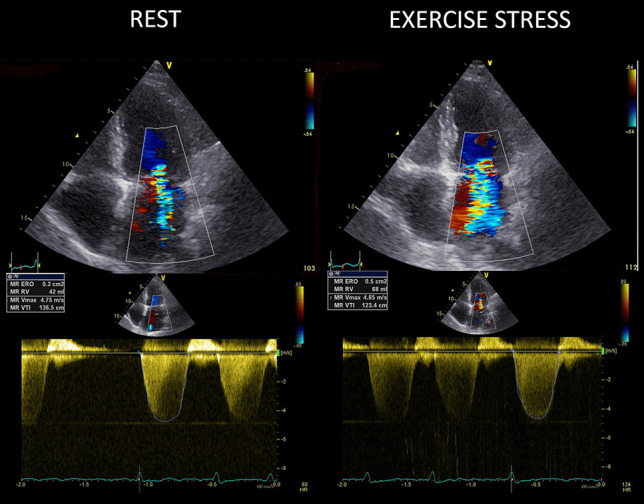
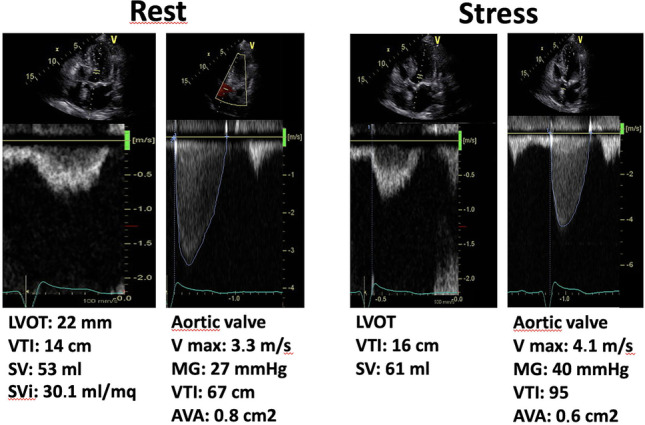
Stress echocardiography is recommended in valvular heart disease when there is a mismatch between resting transthoracic echocardiography findings and symptoms during activities of daily living. We describe the current methodology and the evidence supporting these applications.
The comprehensive stress echo assessment includes valve function (gradients and regurgitation), left ventricular global systolic and diastolic function, left atrial volume, pulmonary congestion, pulmonary arterial pressure, and right ventricular function, integrated with blood pressure response with cuff sphygmomanometer, chronotropic reserve with heart rate, and symptoms. Recent guidelines recommend the evaluation of asymptomatic severe or symptomatic non-severe mitral regurgitation or stenosis with exercise stress and suspected low-flow, low-gradient severe aortic stenosis with reduced ejection fraction with low dose (up to 20 mcg, without atropine) dobutamine stress. Prospective, large-scale studies based on a comprehensive protocol (ABCDE +) capturing the multiplicity of clinical phenotypes are needed to support stress echo-driven treatment strategies.
当静息经胸超声心动图检查结果与日常生活活动中的症状不匹配时,建议在瓣膜性心脏病中进行应激超声心动图检查。我们描述了当前的方法学以及支持这些应用的证据。
综合应激超声心动图评估包括瓣膜功能(梯度和反流)、左心室整体收缩和舒张功能、左心房容积、肺充血、肺动脉压和右心室功能,与袖带血压计的血压反应、心率的变时储备以及症状相结合。最近的指南建议用运动应激评估无症状的严重或有症状的非严重二尖瓣反流或狭窄,以及用低剂量(最高 20 微克,不用阿托品)多巴酚丁胺应激评估怀疑为低流量、低梯度的严重主动脉瓣狭窄和射血分数降低。需要基于包含多种临床表型的综合方案(ABCDE+)进行前瞻性、大规模研究,以支持基于应激超声心动图的治疗策略。