Department of Psychiatry and Behavioral Sciences, Medical University of South Carolina, Charleston, SC, United States.
Hollings Cancer Center, Medical University of South Carolina, Charleston, SC, United States.
J Med Internet Res. 2022 Aug 30;24(8):e38663. doi: 10.2196/38663.
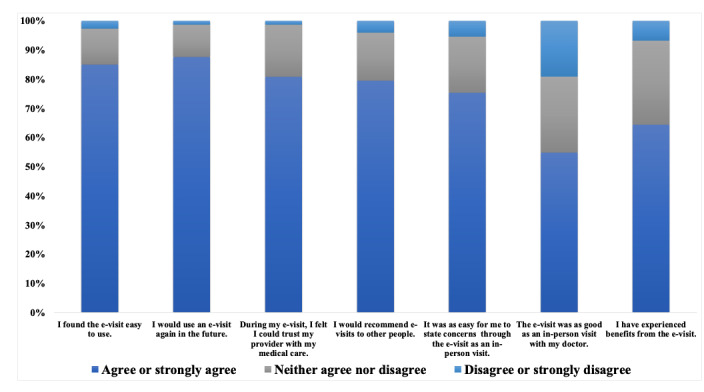
Most smokers with chronic obstructive pulmonary disease (COPD) have not yet been diagnosed, a statistic that has remained unchanged for over two decades. A dual-focused telehealth intervention that promotes smoking cessation, while also facilitating COPD screening, could help address national priorities to improve the diagnosis, prevention, treatment, and management of COPD. The purpose of this study was to preliminarily evaluate an integrated asynchronous smoking cessation and COPD screening e-visit (electronic visit) that could be delivered proactively to adult smokers at risk for COPD, who are treated within primary care.
The aims of this study were (1) to examine e-visit feasibility and acceptability, particularly as compared to in-lab diagnostic pulmonary function testing (PFT), and (2) to examine the efficacy of smoking cessation e-visits relative to treatment as usual (TAU), all within primary care.
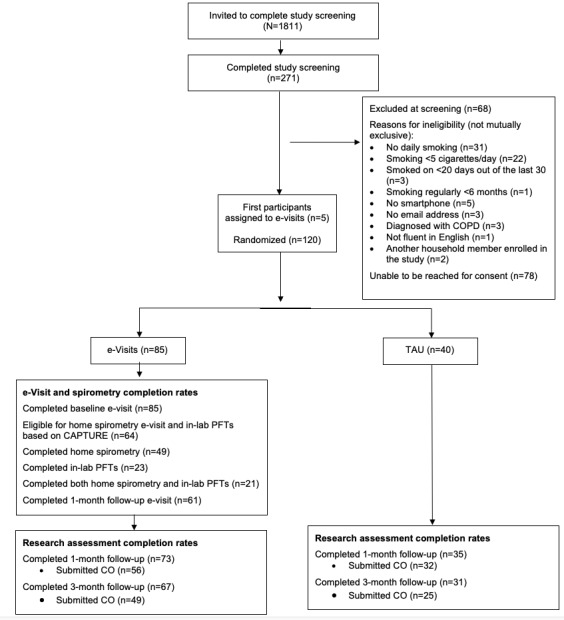
In a randomized clinical trial, 125 primary care patients who smoke were randomized 2:1 to receive either proactive e-visits or TAU. Participants randomized to the e-visit condition were screened for COPD symptoms via the COPD Assessment in Primary Care to Identify Undiagnosed Respiratory Disease and Exacerbation Risk (CAPTURE). Those with scores ≥2 were invited to complete both home spirometry and in-lab PFTs, in addition to two smoking cessation e-visits. Smoking cessation e-visits assessed smoking history and motivation to quit and included completion of an algorithm to determine the best Food and Drug Administration-approved cessation medication to prescribe. Primary outcomes included measures related to (1) e-visit acceptability, feasibility, and treatment metrics; (2) smoking cessation outcomes (cessation medication use, 24-hour quit attempts, smoking reduction ≥50%, self-reported abstinence, and biochemically confirmed abstinence); and (3) COPD screening outcomes.
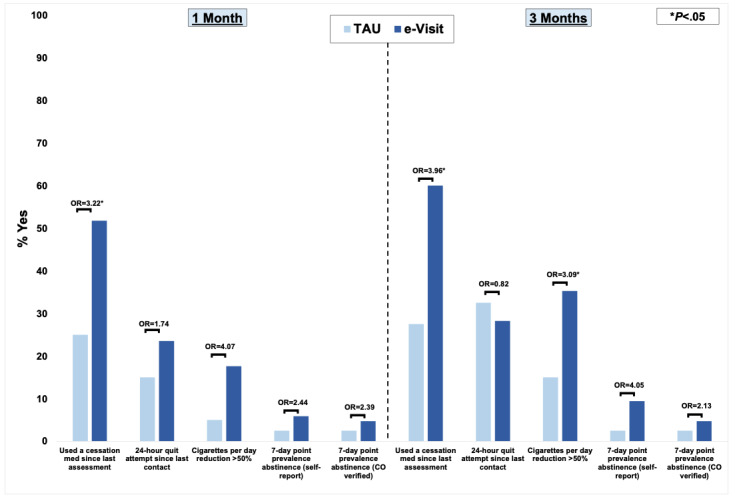
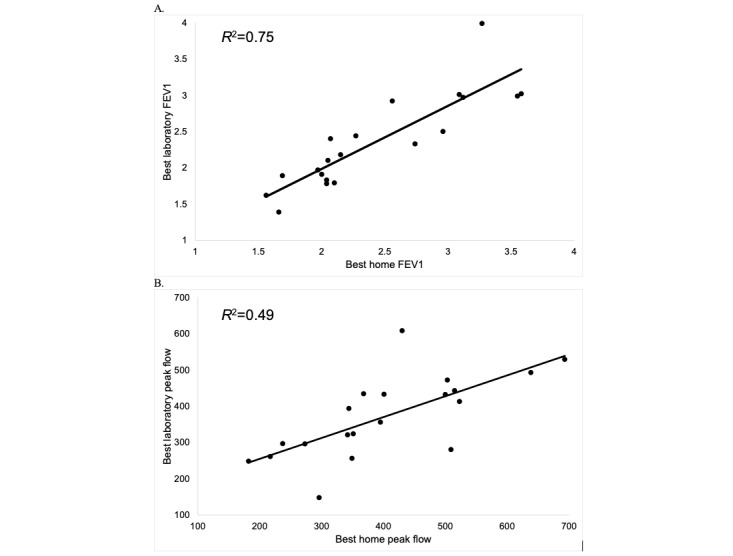
Of 85 participants assigned to the e-visits, 64 (75.3%) were invited to complete home spirometry and in-lab PFTs based on CAPTURE. Among those eligible for spirometry, 76.6% (49/64) completed home spirometry, and 35.9% (23/64) completed in-lab PFTs. At 1 month, all cessation outcomes favored the e-visit, with a significant effect for cessation medication use (odds ratio [OR]=3.22). At 3 months, all cessation outcomes except for 24-hour quit attempts favored the e-visit, with significant effects for cessation medication use (OR=3.96) and smoking reduction (OR=3.09).
A proactive, asynchronous e-visit for smoking cessation and COPD screening may offer a feasible, efficacious approach for broad interventions within primary care.
ClinicalTrials.gov NCT04155073; https://clinicaltrials.gov/ct2/show/NCT04155073.
大多数患有慢性阻塞性肺疾病(COPD)的吸烟者尚未被诊断出来,这一统计数据在过去二十年中一直没有改变。一种双重重点的远程医疗干预措施,既能促进戒烟,又能促进 COPD 筛查,可能有助于解决国家优先事项,以改善 COPD 的诊断、预防、治疗和管理。本研究的目的是初步评估一种综合的异步戒烟和 COPD 筛查电子就诊(电子就诊),可以主动提供给在初级保健中接受治疗的有 COPD 风险的成年吸烟者。
本研究的目的是(1)检查电子就诊的可行性和可接受性,特别是与实验室诊断肺功能测试(PFT)相比,以及(2)检查戒烟电子就诊相对于常规治疗(TAU)的效果,均在初级保健范围内进行。
在一项随机临床试验中,125 名吸烟的初级保健患者被随机分为 2:1 接受主动电子就诊或 TAU。被分配到电子就诊组的患者通过 COPD 初级保健评估以识别未确诊的呼吸道疾病和加重风险(CAPTURE)筛查 COPD 症状。得分≥2 的患者被邀请完成家庭肺活量测定和实验室 PFT,以及两次戒烟电子就诊。戒烟电子就诊评估吸烟史和戒烟意愿,并完成确定最佳食品和药物管理局批准的戒烟药物的算法。主要结果包括:(1)与电子就诊的可接受性、可行性和治疗指标相关的措施;(2)戒烟结果(戒烟药物使用、24 小时戒烟尝试、吸烟减少≥50%、自我报告的戒烟和生物化学确认的戒烟);和(3)COPD 筛查结果。
在被分配到电子就诊的 85 名参与者中,根据 CAPTURE,有 64 名(75.3%)被邀请完成家庭肺活量测定和实验室 PFT。在有资格进行肺活量测定的患者中,76.6%(49/64)完成了家庭肺活量测定,35.9%(23/64)完成了实验室 PFT。在 1 个月时,所有戒烟结果均有利于电子就诊,戒烟药物使用的效果显著(优势比[OR]=3.22)。在 3 个月时,除 24 小时戒烟尝试外,所有戒烟结果均有利于电子就诊,戒烟药物使用(OR=3.96)和吸烟减少(OR=3.09)的效果显著。
主动、异步的戒烟和 COPD 筛查电子就诊可能为初级保健中的广泛干预提供一种可行、有效的方法。
ClinicalTrials.gov NCT04155073; https://clinicaltrials.gov/ct2/show/NCT04155073。