Departments of Microbiology, Faculty of Biological Sciences, Abia State University, Uturu, Nigeria.
PLoS Negl Trop Dis. 2022 Aug 30;16(8):e0010720. doi: 10.1371/journal.pntd.0010720. eCollection 2022 Aug.
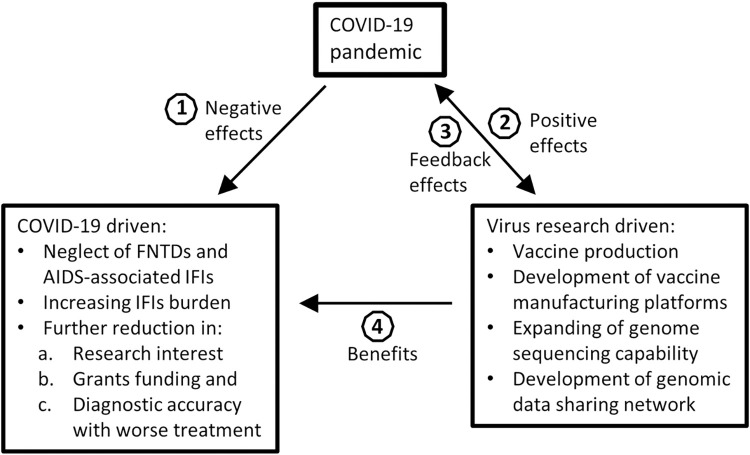
Invasive fungal infections (IFIs) have been described as diseases of the poor. The mortality rate of the infections is comparable to that of malaria, HIV, and TB, yet the infections remain poorly funded, neglected in research, and policy at all levels of human resources. The Coronavirus Disease 2019 (COVID-19) pandemic has further worsened the current state of management for IFIs. At the same time, response to COVID-19 has stirred and boosted vaccine production, vaccine substance manufacturing, and building of next-generation sequencing capacity and genomics data sharing network in the continent. Through collaboration and transdisciplinary research effort, these network and technology can be extended to encourage fungal research to address health issues of existing and emerging fungal pathogens.
侵袭性真菌感染(IFI)被描述为穷人的疾病。真菌感染的死亡率与疟疾、艾滋病毒和结核病相当,但在人力资源的各个层面,真菌感染的资金仍然不足,研究和政策都被忽视。2019 年冠状病毒病(COVID-19)大流行进一步恶化了目前 IFI 的管理状况。与此同时,对 COVID-19 的应对措施激发并促进了疫苗生产、疫苗物质制造以及建立下一代测序能力和基因组学数据共享网络。通过合作和跨学科研究工作,这些网络和技术可以扩展,以鼓励真菌研究,以解决现有和新出现的真菌病原体的健康问题。